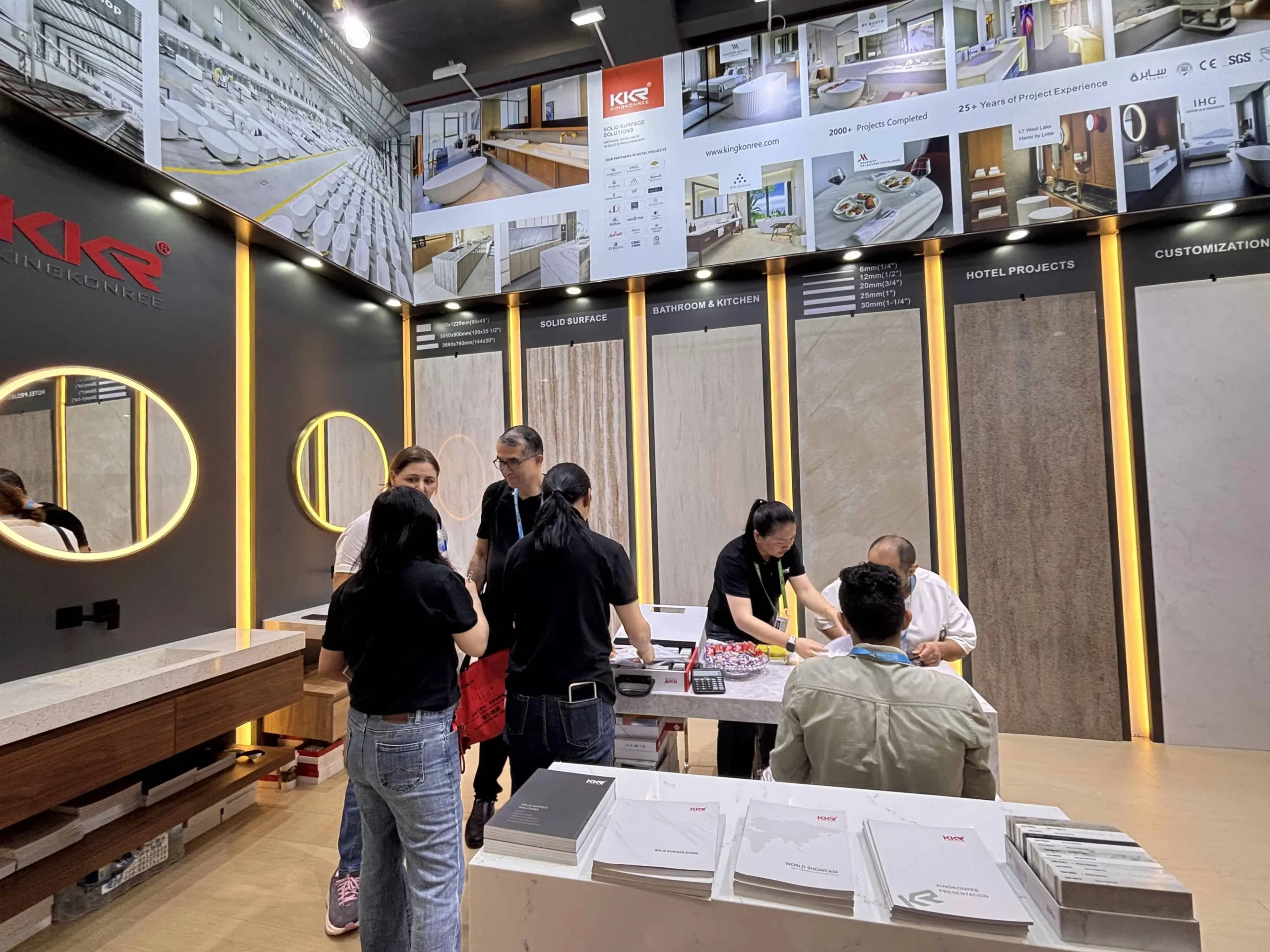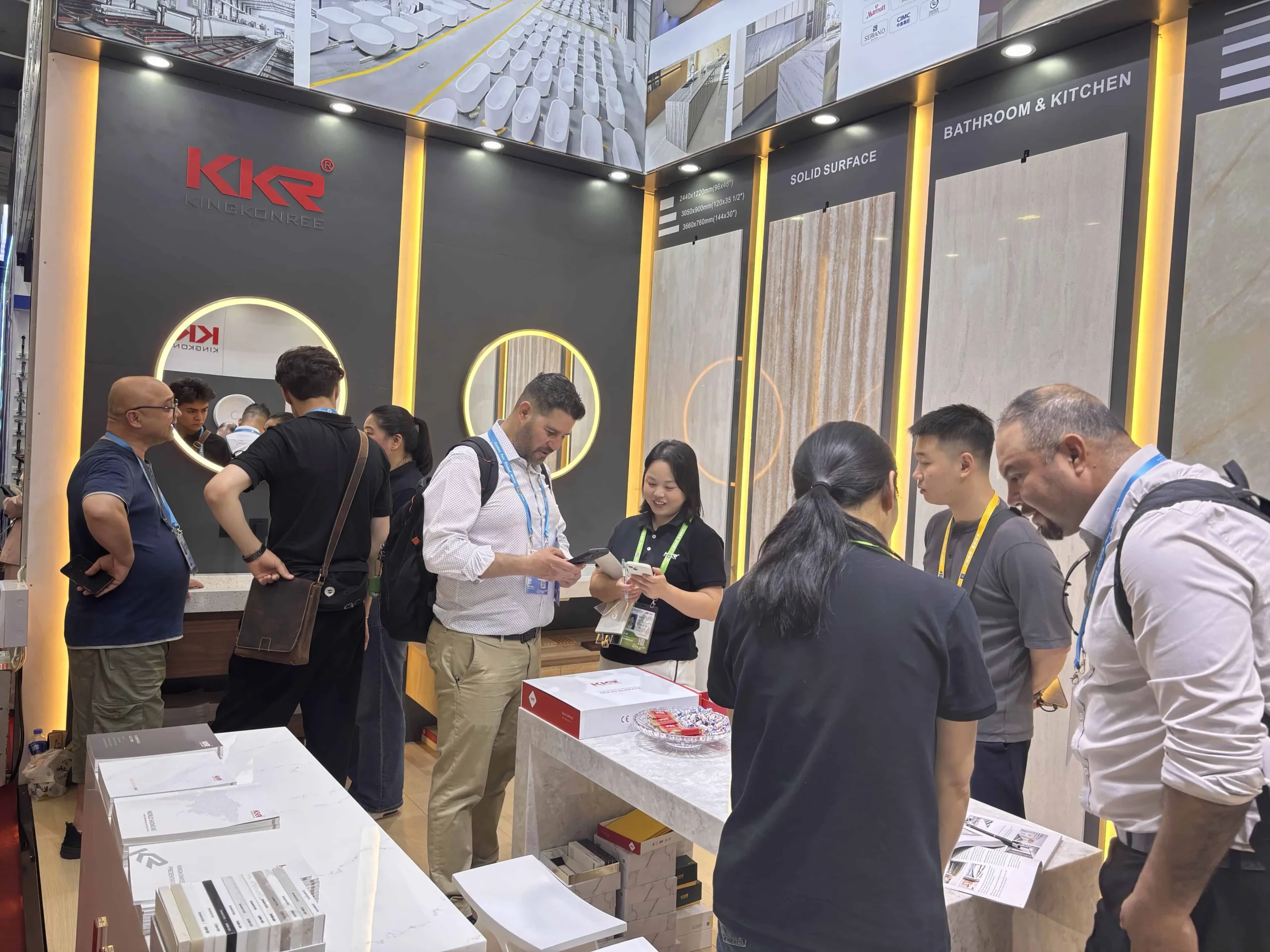






From Custom Cabinet Basins to Earth-Tone Bathtubs, KKR's 2026 Collection Redefines How the World Sources High-End Solid Surface Solutions
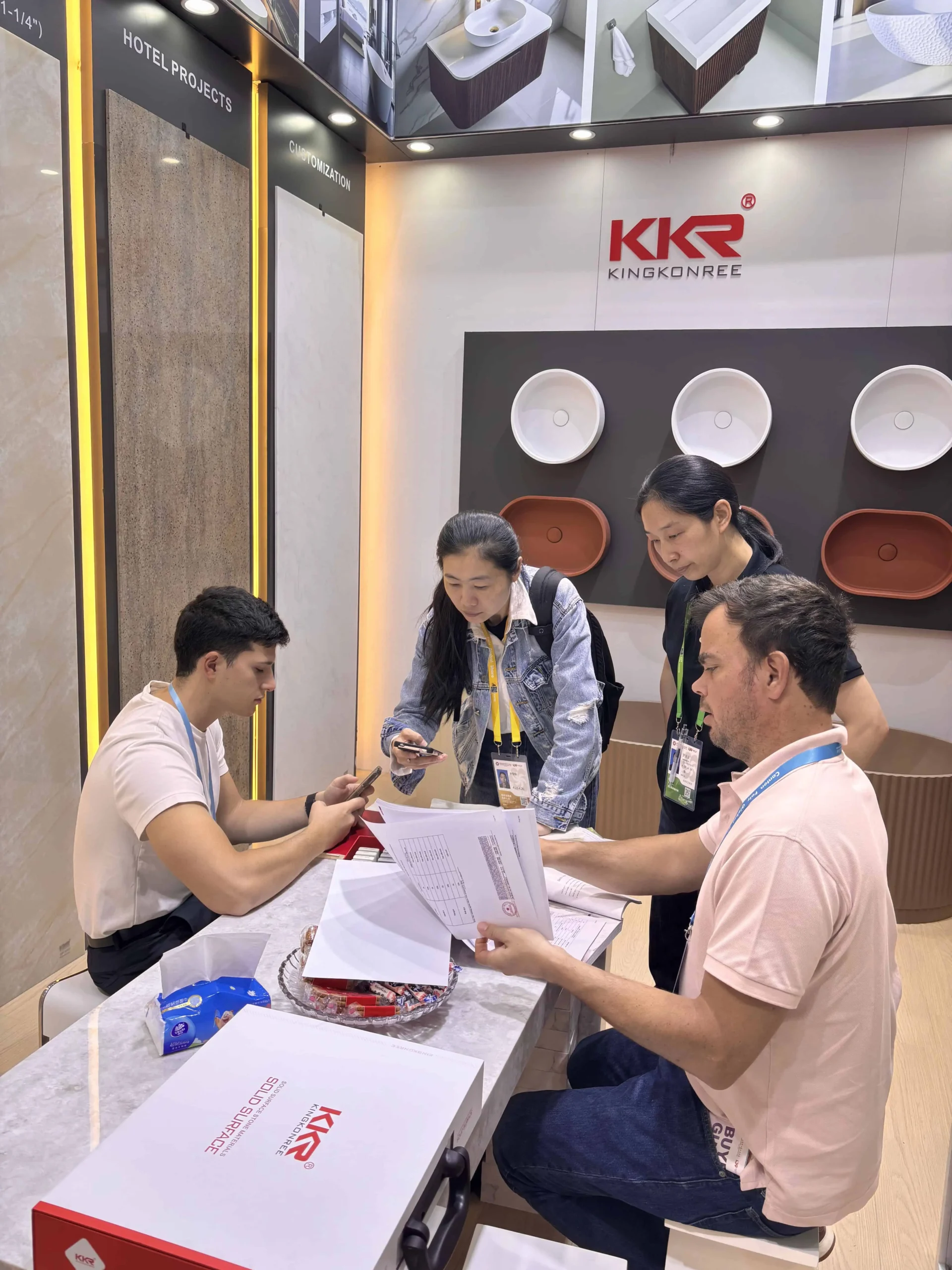
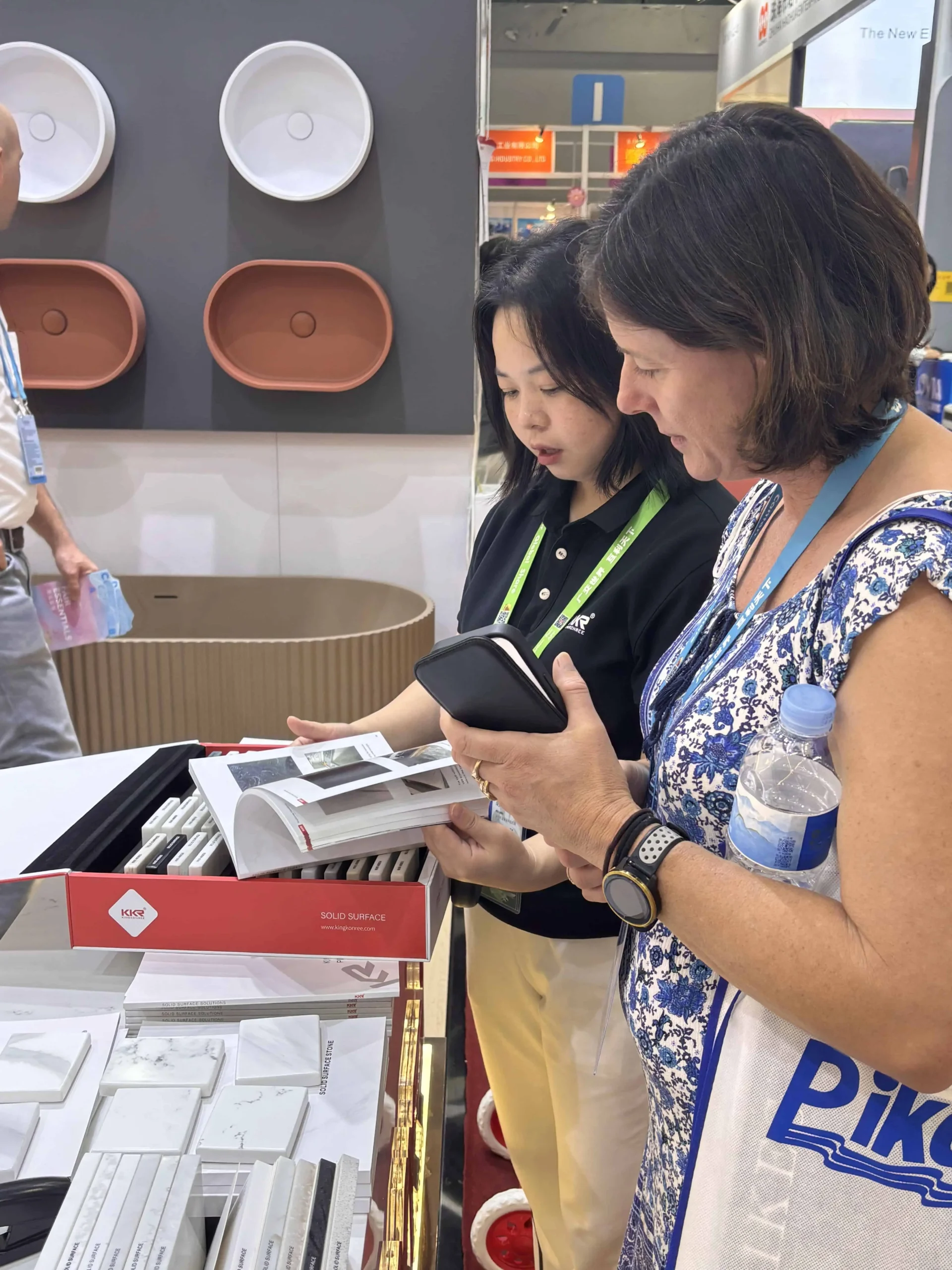
When thousands of buyers descend on Guangzhou this week for the 139th Canton Fair, one booth will be doing something most Chinese manufacturers haven't cracked yet: speaking the language of global interior designers — not just selling to them.
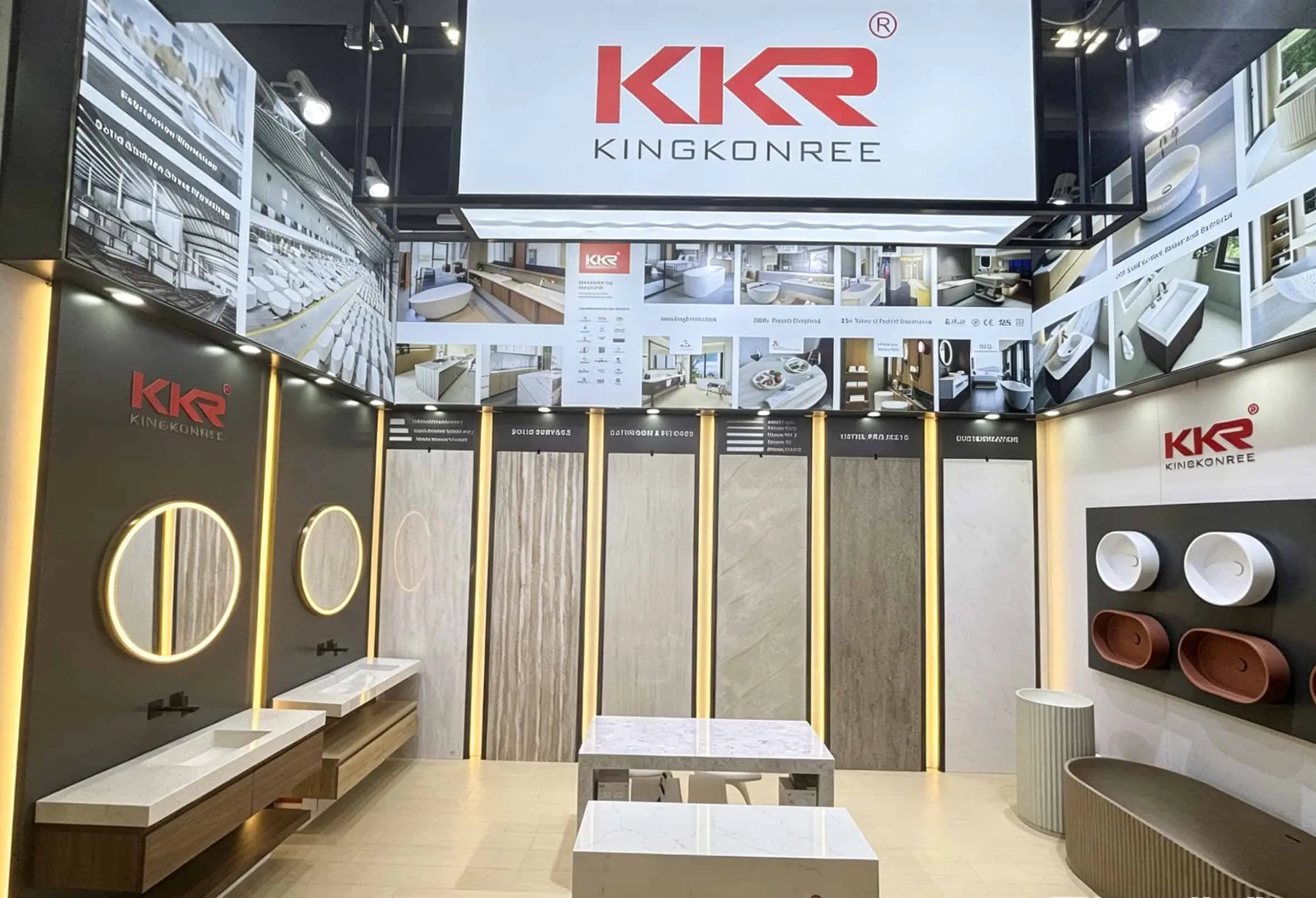
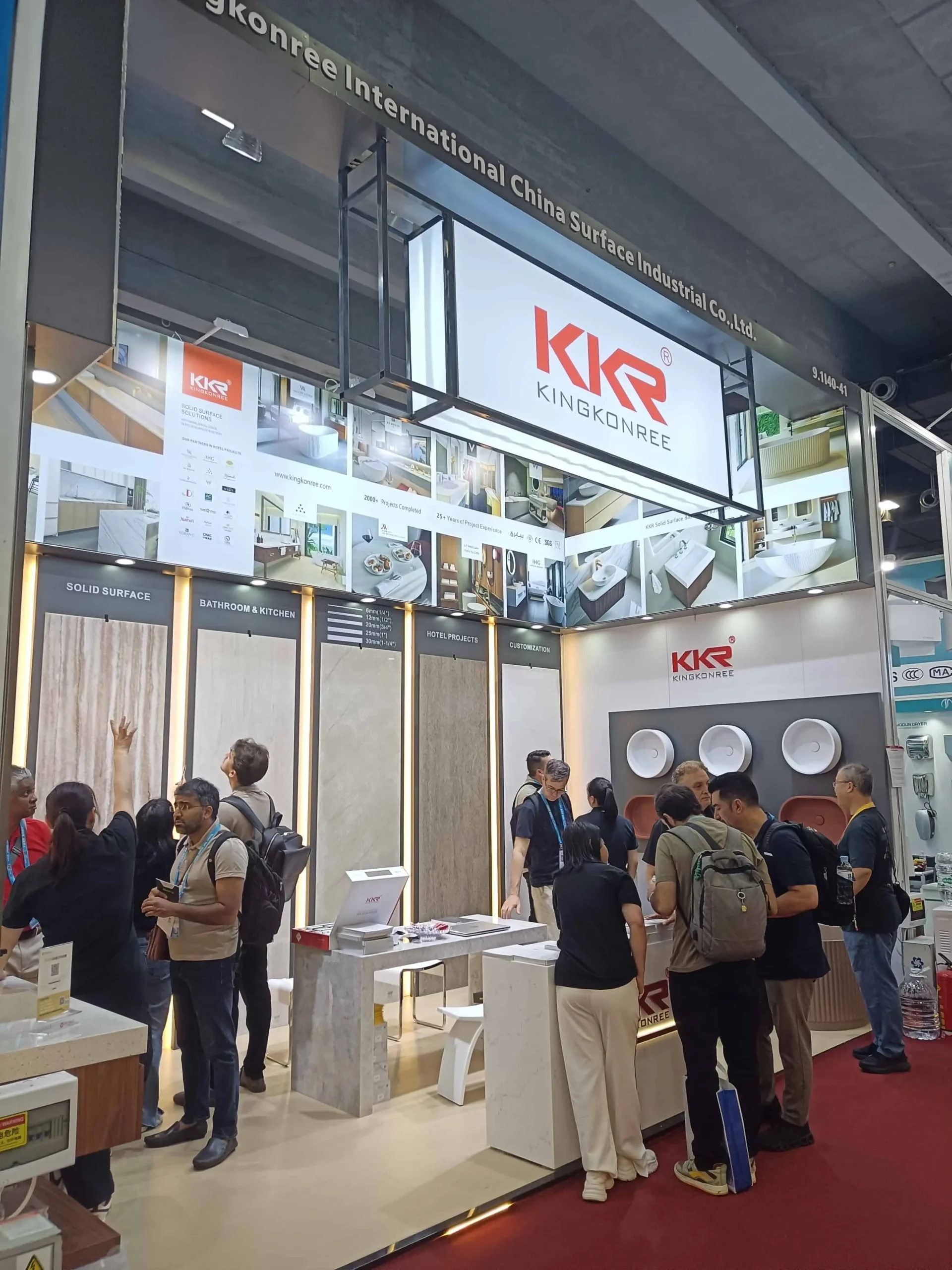
KingKonree (KKR), the Shenzhen-headquartered solid surface manufacturer, has built a reputation over years of supplying some of the world's most demanding commercial projects. But at Booth 9.1I40-41 this week, the company is making a deliberate move up the value chain — not just selling sheets and basins, but presenting a complete "Integrated Living" vision for the 2026 market.
And to make sure the world can actually work with them smoothly, KKR quietly opened a dedicated US support center in Sheridan, Wyoming — a strategic bet that global service starts with local presence, not just competitive pricing.
In the world of high-end surface materials, 2026 is being shaped by a single observation: spaces are getting smarter, and surfaces have to catch up.
"Invisible hygiene" — the design philosophy of minimizing seams, gaps, and hard-to-clean edges — has become the driving force behind hotel renovations, luxury residential projects, and healthcare facility upgrades worldwide. Countertops that collect grime in joints. Basins that leave water pools along silicone lines. These aren't just aesthetic complaints; in commercial environments, they're maintenance liabilities that add up fast.
KKR's 2026 "Integrated Living" Collection attacks this problem at the material level. By leveraging the seamless casting capabilities of solid surface — a 100% acrylic or polyester resin composite combined with aluminum hydroxide — KKR creates basins, bathtubs, and workstations where the join between basin and cabinet, or between countertop and wall, simply disappears.
The result: surfaces that look continuous, clean faster, and age better. And for the first time, KKR is bringing that promise to a full product ecosystem.
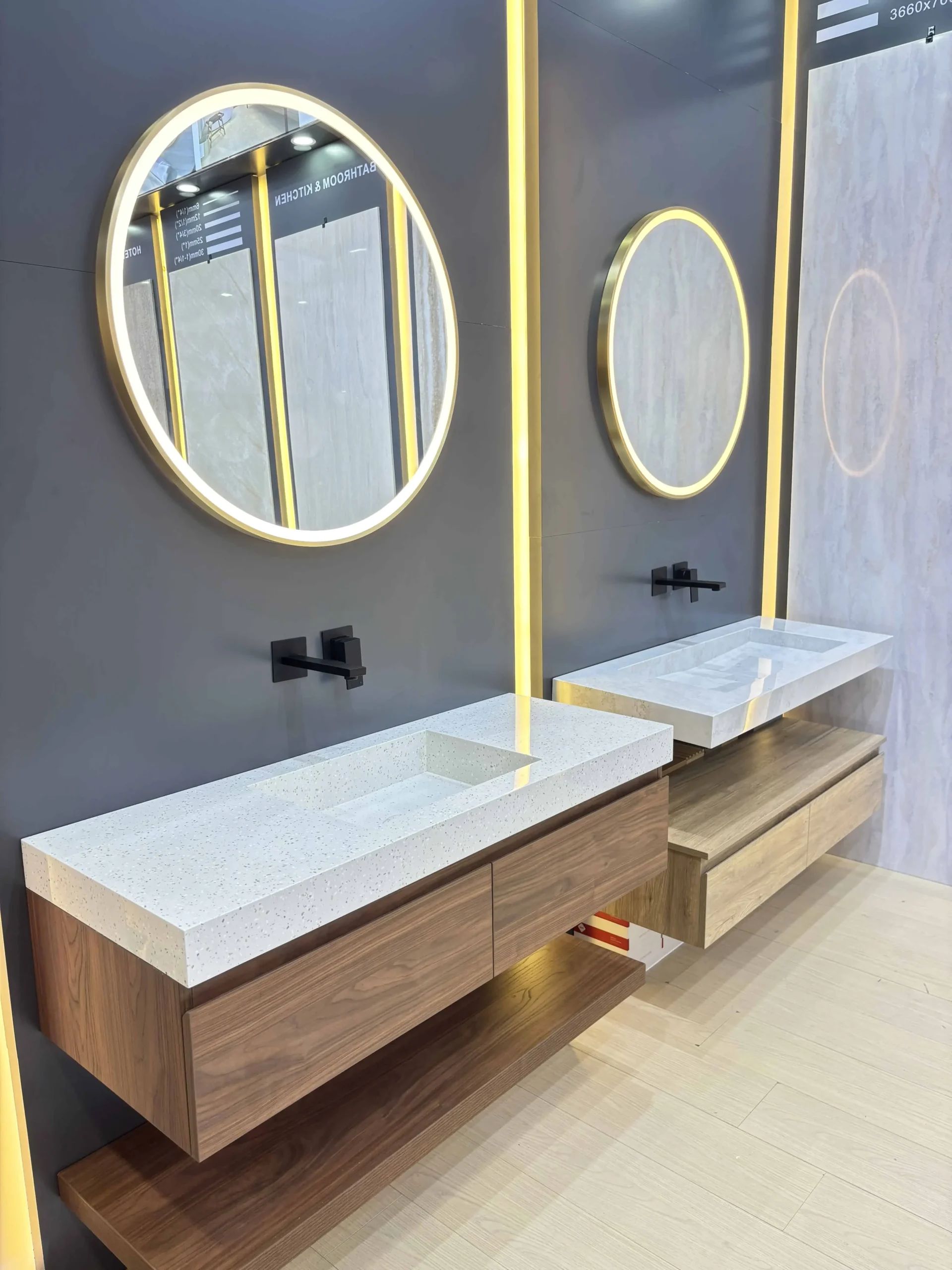
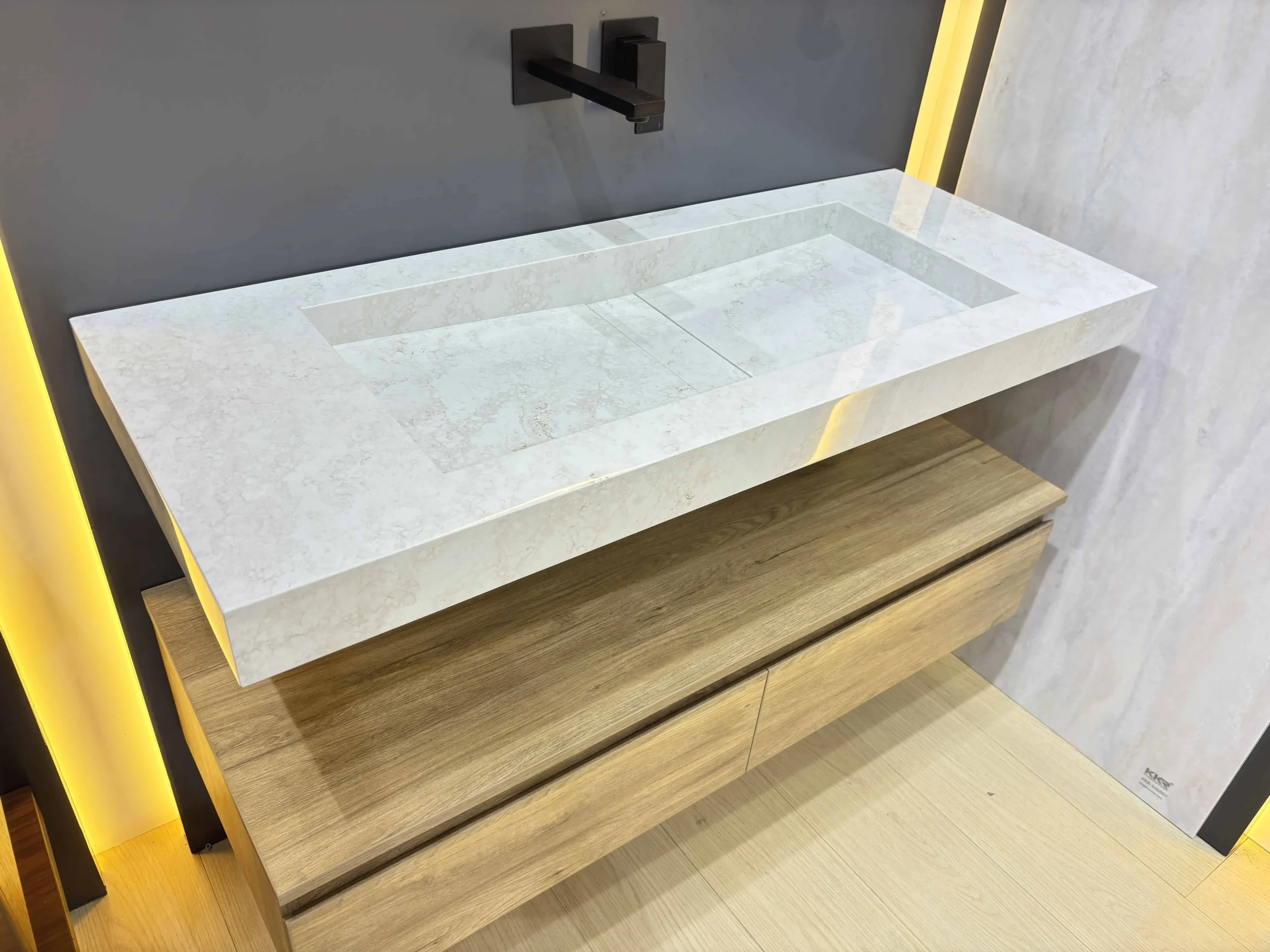
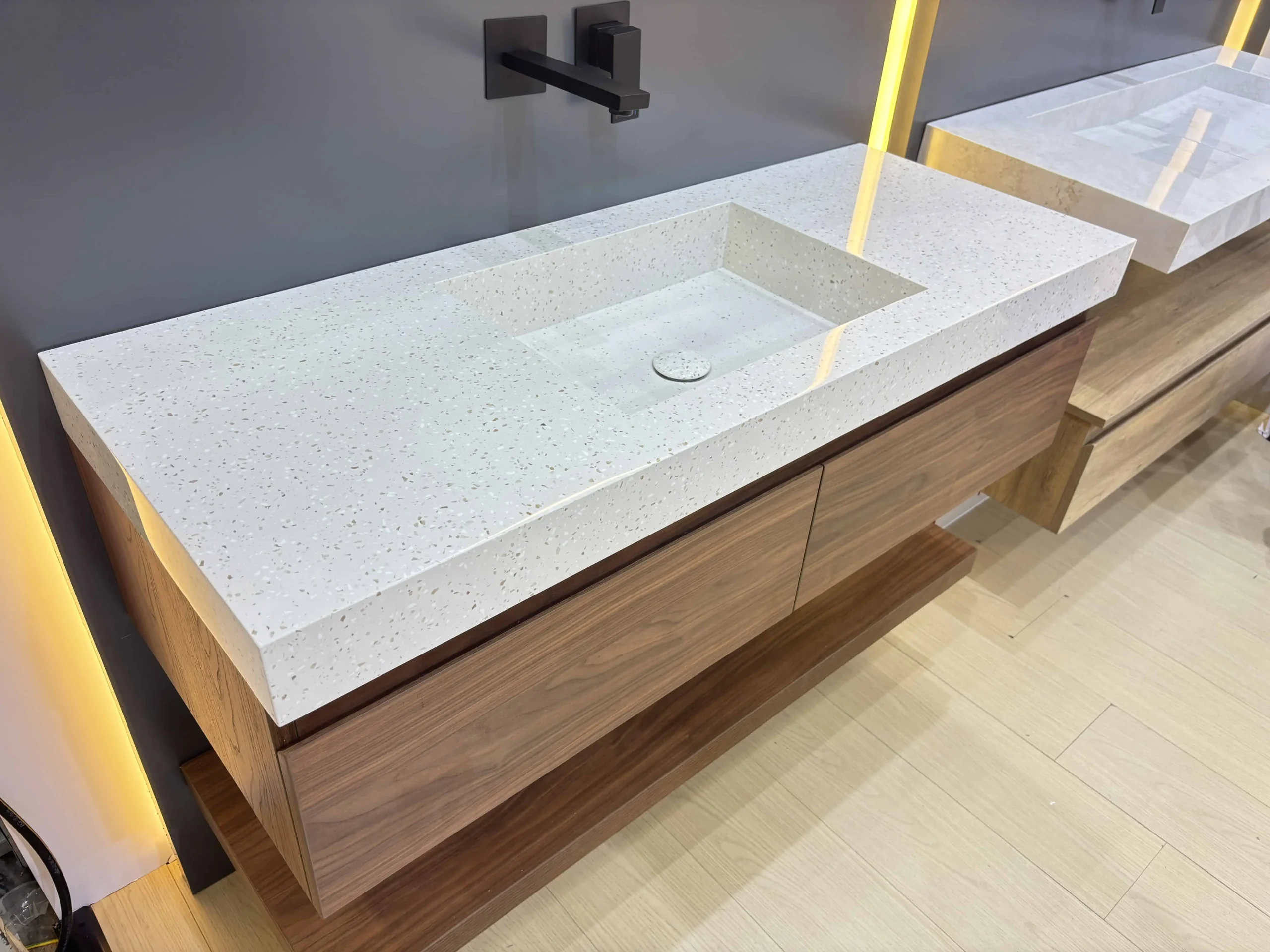
The standout of the 2026 launch is the new Customizable Cabinet Basin Series — a product built for exactly the type of project where KKR has been winning converts.
Each unit pairs a seamless matte-finish solid surface basin with a durable melamine-veneered plywood cabinet, available in two standard configurations: 1200×460×250mm and 1200×460×200mm. The critical design move: the basin integrates directly into the countertop surface, eliminating the gap between basin rim and counter — the exact place where mold, scale, and grime accumulate in conventional setups.
For hotel procurement managers, this means fewer callbacks, lower maintenance costs, and a bathroom that looks freshly built for longer.
Why matte finish matters: Unlike glossy surfaces that show every fingerprint and water spot, KKR's matte-finish solid surface has a soft-touch texture that is both stain-resistant and non-porous — a combination that's increasingly mandatory in high-end hospitality specifications.
If 2025 was the year of crisp white surfaces, 2026 is the year interiors got warmer.
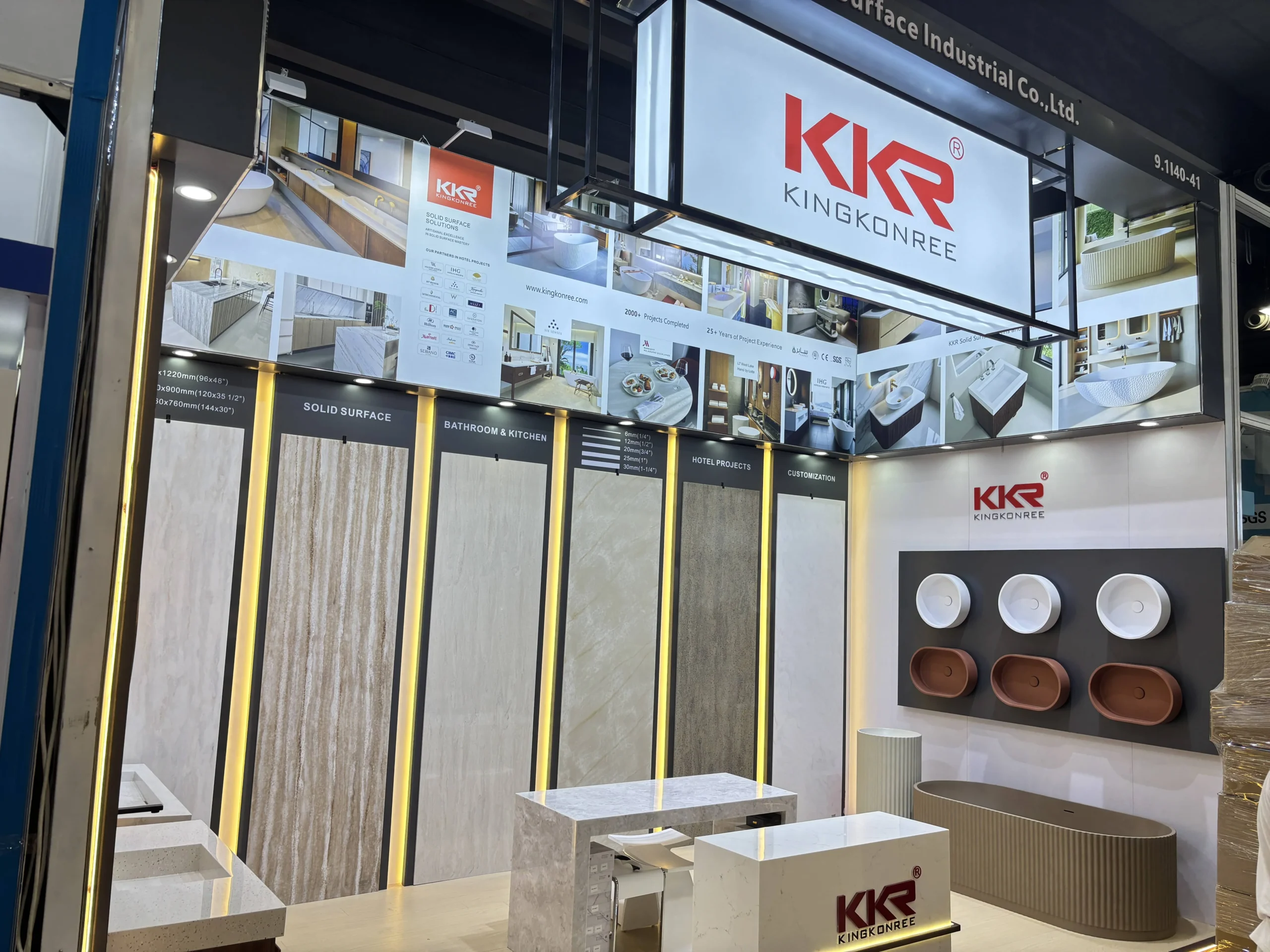
KKR's sculptural freestanding basin (KKR-1908) and solid surface bathtub (KKR-B114) are now finished in COCOA/PLAIN and PEBBLE GREY/PLAIN respectively — sophisticated earth tones that are rapidly becoming the specified palette for boutique hotels, resort spas, and high-end residential projects across North America and Europe.
This isn't arbitrary. The trend maps to a broader shift in hospitality design: biophilic design — the practice of incorporating natural materials, earthy palettes, and organic textures into interior spaces to reduce stress and increase wellbeing. Color institutes from WGSN to Pantone have flagged earthy greens, warm taupes, and stone greys as defining hues for commercial interiors through 2027.
What makes KKR's execution notable is the combination of color + texture: the matte solid surface finish gives these pieces a tactile quality — they feel like carved stone, without the cost, weight, or porosity of the real thing.
For designers: No sealing. No special cleaners. A material that can be thermoformed into curves, routed into edges, and repaired on-site if it chips — all while maintaining a consistent, continuous color through the full depth of the material.
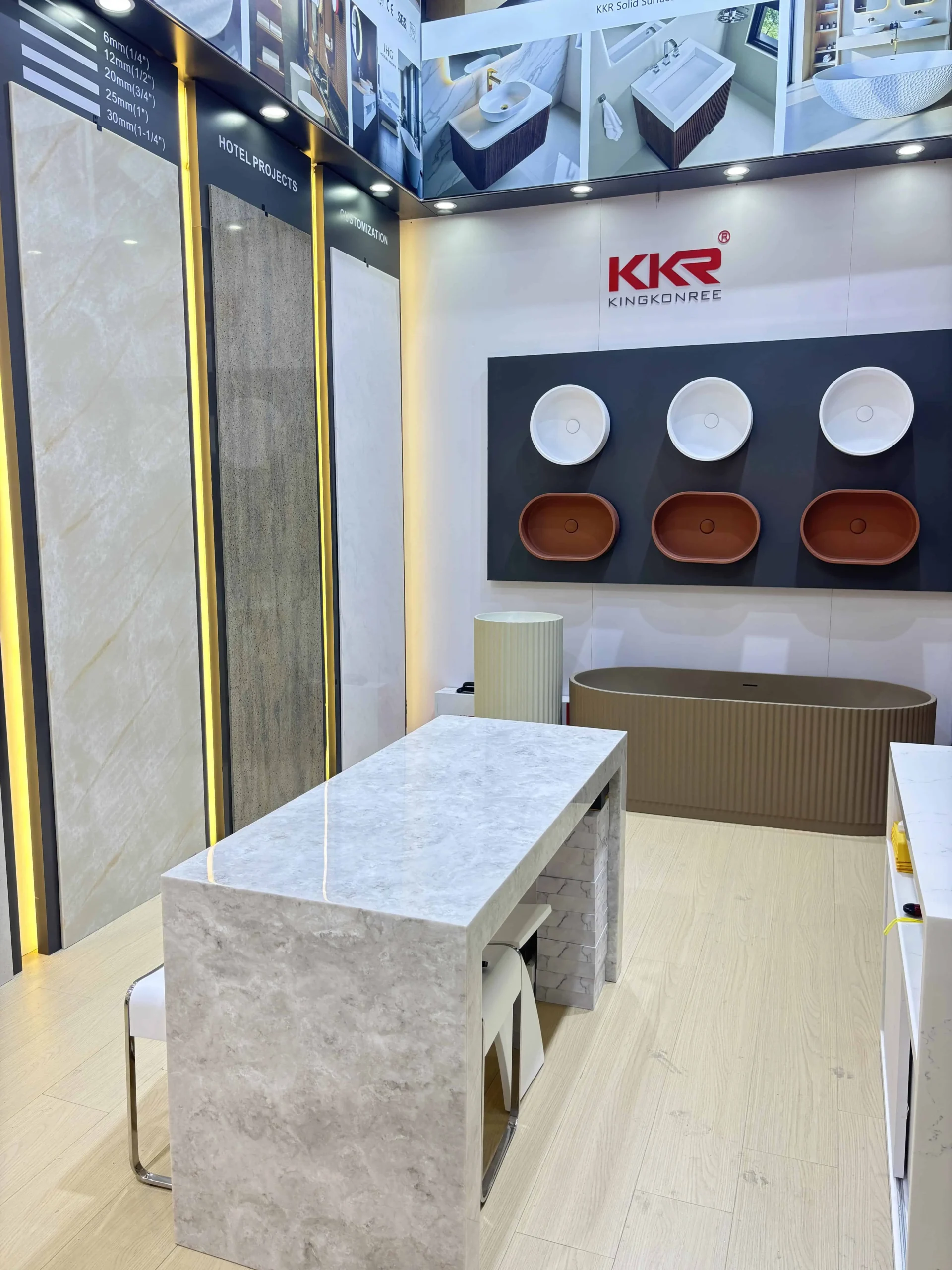
For commercial and hospitality applications, KKR introduces two custom-fabricated pieces that demonstrate the material's real superpower: complex shapes without compromising durability.
The Customizable Reception Desk (1100×400×880mm) and Table (1400×600×750mm) are designed for high-traffic environments — hotel lobbies, office receptions, retail spaces — where the front desk or communal table often sets the aesthetic tone for the entire space.Solid surface's ability to be molded into ergonomic curves and seamlessly joined means these pieces can incorporate curved fronts, integrated cable management channels, and integrated lighting channels in a single, non-porous, easy-to-clean surface. No edge banding. No silicone joints. No future maintenance headaches.
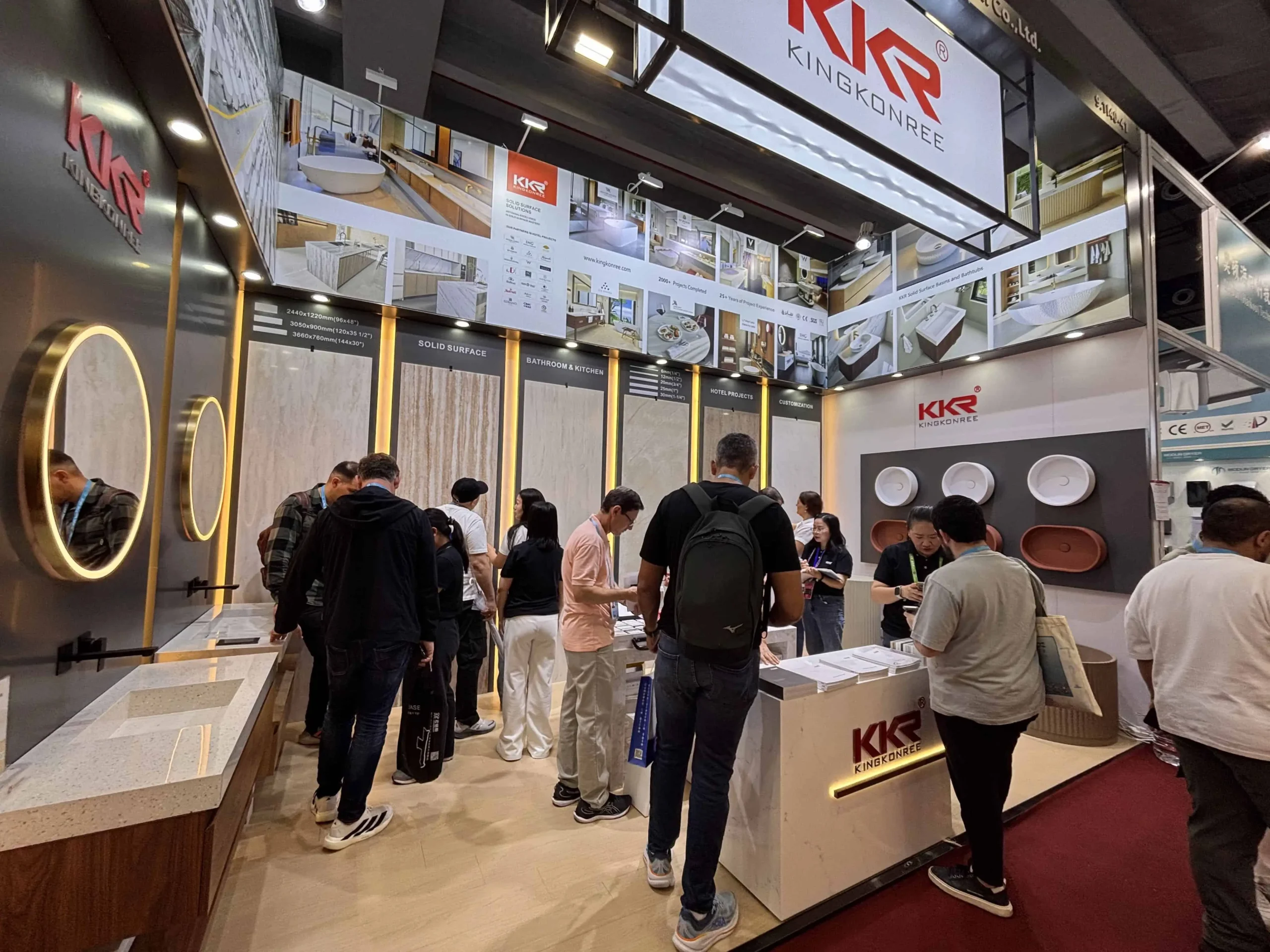
To appreciate what KKR brings to the table, you have to understand the manufacturing scale behind it.
The company's Shenzhen facility spans 25,000m², producing over 15,000 finished products per month — including 6,000 solid surface sheets and 3,000 wash basins. The factory is ISO 9001:2015 certified and operates with advanced dust-removal equipment to maintain a clean-room environment for technicians handling material casting and finishing.
This isn't just about volume. The scale enables KKR to offer what few solid surface manufacturers can match: over 3,000 colors and 127 patterns, including:
KKR's proprietary technology ensures that decorative speckles — the defining aesthetic of solid surface — are evenly distributed throughout the material, including on edges and corners cut during fabrication. For architects and fabricators, this means no white lines or inconsistent patterns appearing at mitred joints.
The practical implication for buyers: Whether you're ordering 50 sheets for a single hotel project or 500 for a multi-property pipeline, KKR's production capacity means lead times are manageable, color consistency is trackable, and quality control stays inside the factory rather than being delegated to a third-party broker.
Here's the part of the KKR story that most Chinese manufacturers skip: what happens after the order is placed.
For North American distributors, contractors, and interior design firms, working with Asian manufacturers has historically meant time zone friction, language barriers in technical specs, and logistics coordination that could stretch from weeks to months.
KKR's solution is deceptively simple: a dedicated US support center in Sheridan, Wyoming. The center isn't just a warehouse — it's a staffed operation handling logistics coordination, technical specification support, sample requests, and after-sales service for the North American market.
What this means in practice:
For a fabricator in Chicago specifying solid surface for a hotel project, the difference between a Shenzhen-based email chain and a Sheridan-based support team can be the difference between a project that ships on time and one that doesn't.
If you've been following the materials landscape, you know that solid surface has been gaining ground against both natural stone and engineered quartz in a specific set of applications. Here's why the timing for KKR's push matters:
Versus Natural Stone (Granite/Marble): Solid surface is non-porous, meaning it doesn't require sealing — ever. It resists stains from coffee, wine, and common bathroom chemicals. And if it does get damaged, it can be repaired on-site by a trained fabricator, invisibly restoring the surface.
Versus Engineered Quartz: Solid surface — particularly 100% acrylic formulations — can be thermoformed into curves and complex shapes that quartz cannot achieve without significant tooling investment. For custom reception desks, integrated basin countertops, or curved shower walls, solid surface is the only practical option.
Versus Ceramic/Porcelain: Ceramic is rigid and chips on impact. Solid surface absorbs impact, won't crack from thermal shock, and can be fabricated to any dimension without grout lines.
The KKR-specific edge: That combination of material flexibility + manufacturing scale + US support presence is what KKR is betting on — and why its booth is worth a visit if you're spec'ing or procuring for any project where surfaces matter.
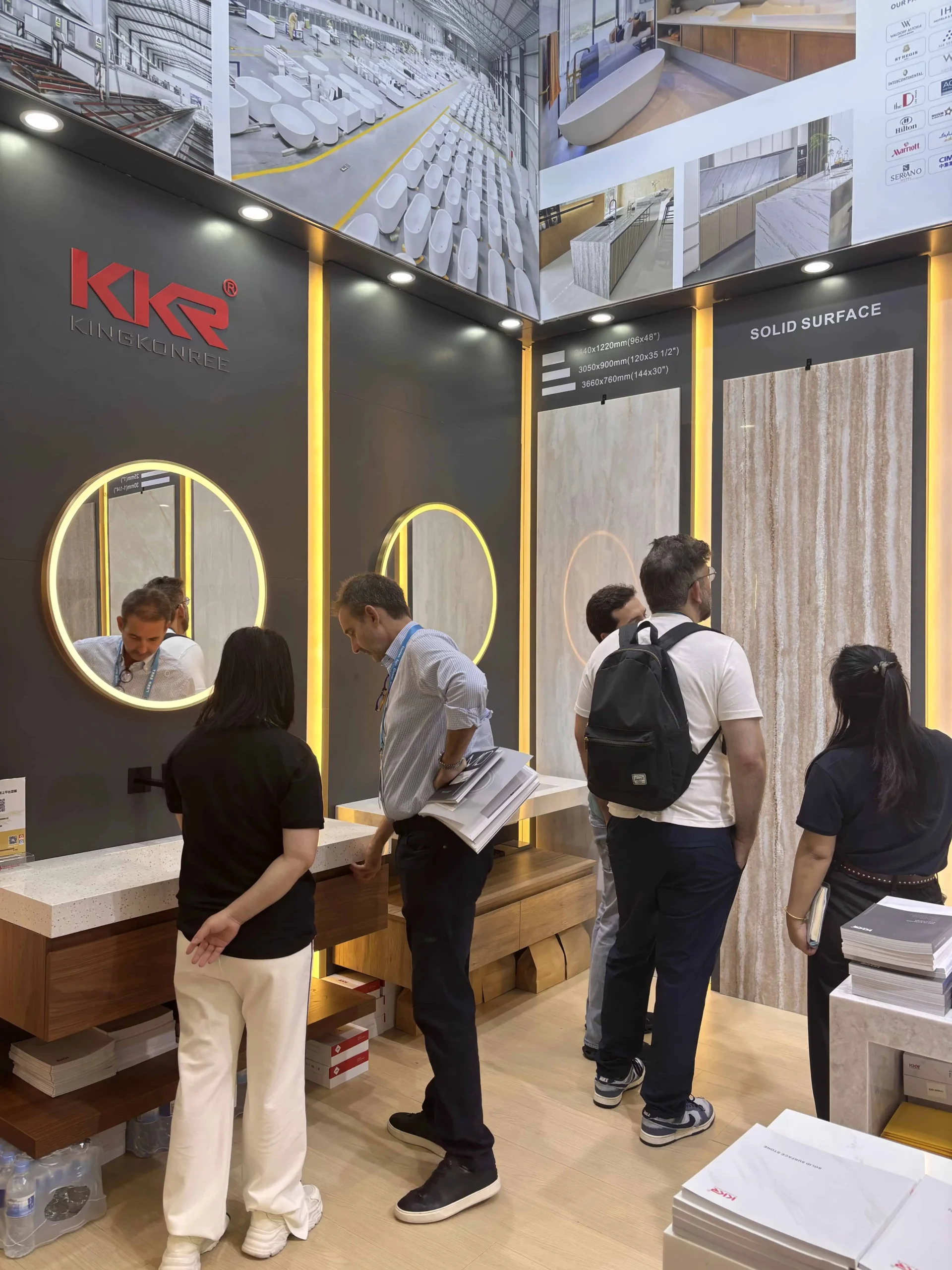
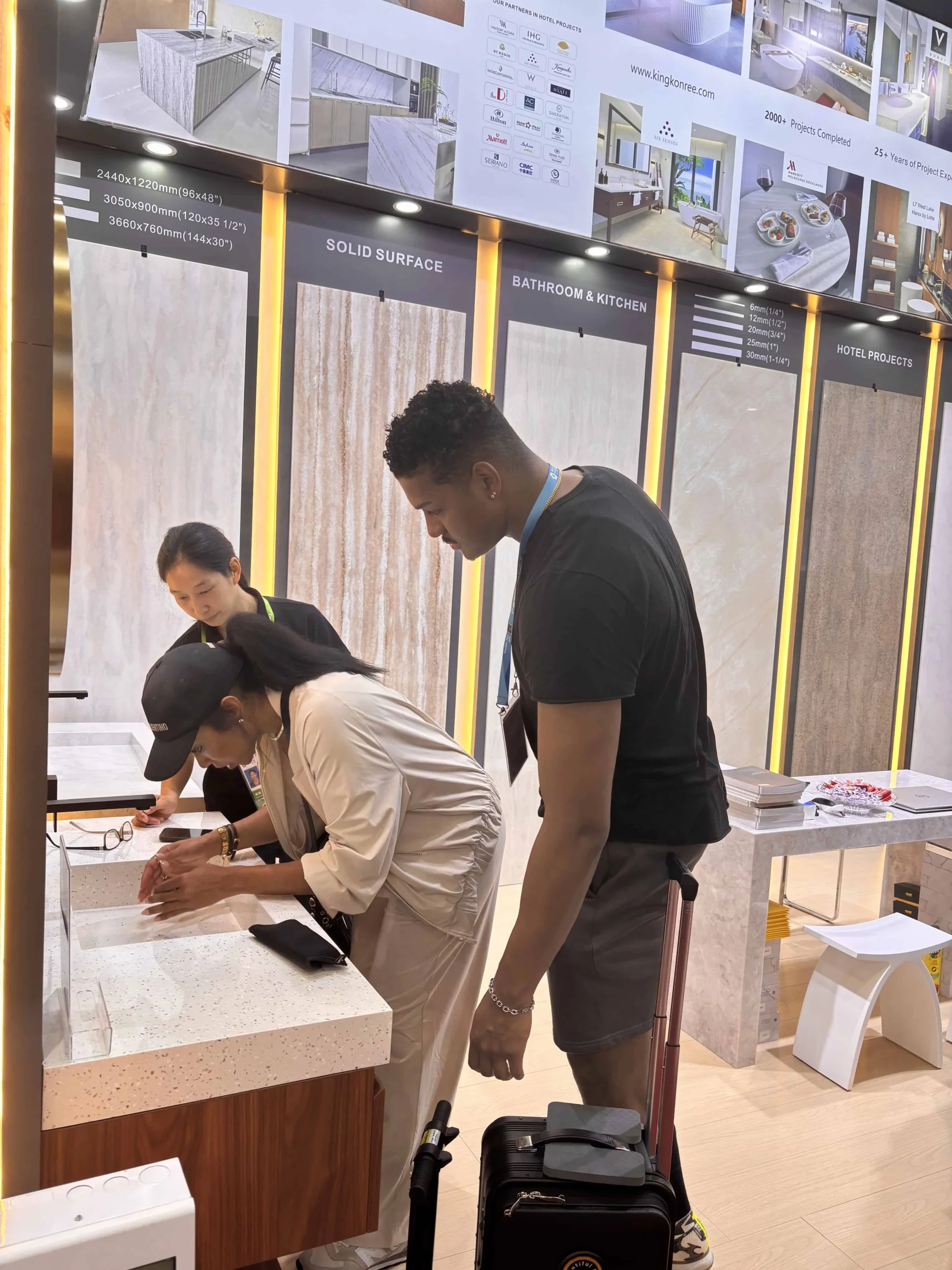
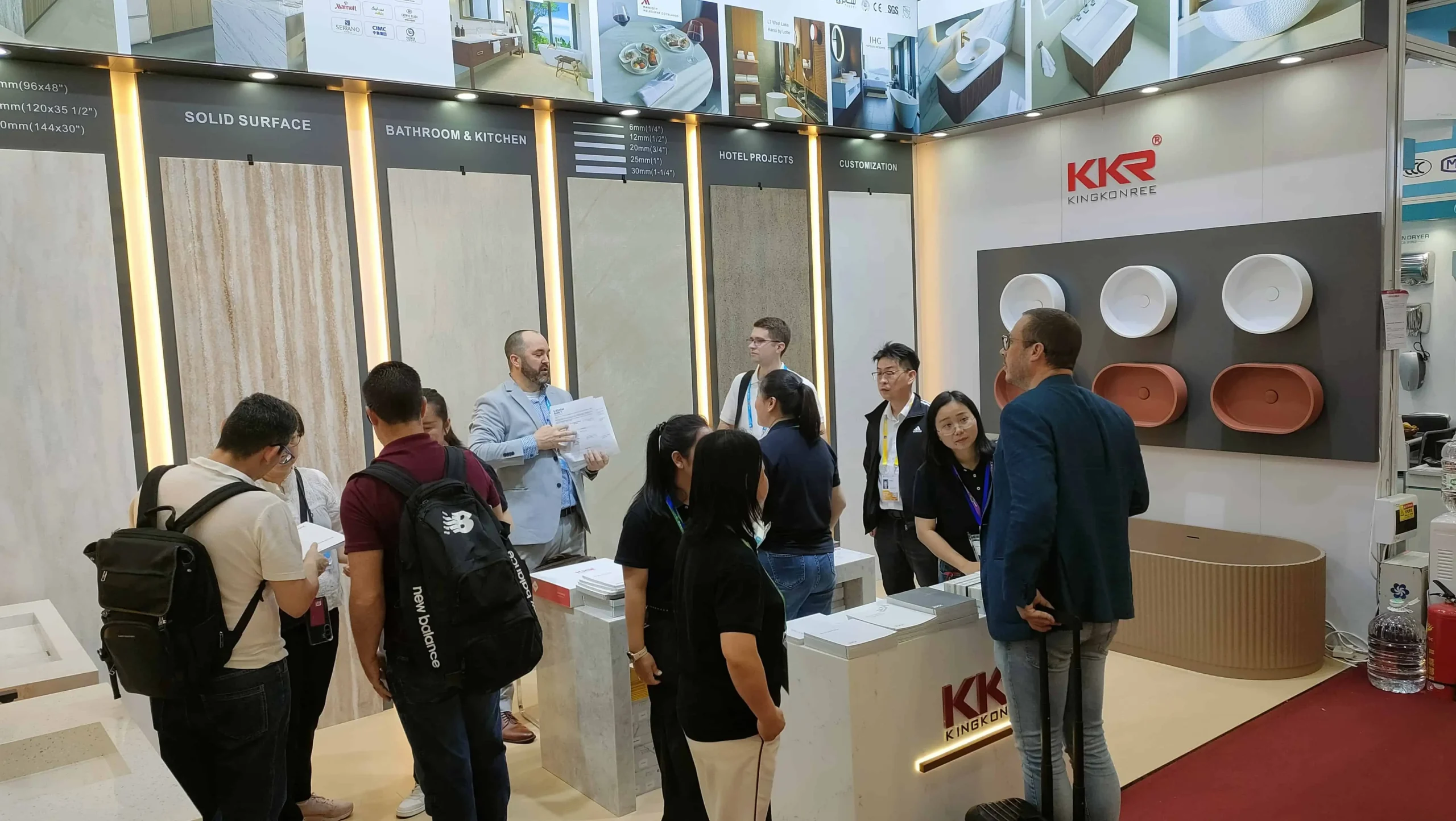
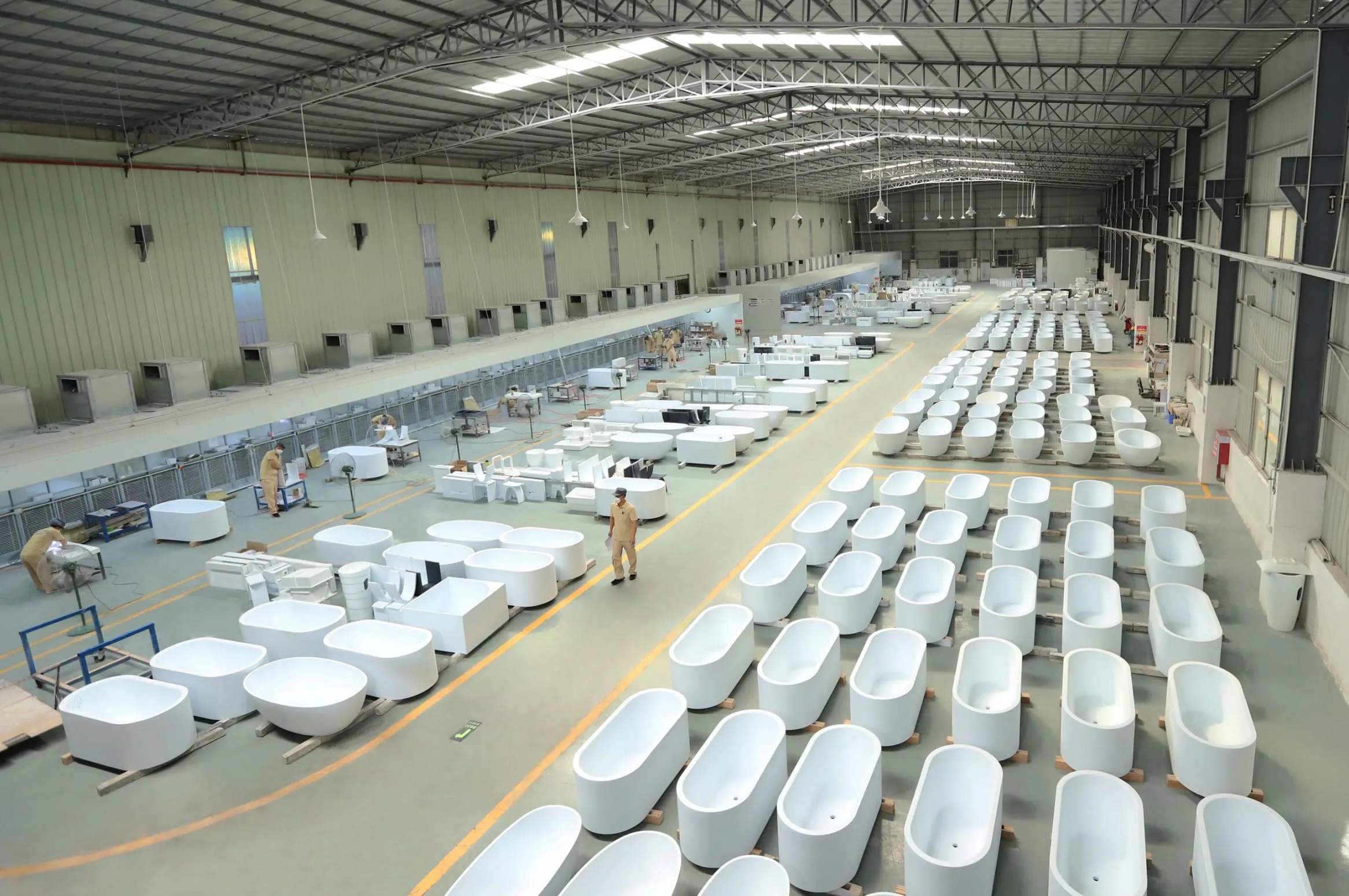
If you're attending the Canton Fair, KKR's booth will showcase:
Can't make it to Guangzhou? Visit https://www.kkrstone.com/ to explore the full product catalog and request samples directly.
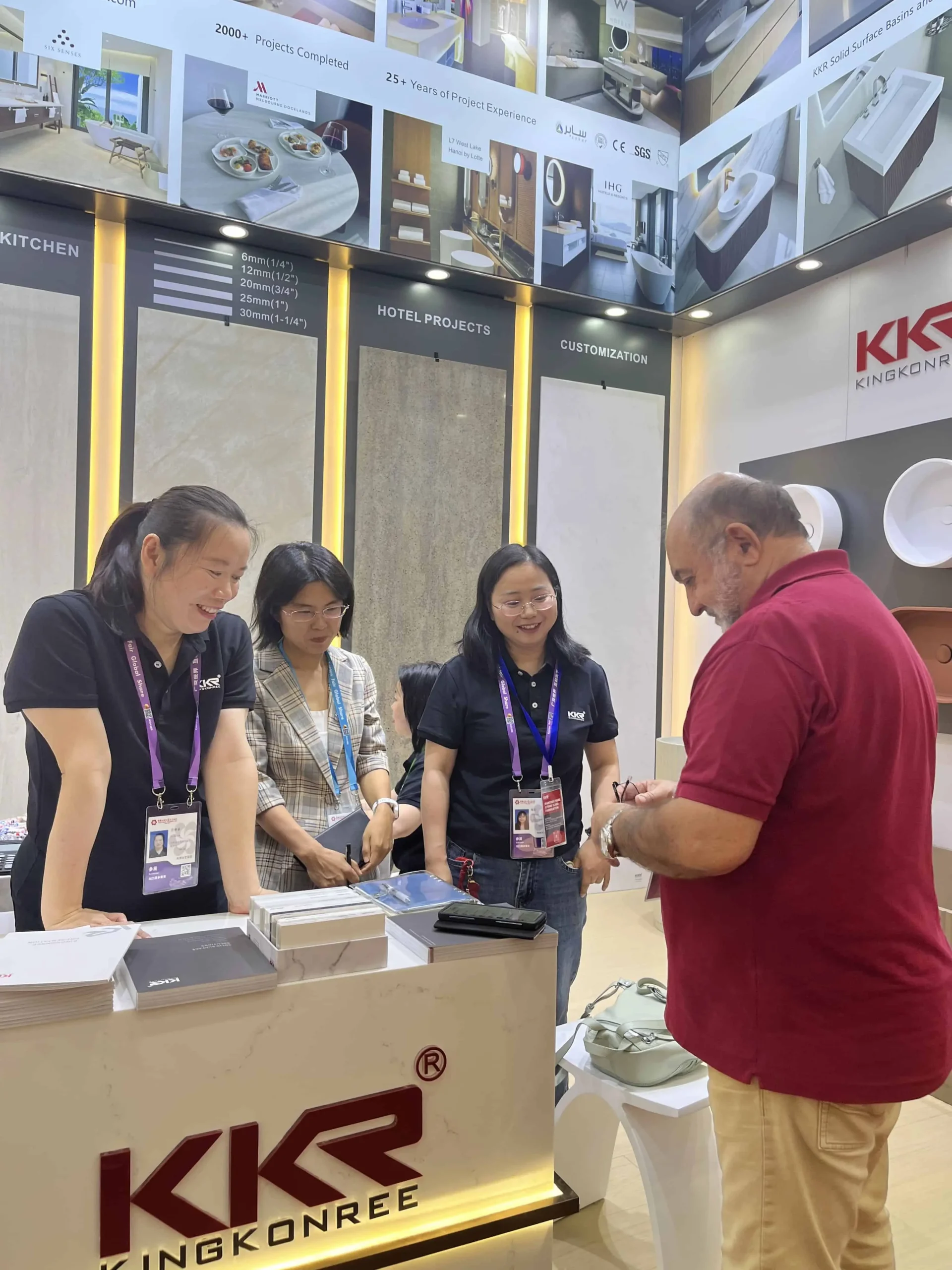
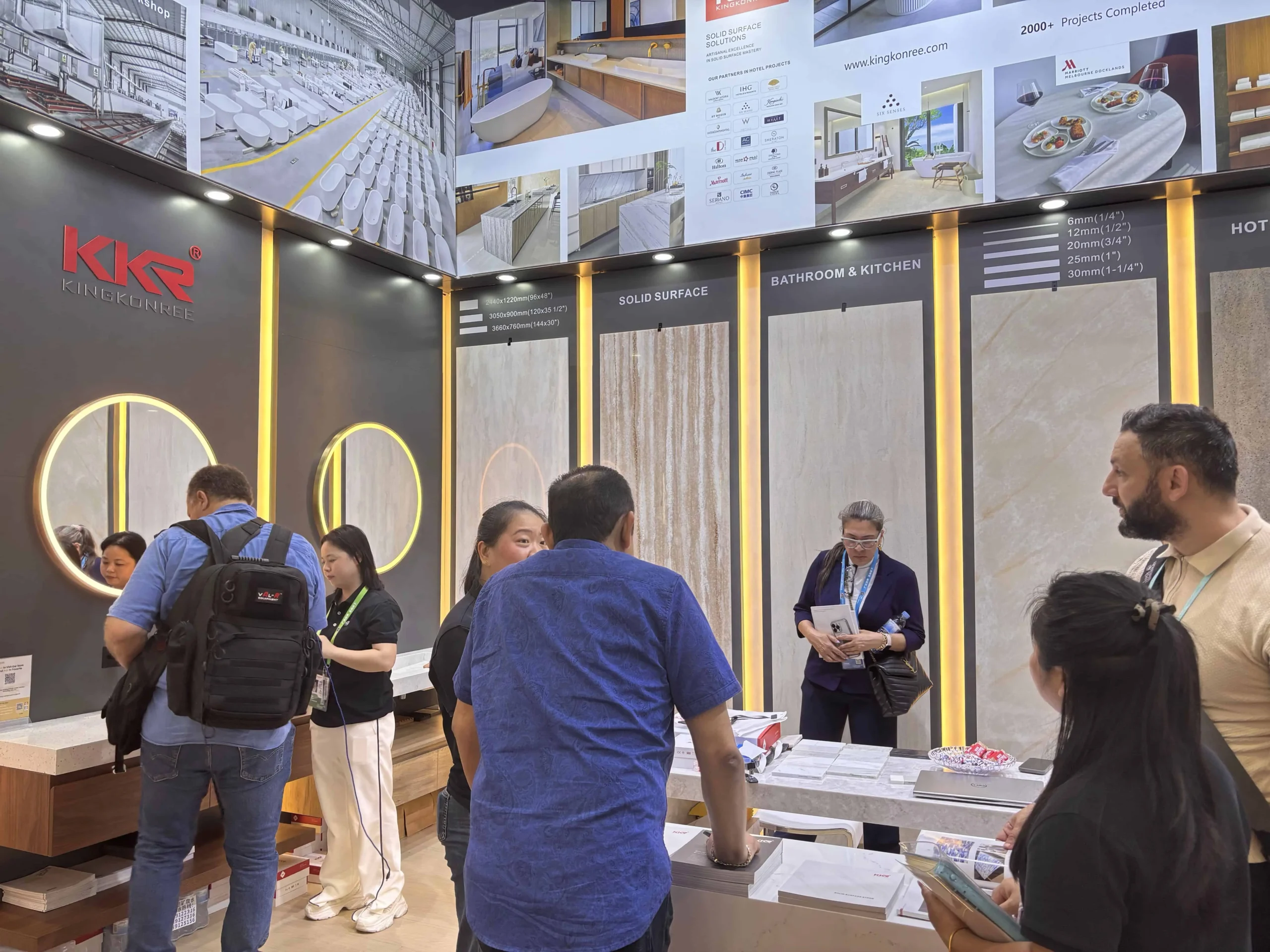
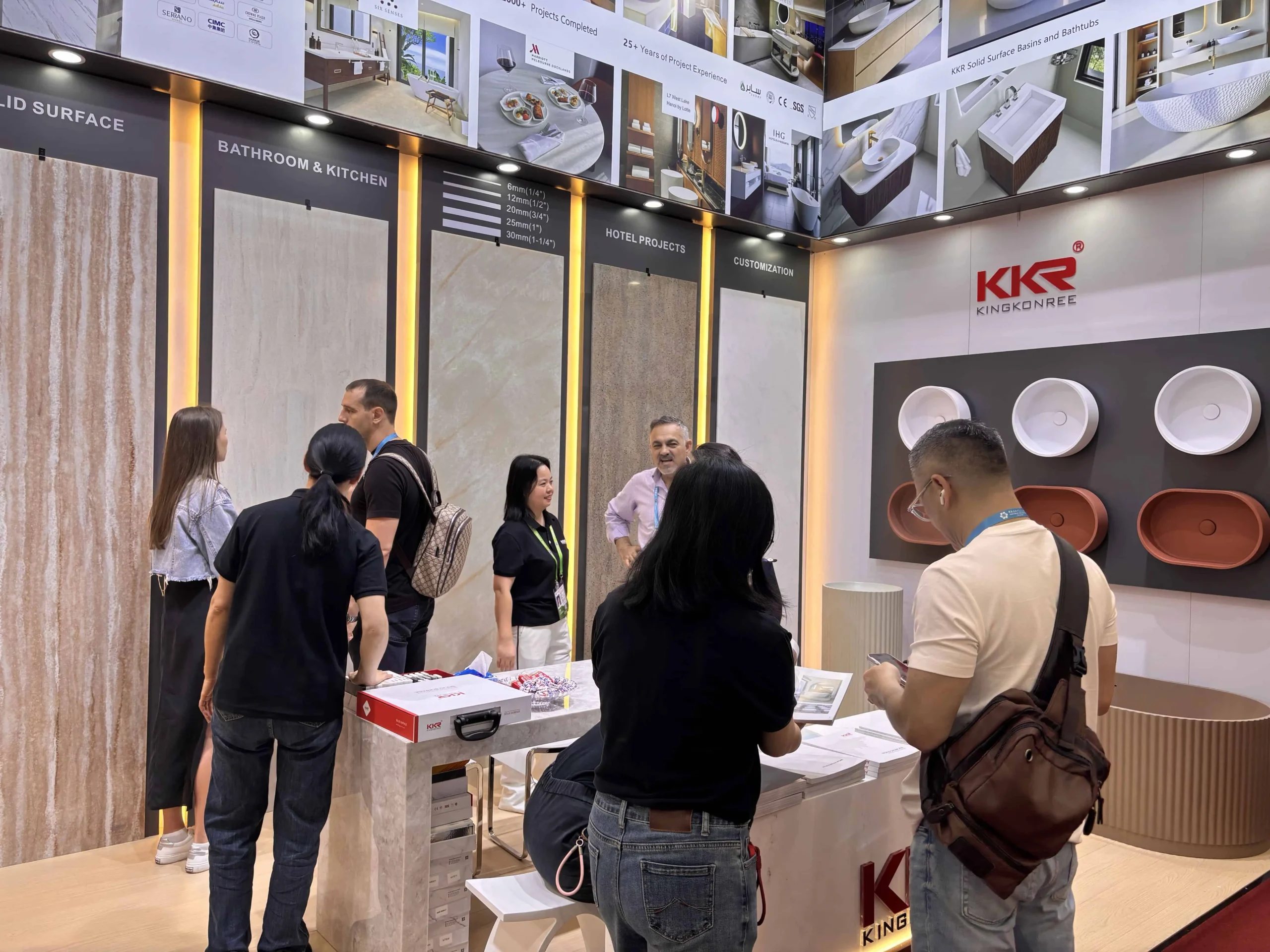
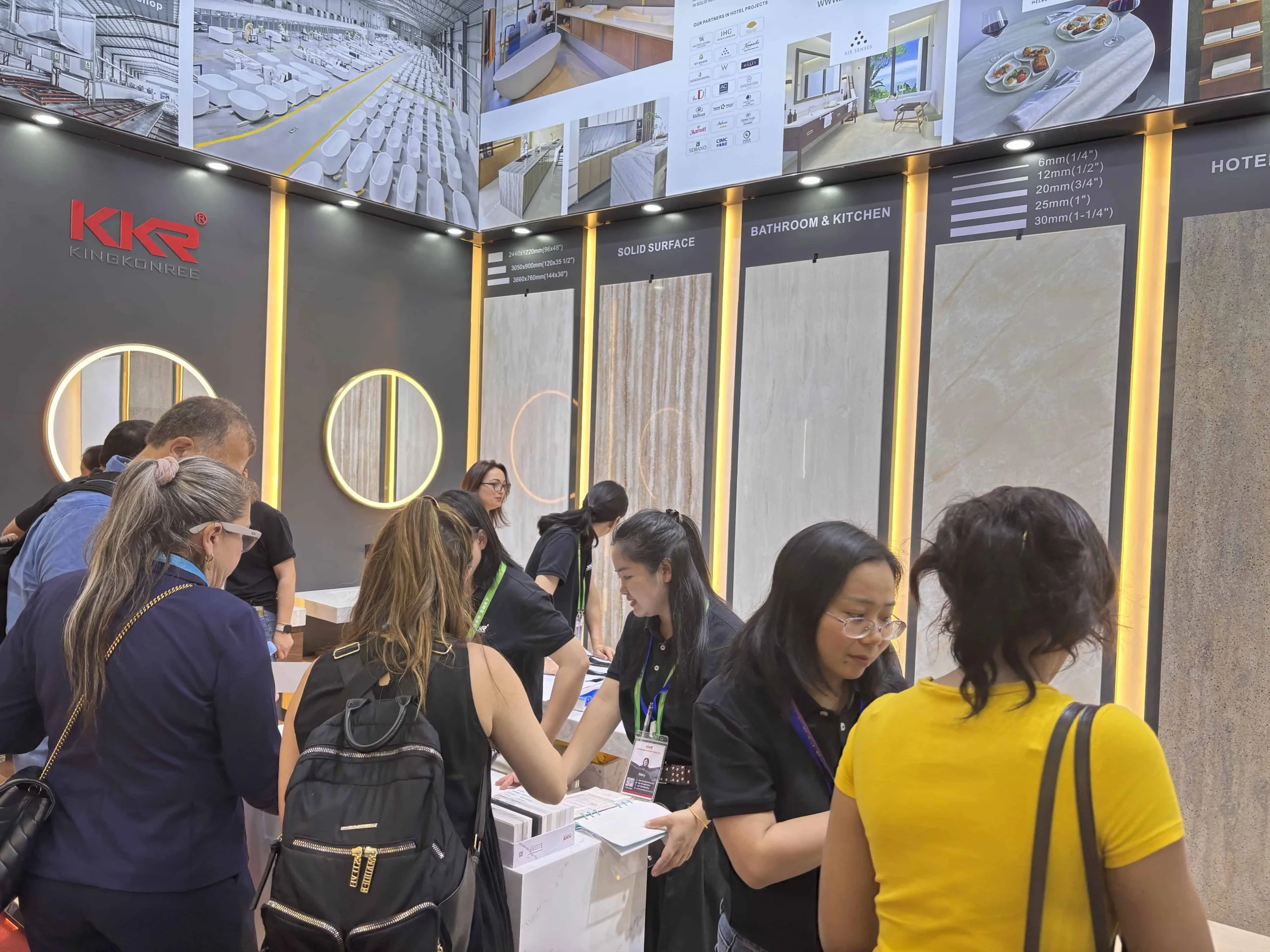
KKR has been building the manufacturing capacity to compete at scale. Now it's building the design intelligence and service infrastructure to compete at the premium end of the market.
The 2026 "Integrated Living" Collection isn't a product launch — it's a statement about where Chinese solid surface manufacturing is heading: from low-cost volume player to full-spectrum design partner for the world's architects, designers, and procurement teams.
Whether you're renovating a boutique hotel in Austin, equipping a healthcare facility in Toronto, or designing a luxury residence in Sydney — the material question is increasingly answered by solid surface. And the manufacturer question increasingly leads back to Shenzhen.
About KingKonree International Surface Industrial Co., Ltd
KingKonree International Surface Industrial Co., Ltd is a leading global solid surface supplier headquartered in Shenzhen, China, with a dedicated US support center in Sheridan, Wyoming. With a 15,000m² production base, KKR specializes in 100% acrylic solid surface sheets, seamless sanitary ware, and custom fabricated solutions for residential, hospitality, and healthcare applications. The company is committed to innovation, environmental sustainability, and providing one-stop solutions for clients worldwide.
Visit KKR at Booth 9.1I40-41, Canton Fair, April 23–27 | https://www.kkrstone.com/