






Can you remember the last time you checked into a hotel? What was the first thing you did? If you are like most people, I am you dropped your bags on the bed and walked straight into the bathroom. You checked the water pressure, looked at the towels, and most importantly, evaluated the tub at a glance.
If that tub looks stained, has moldy grout lines or feels like plastic when you tap it, well, the luxury feel of the entire room goes in the air.
For developers and project managers of commercial properties, this means the pressure is on. You need a bathtub that feels like a million dollars under a guest’s hand but its should not cost you a fortune in structural reinforcements or 2 a.m. Maintenance calls.
It becomes a high stake calculation when you think about selecting the best bathtub material for a commercial project. This means if you pick a tub that is too heavy, your structural costs can become too high. And if you pick a bathtub that is too fragile your maintenance team will be patching chips every time a guest drops a shampoo bottle.
Architects, building contractors, designers, and procurement teams have to understand the advantages and drawbacks of different materials of these bathtubs. By keeping into considerations various aspects of these materials their projects look great and perform well for guests and residents.
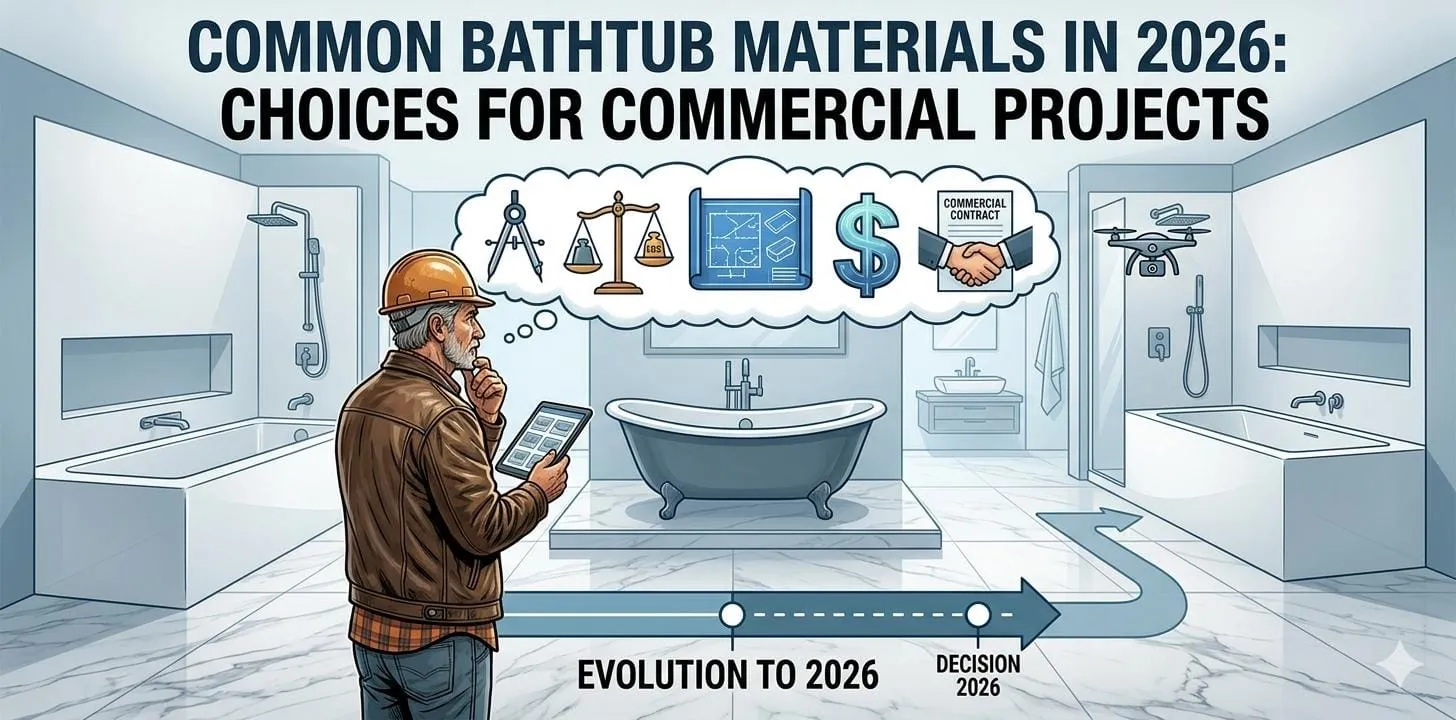
The following article covers the same topic. It will look at what are the common Bathtub Materials in 2026. It will also highlight the pros, cons, and cost considerations of these bathtub materials for commercial projects.
So, lets read on.
Evolution of Tactile Luxury – Material Standards Now Define the Guest Journey
In 2026, the industry has moved past the idea that a bathroom is only a functional space. It is now viewed as the emotional center of a hospitality project.
In the luxury design industry many experts have highlighted that the quality of the wet zone is one of the most direct ways to create value for guests.
Same has been mentioned by David Rockwell. He is the founder of the Rockwell Group. It is an architecture and design studio. Rockwell lays stress on the fact that design should prioritize how guests feel rather than just how a space looks.
Jennifer Kolstad is the Global Creative Director at HKS Architects. She has frequently highlighted that the quality of the wet zone is the most direct way to signal value to a guest.
“In luxury commercial projects, the weight, texture and hygiene of the bathroom surfaces are non-negotiable. Guests in 2026 are highly sensitive to authenticity. They can distinguish between a hollow, plastic-feeling tub and a solid stone-resin piece the moment they touch it. That tactile feedback is what validates the premium they are paying for the room.”
Similarly as per the insights from 2026 Hospitality Design Forecasts:
“In 2026, the ‘Spa-ification’ of the hotel bathroom has turned material selection into a high-stakes decision. Guests are no longer satisfied with clinical, white boxes. They want sensory engagement.”
Popular Bathtub Materials: Pros and Cons
When we explore the market of bathtubs there are several different materials you will often see. Each has its own strengths and weaknesses.
Knowing and understanding them helps you make smart choices for commercial use.
1. Acrylic Bathtubs:
This can be called the high-volume workhorse. Acrylic has been the most used material for bathtubs for decades. It still holds a massive share of the market for mid-range hotels and standard residential builds.
These are made from vacuum-formed sheets of acrylic. They are usually reinforced with fiberglass. They have resin on the underside.
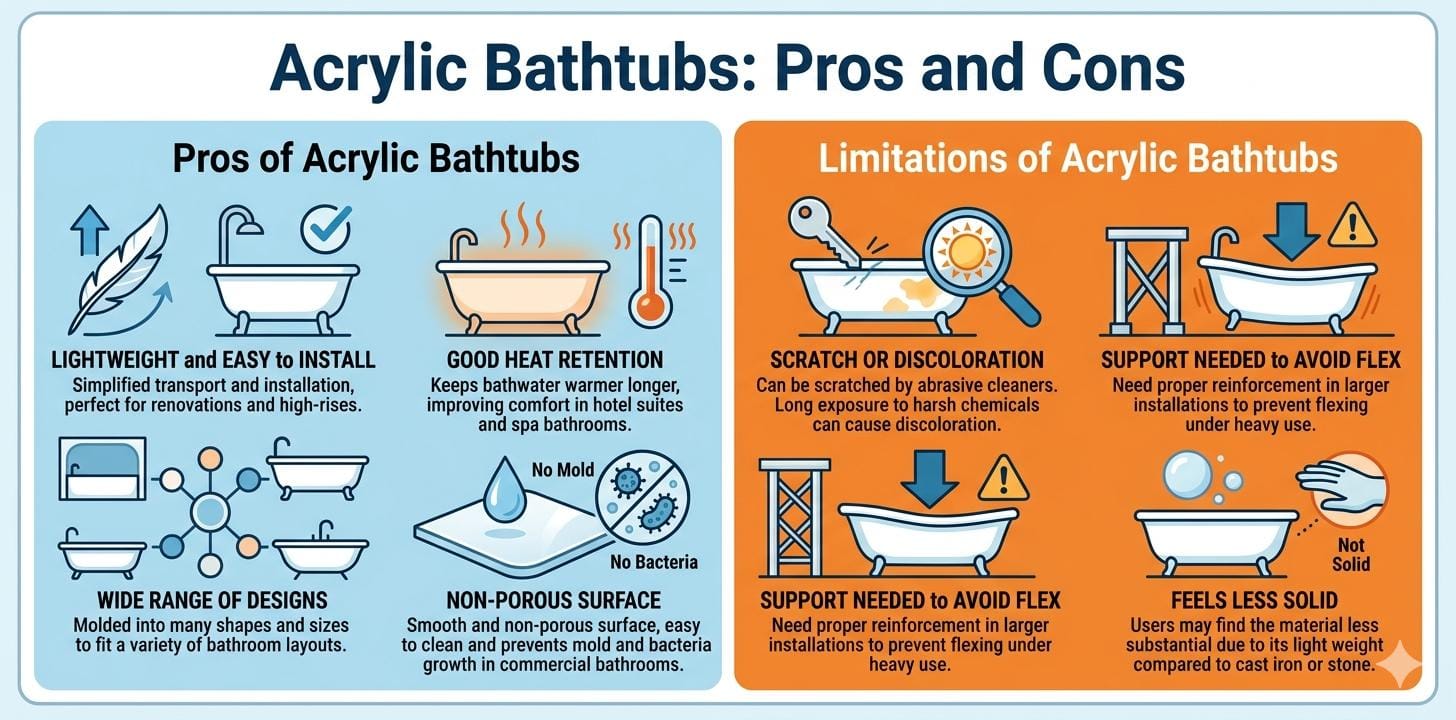
Advantages of Acrylic Bathtubs
• Lightweight and Easy to Install:
Tubs made from acrylic materials are much lighter as compared with their competitive materials like cast iron or stone. This feature makes them simpler to transport and install in high rise hotels or renovation projects where weight matters.
• Good Heat Retention:
Acrylic bathtubs keep bathwater warmer for longer time than some metal tubs. This improves guest comfort in hotel suites and spa bathrooms.
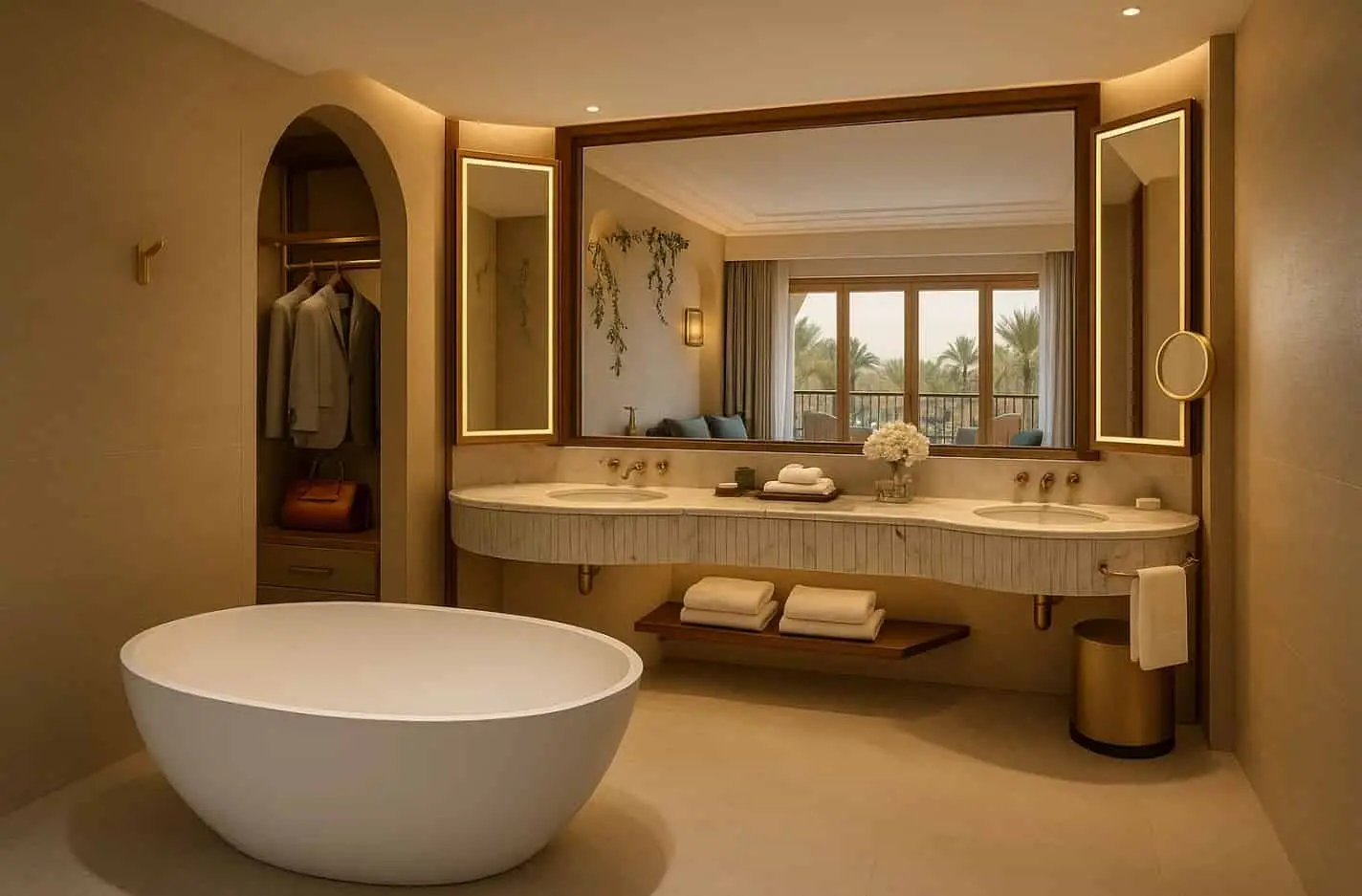
• Wide Range of Designs:
Acrylic material can be molded into many shapes and sizes. This includes freestanding and built in styles. They can fit in a variety of bathroom layouts.
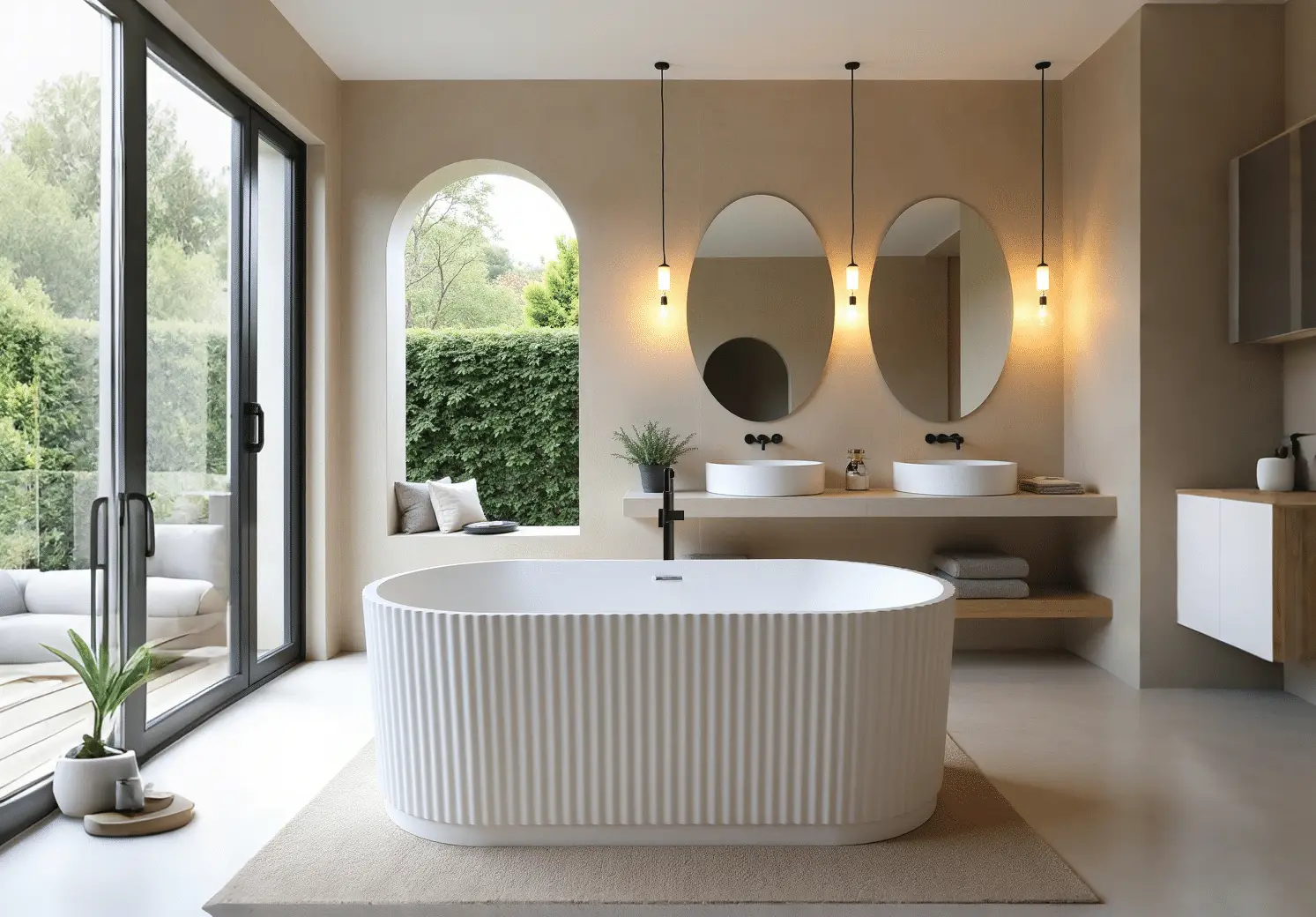
• Non Porous Surface:
Acrylic surface is smooth and non-porous. Hence it is easy to clean. It also does not allow water to seep in. This characteristic helps in preventing growth of mold and bacteria. This is a much need consideration in commercial bathrooms.
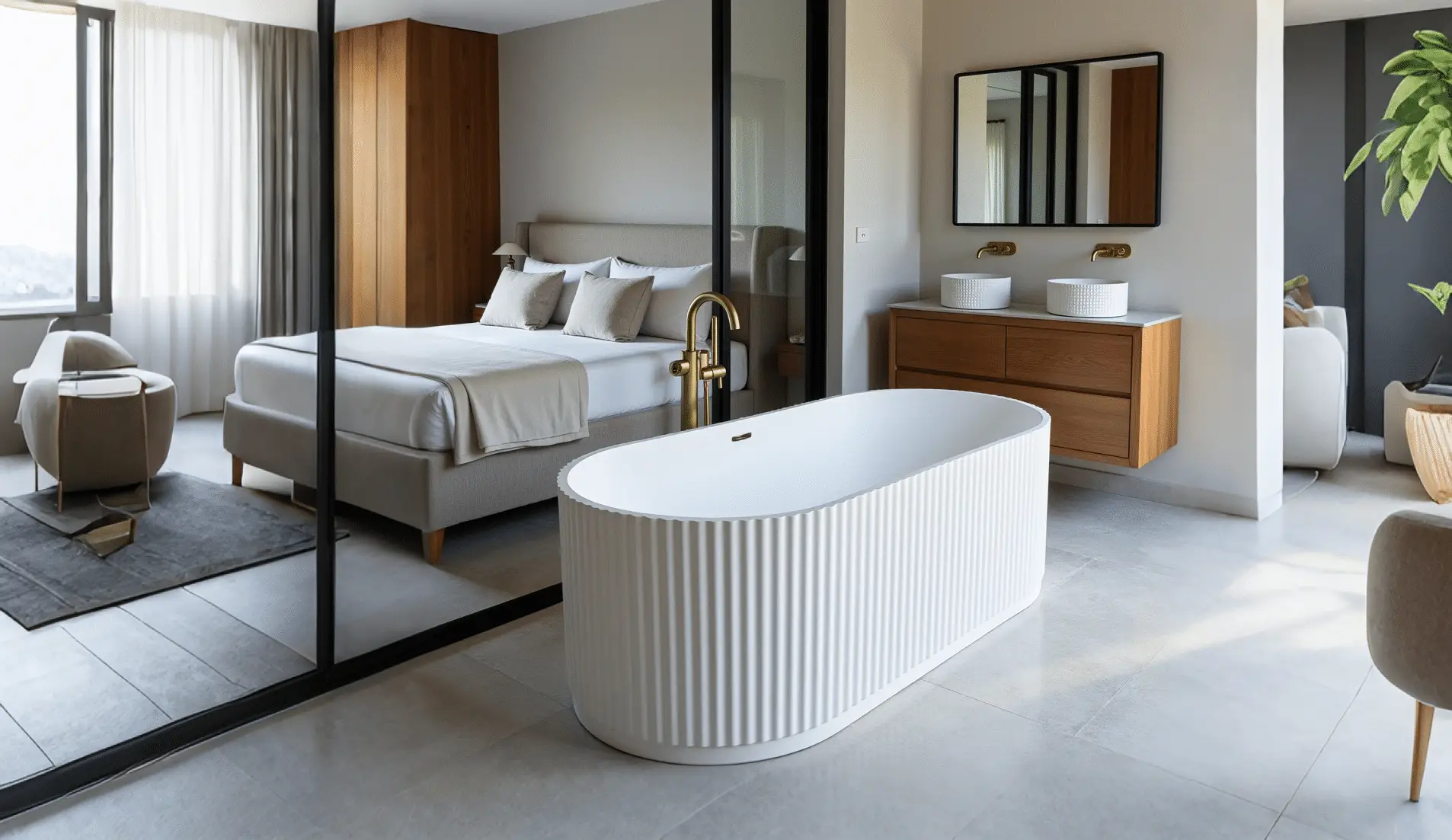
Limitations of Acrylic Bathtubs
• Scratch or Discoloration:
Acrylic surfaces can be scratched by abrasive cleaning products. If exposed to harsh chemicals and put to long use they may get discolored.
• Support Needed to Avoid Flex:
In larger installations, acrylic tubs need proper reinforcement underneath. If not they can flex under heavy use.
• Feels Less Solid:
Some users find that the touch of acrylic material in bathtubs is less substantial. This is due to its light weight as compared with heavier materials like cast iron or stone.
2. Cast Iron Bathtubs
This is a very durable and long lasting material when it comes to bathtubs. For people, who are building a legacy 5-star hotel or a luxury heritage property, cast iron is like the gold standard for durability.
Cast iron bathtub is made from molten iron. It is poured into a mold. Then coated with a thick layer of porcelain enamel.
Advantages of Cast Iron Bathtubs
• Extreme Durability:
Cast iron is one of the longest lasting bathtub materials. It has the ability to remain functional for 50 years or more in many cases.
• Excellent Heat Retention:
Cast iron holds heat very well. Hence, water stays warm longer. This is a very attractive feature for boutique hotels and luxury suites that guests love to have.
• Classic Outlook:
Cast Iron bathtubs have a traditional glossy finish. There is a solid feel. These physical features make cast iron tubs well suited to upscale projects and historic renovations.
Limitations of Cast Iron Bathtubs
• Very Heavy:
Cast iron tubs are extremely heavy. They are sometimes hundreds of pounds in weight. Therefore the installing a cast iron tub often requires reinforced floors and more labor for proper installation.
• Higher Shipping and Installation Costs:
Made from a heavy weight material, these bathtubs also have higher logistics costs. Especially in high rise or retrofit projects.
• Chipping and Cracking of Enamel Coating:
As mentioned earlier, cast iron tubs have iron coated with a layer of enamel. This creates a smooth finish. But if the enamel surface chips, the iron underneath can rust fast. Therefore you need to repair the chip quickly.

3. Solid Surface Bathtubs
Solid surface bathtubs are made from engineered composites of acrylic resin and natural minerals. This forms a single molded piece that has a smooth and uniform finish. These tubs are often chosen for modern and flawless bathroom designs. They offer both durability and flexibility in shape and styling.
Many commercial projects now use engineered or solid surface materials that can be integrated into other bathroom elements like the shower panels, wall surfaces and custom vanity tops. This helps create a unified look throughout the space.
Advantages of Solid Surface Bathtubs
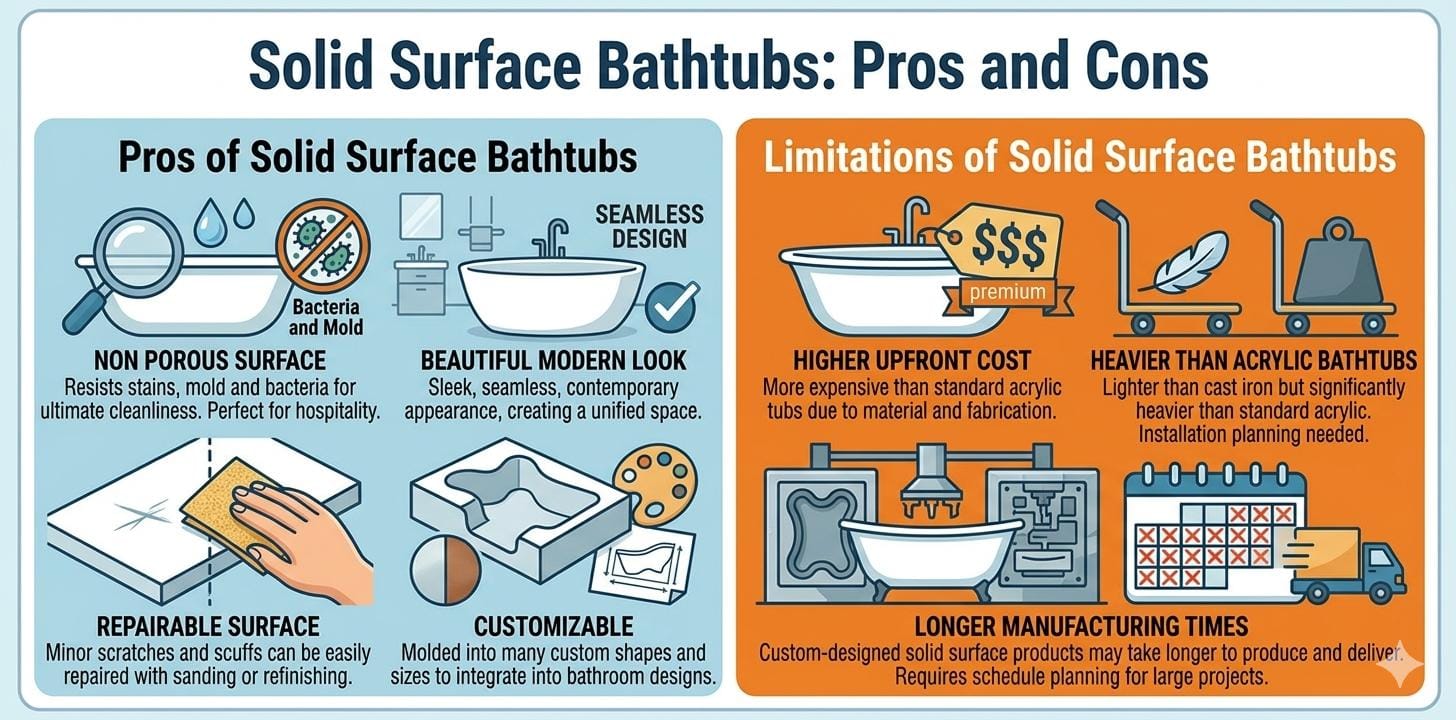
• Non Porous Surface:
Solid surface tubs resist stains, mold and bacteria because they are non-porous. It is very useful in hospitality and commercial spaces where cleanliness is critical.
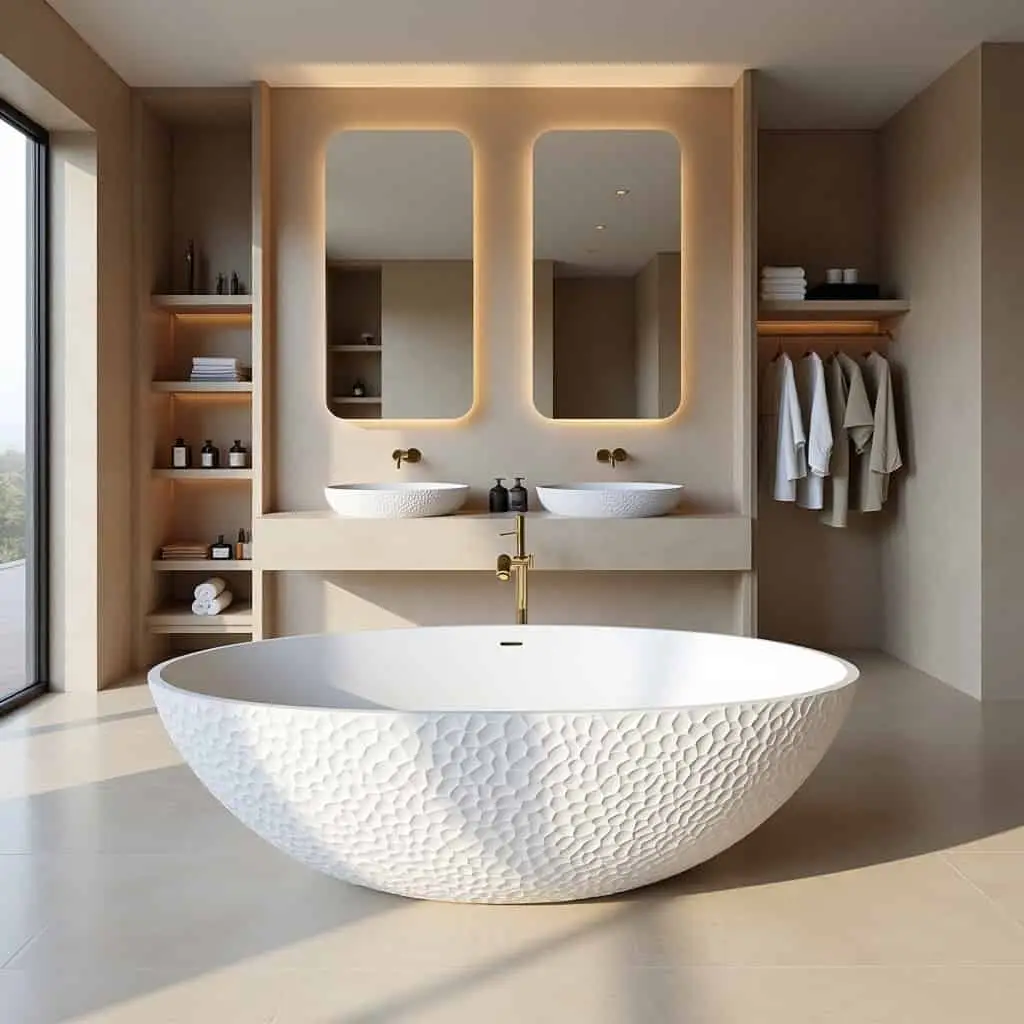
• Beautiful Modern Look:
Bathtubs made from this material does not have seams and joints. This makes cleaning easier. Moreover, it keeps the design clean and contemporary.
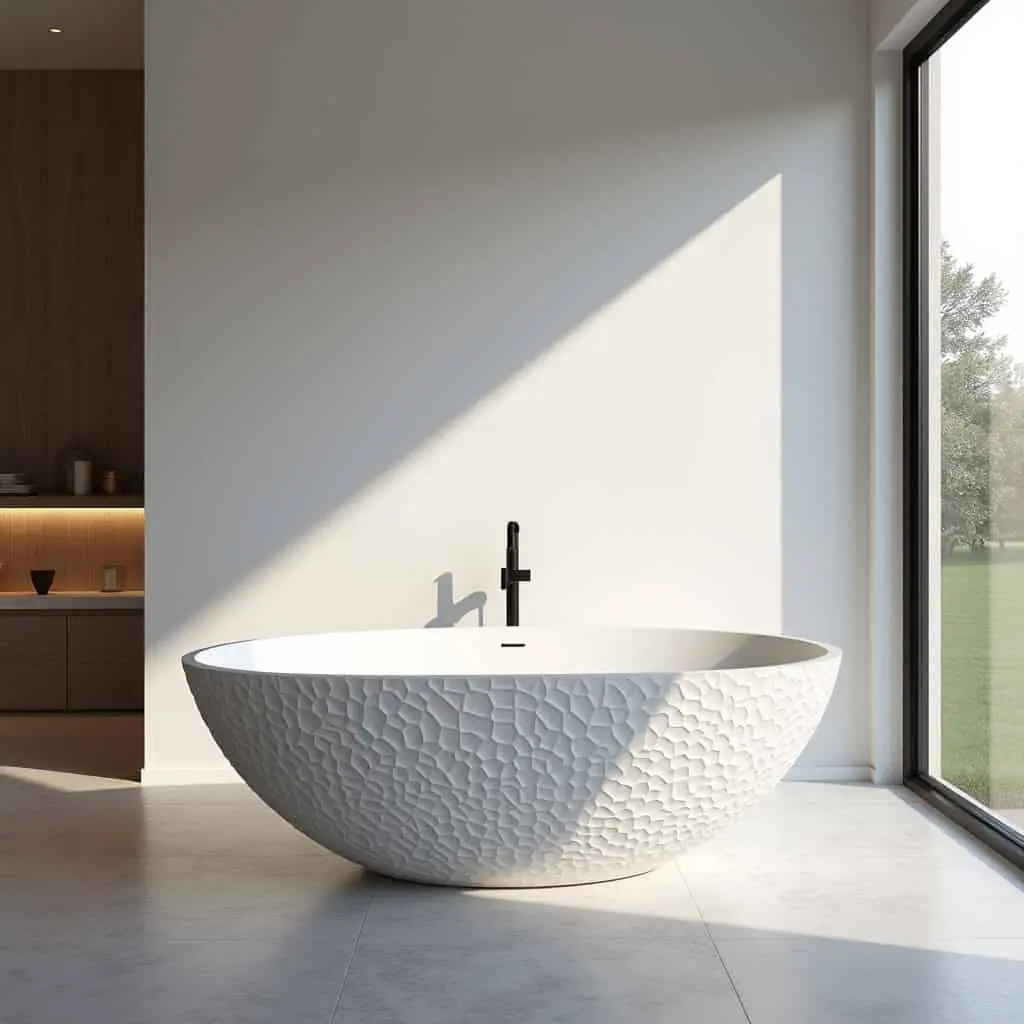
• Repairable Surface:
Minor scratches can often be repaired with sanding or refinishing. This ensures an extended life of the tub.
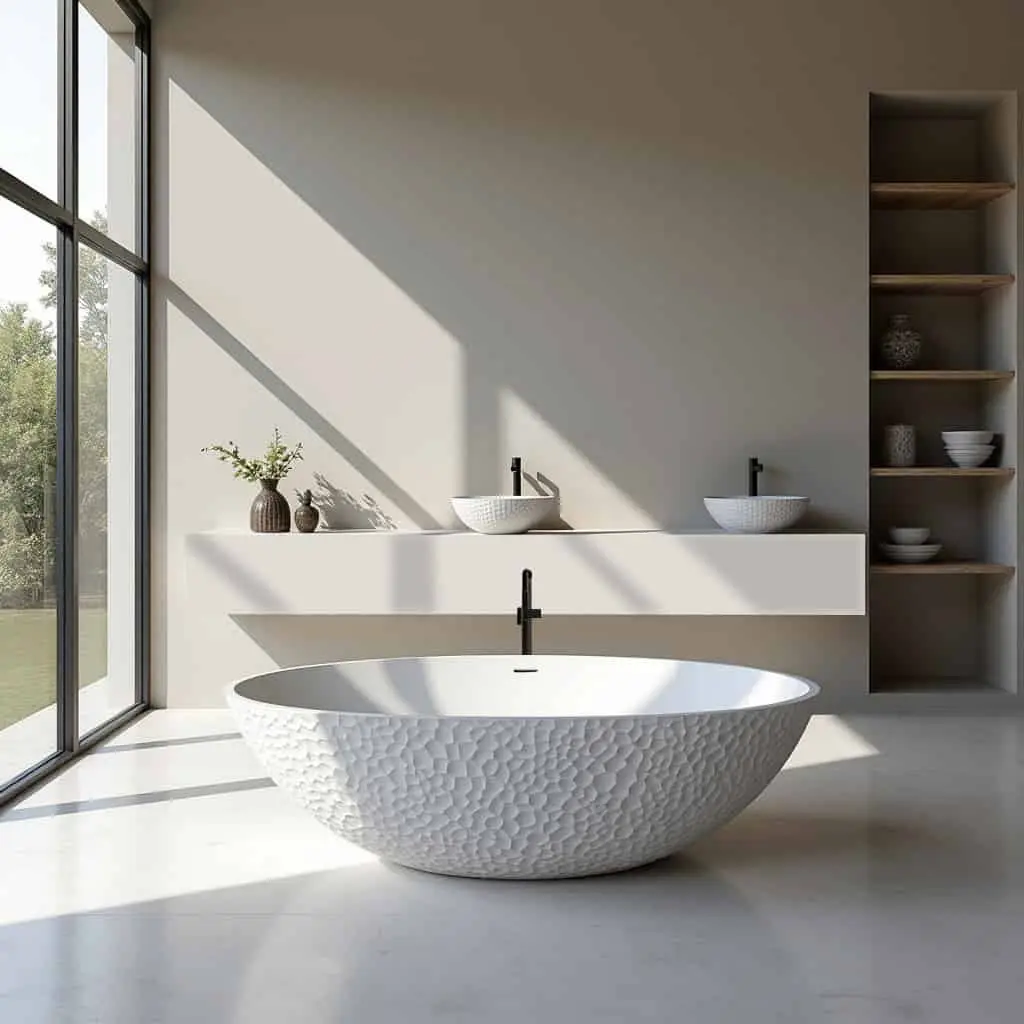
• Customizable:
This material can be molded into many shapes and sizes. This includes integrated tubs that flow into other bathroom surfaces.
Limitations of Solid Surface Bathtubs
• Higher Upfront Cost:
Solid surface bathtubs are more expensive than standard acrylic tubs. This is due to material quality and fabrication costs.
• Heavier Than Acrylic Bathtubs:
These tubs are less heavy than cast iron but more heavy than acrylic bathtubs. Therefore they may often require careful planning in installation.
• Longer Manufacturing Times:
Custom designs made from solid surface may take longer to produce and deliver. Hence this requires schedule planning for large projects.
4. Stone and Stone Composite Bathtubs
These are bathtubs that are made from engineered stone or natural stone composites. This may include mixtures of crushed stone, minerals and resins.
These materials can mimic real stone. They also offer a smoother and sealed surface.
Advantages of Natural Stone Bathtubs
• Luxurious Outlook and Feel:
Natural stone and composites have a rich presence. This works well in high end spas and exclusive hotel suites.
• Non Porous and Easy to Clean:
These surfaces resist moisture and stains when properly sealed,
• Custom Shapes:
Stone composites can be formed into unique designs. This gives each project a distinct identity.
Limitations of Natural Stone Bathtubs
• High Material Cost:
Stone tubs are expensive compared with acrylic or fiberglass materials.
• Very Heavy:
They are quite heavy in weight. Hence structural support, professional fabrication and careful handling during installation may be required.
• Professional Installation Required:
Because of the weight and precision required, these tubs often demand expert installation teams.
Snapshot Comparison of Different Bathtub Materials
| Feature | Acrylic | Cast Iron | Solid Surface (KKR) |
| Typical Lifespan | 10–15 Years | 50+ Years | 25+ Years |
| Maintenance | Moderate (Scratch prone) | Low (Hard finish) | Very Low (Renewable) |
| Repairability | Difficult | Hard (Chipping is permanent) | Easy (Sanding/Buffing) |
| Heat Retention | Good | Excellent (once warmed) | Excellent (Instant) |
| Installation | Very Easy | Very Hard | Moderate |
Why KKR Solid Surface is Winning the B2B Market?
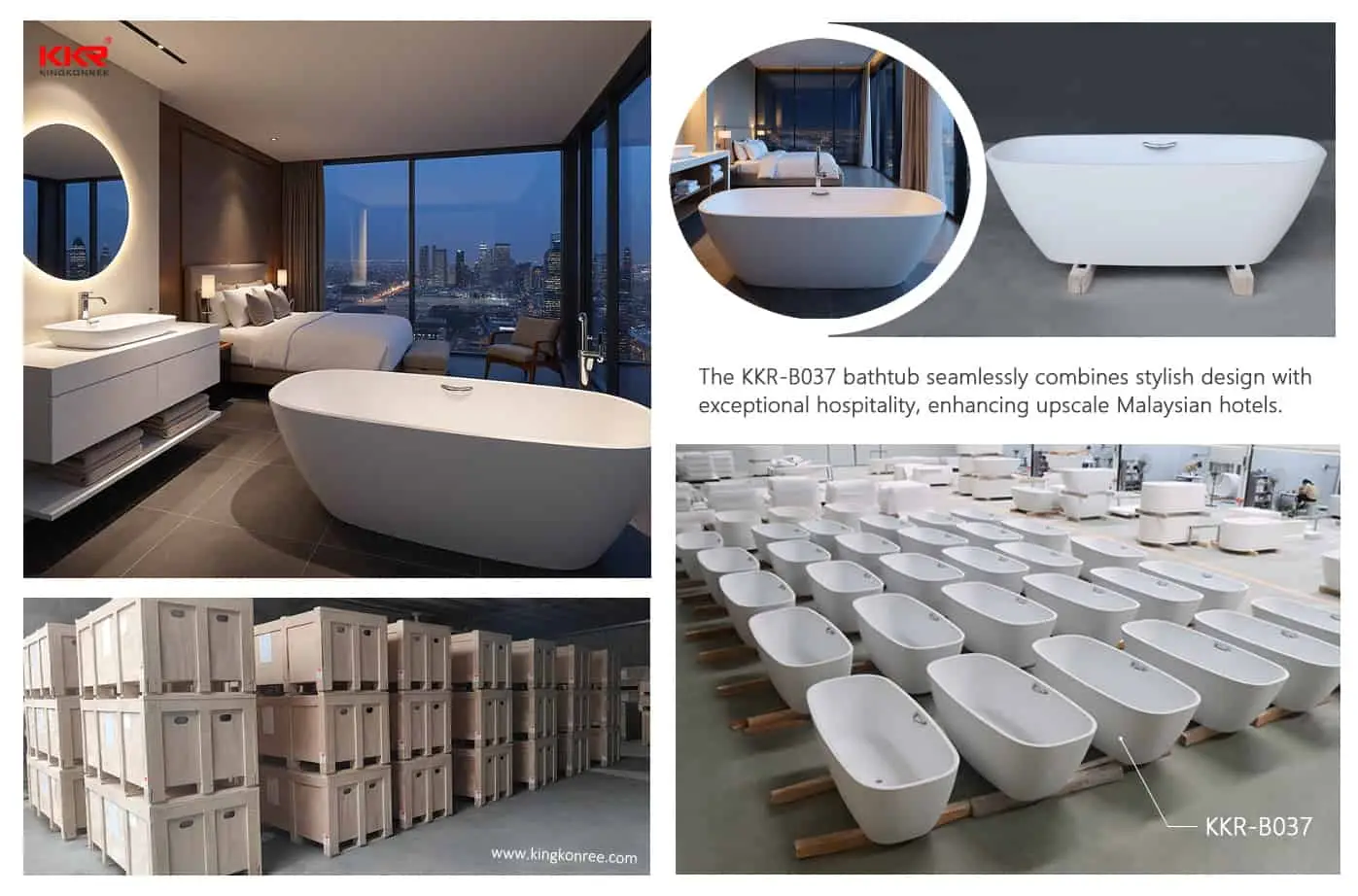
In 2026, leading solid surface manufacturer like KKR have refined solid surface to meet specific commercial needs that other materials just cannot reach out to.
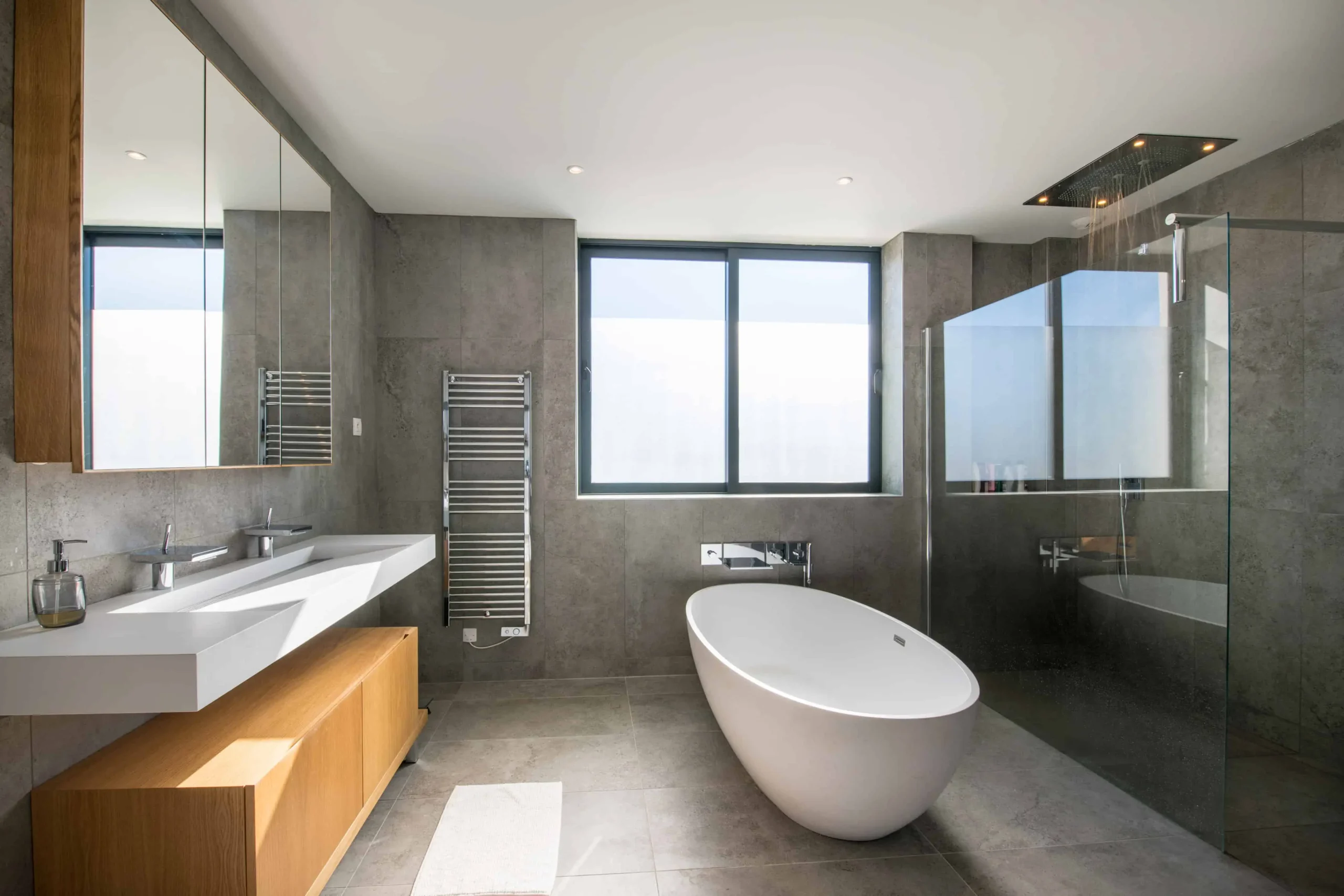
Silica-Free:
In 2026, new building and hospitality regulations focus on health and safety. KKR being a premium manufacturer has started making products that have 0% crystalline silica content. This makes them safer for the environment and for the workers installing them.
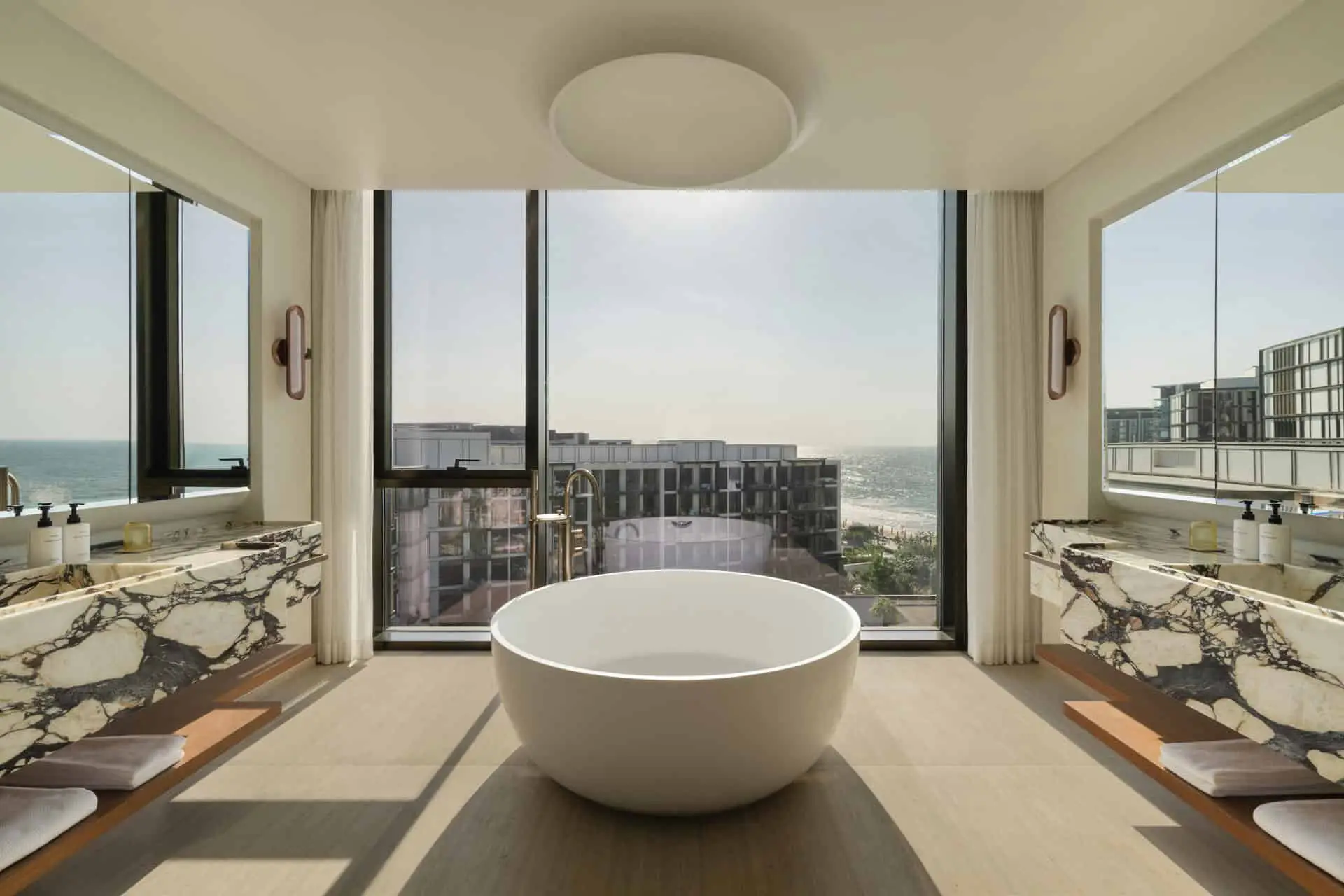
Customization at Scale:
As an industry standard in hotels, a tub that is exactly 1650mm to fit a specific alcove is often required. Solid surface can be custom-sized and colored (matte black, concrete grey, or classic white) even for bulk orders.

Thin-Edge Design:
One of the biggest trends this year is the thin-edge tub. It creates a lighter, architectural look. Solid surface is strong enough to maintain a 10mm edge without cracking, which acrylic usually can’t do without feeling flimsy.
B2B Support:
Companies like KKR offer direct project support, meaning they work with your architects on the CAD drawings and handle the logistics of getting 50+ tubs to a job site on time.
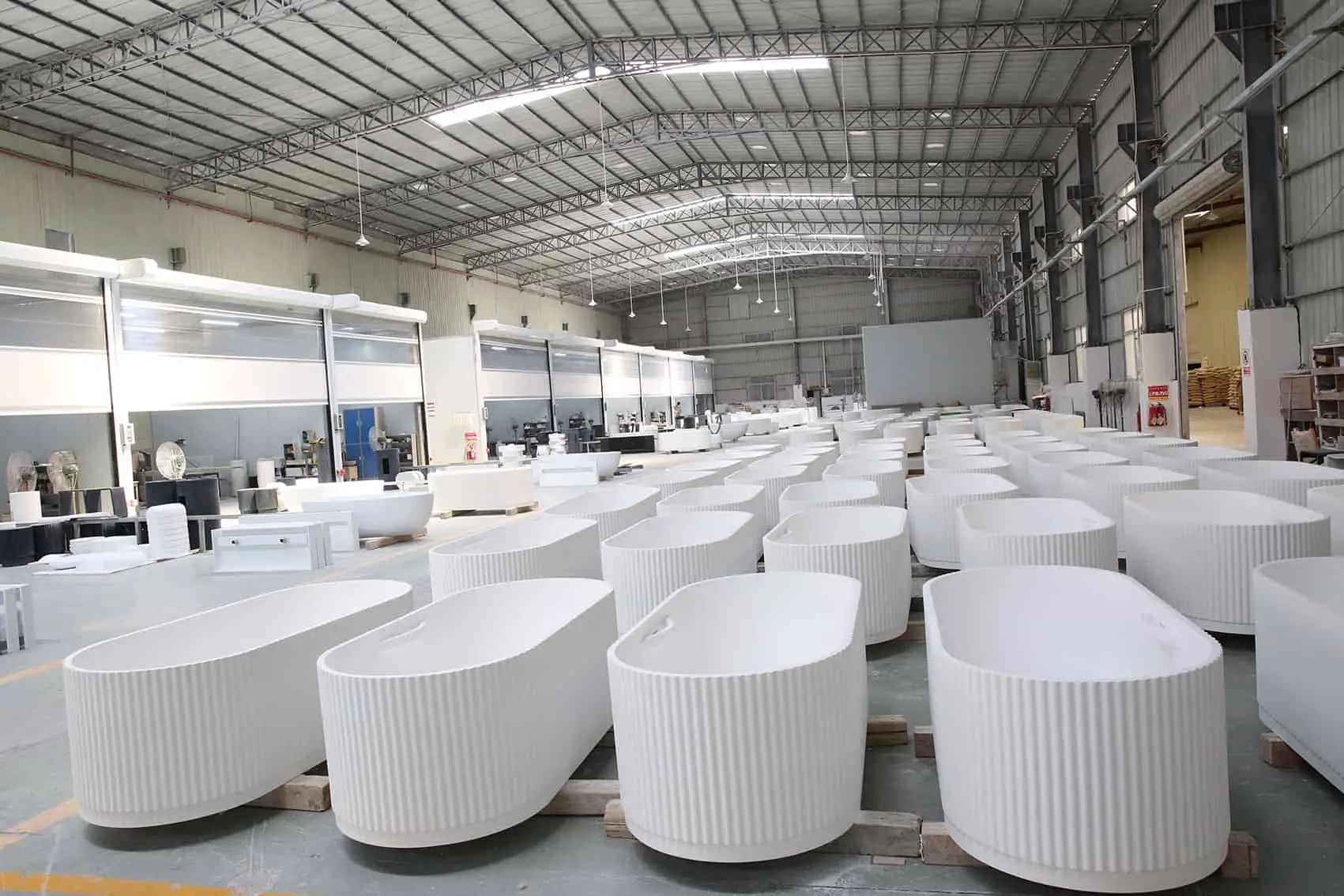
Cost Considerations
When you are looking at your budget, don’t just look at the price of the tub. Consider these extra costs:
Shipping & Logistics:
Shipping 100 cast iron tubs is a logistical nightmare compared to 100 acrylic or solid surface tubs. You’ll pay significantly more in freight and fuel surcharges.
Labor:
An acrylic tub is a two-person job. A cast iron tub often requires a crane or a reinforced lift. Over a large project, this labor difference can be tens of thousands of dollars.
Floor Reinforcement:
If your building wasn’t designed for 500lb tubs, adding cast iron can require structural steel or extra wood framing. Solid surface and acrylic usually don’t require this.
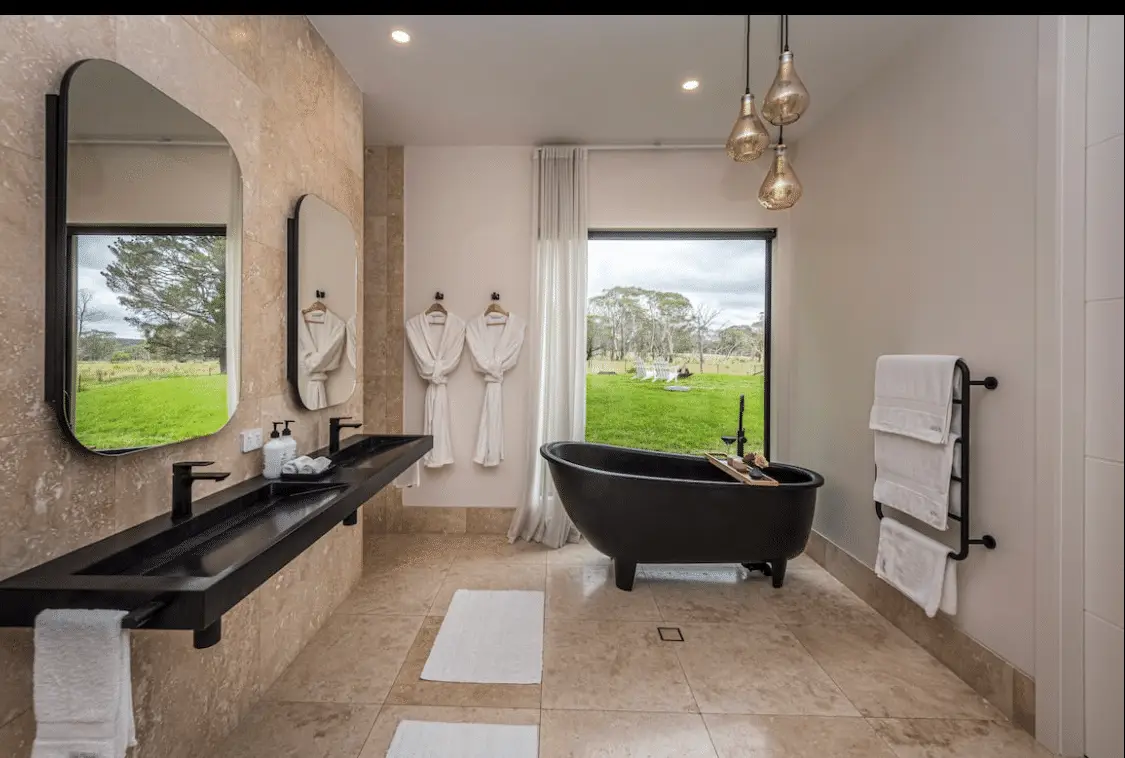
Maintenance and Lifecycle
Like mentioned above, the acrylic and solid surface tubs tend to be easier to maintain and repair. Features like these make them attractive for commercial spaces where bathrooms need to look great for many years. Cast iron is a durable choice. However, it is harder to work with if repairs or renovations are needed.
Stone tubs require careful sealing and cleaning to protect the surface.
Choose the Best Material for Bathtubs
When you are undertaking a commercial bathroom project the choice of bathtub material can have a bigger impact than you think. It can influence its performance, outlook and lifecycle costs.
So, there is a need to understand the strengths and weaknesses of each bathtub material used. It can enable architects, contractors and procurement teams. They can make better and smarter decisions for their projects with better efficiency and effectiveness.
For hotels and luxury properties, the acrylic solid surface bathtubs are best. They are engineered by reputable manufacturers like KKR. These provide an excellent option with durability, hygiene, design flexibility and long term performance.
By weighing factors like maintenance, weight, cost, and installation complexity, project teams can deliver bathrooms that are both functional and beautiful.
FAQs
• What are the most common materials used for bathtubs installed in hotels?
The most common types of materials used in the bathtubs of hotels are acrylic, cast iron and solid surface composite materials. They are best suited for their hygienic properties, durable features and design versatility.
• As compared to cast iron how durable are acrylic bathtubs?
Bathtubs made of acrylic material are lighter. They are easier to install and maintain. However, they may be less durable in long term. Especially when compared with cast iron. Cast iron can last decades with minimal issues.
• Are solid surface bathtubs suitable for commercial projects?
Yes, sure. They have the ability to resist stains and bacteria. Additionally they can be customized and provide a unified finish that works well in hotel bathrooms.
• Can acrylic bathtubs be customized for unique bathroom layouts?
Absolutely, they can be. This is one of acrylic’s biggest advantages. It is flexible in design for custom shapes and integrated bathroom systems.
• How does maintenance differ between acrylic, cast iron and stone tubs?
Acrylic and solid surface tubs are easier to clean and repair. On the other hand cast iron and stone require specialized approaches. It sometimes requires more effort to maintain their finish.