






Introduction
Did you know that Granite, because of its deep Earth origins, has traces of radioactive elements? While this background radiation is not harmful to human beings, engineered solid surface countertops are free of it. For interior designers, picking either of the two options is a challenging but critical choice. In modern kitchen interiors, the countertop occupies the most visual real estate, making it the focal point of interior design.
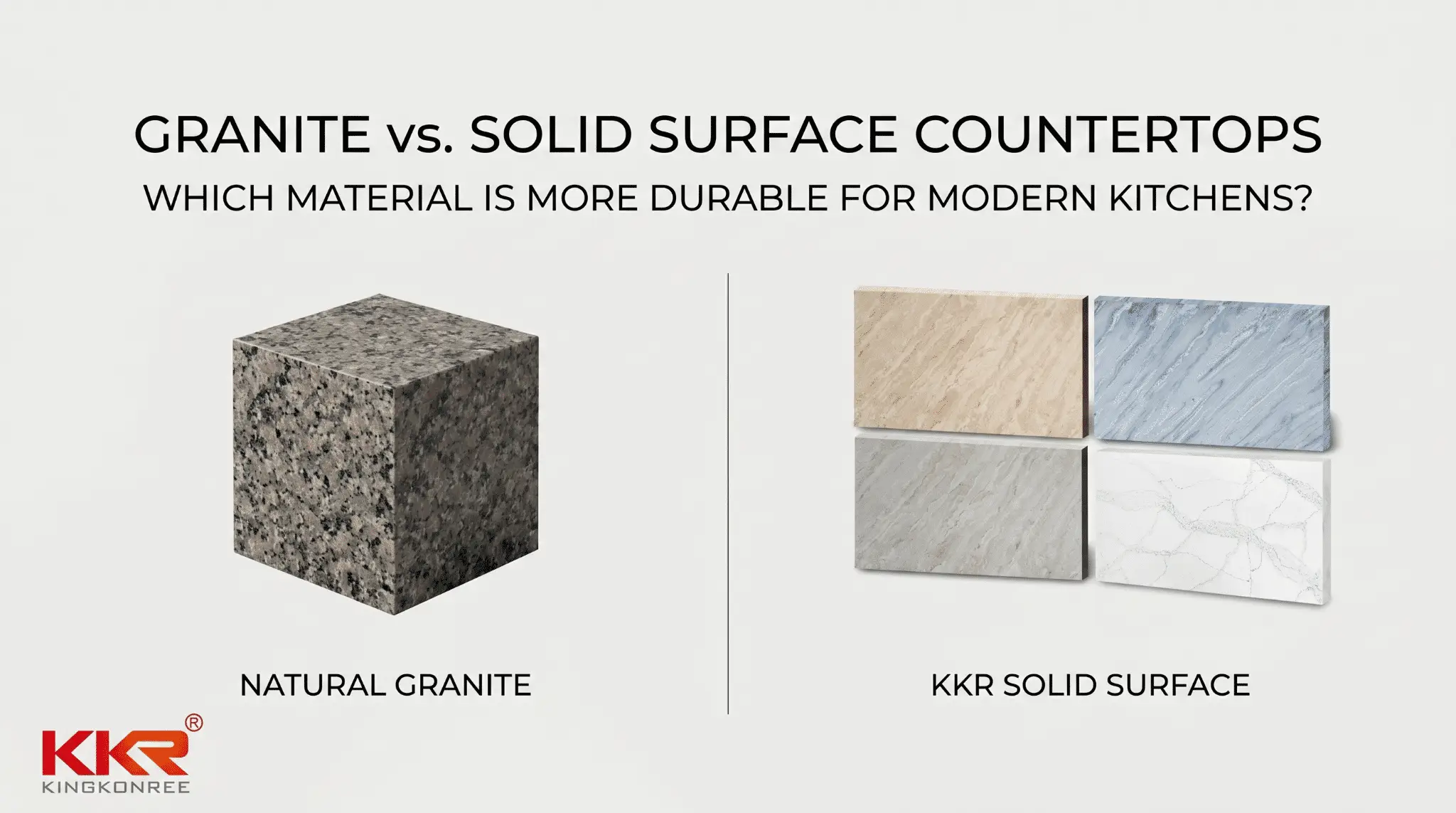
After aesthetics come properties, picking either of them requires evaluating the physical characteristics of the two surfaces, including liquid absorption, durability and heat resistance. The recent trend shows buyers are actively pursuing wellness-focused architecture. It makes non-porous surfaces with antimicrobial properties highly relevant. Everything from modern kitchens to pharmaceutical applications can utilize these medical-grade surfaces.
To align with health-oriented consumers, modern manufacturers are shifting towards premium solid surface materials free from harmful dust particles like silica. This guide will help you understand both types of countertops in depth. It is designed to provide sufficient information on granite and solid surface countertops for educated purchase decisions.
Understanding Granite and Solid Surface Countertops
Granite Countertops
Origin of Granite Countertop Material
Deep in the Earth’s crust, the Granite rock is formed through a slow cooling and hardening process. It leads to the formation of stone made up of common earth minerals like quartz, feldspar and mica. Granite is extracted from the earth at quarries. These are located all around the world in countries such as India, Italy and Brazil. It’s the reason you will often find country of origin names with the material.
100% Unique Design
The process that takes millions of years for its formation is complex and random. It means that two granite countertops can never be the same. It’s a 100% natural product which ties a story behind every piece. The earthy character and intricate patterns are never a full match when engineers try to copy them into engineered material.
Strength and Hidden Details
Granite has a hard surface, which is scientifically measured on the Mohs mineral hardness scale. It scores 7 on the standard, which means it provides excellent structural durability for everyday use. It’s important to consider the hairline mineral separations or fissures that are naturally present in the granite material. They need to be carefully evaluated during the fabrication process to avoid creating weak areas.
Applications
- Luxury Residential Kitchens
- Hotel Vanity Tops
- Restaurant Counters
- High-End Commercial Interiors
Solid Surface Countertops
How Solid Surface is Engineered and What it Is
Solid surface is a manmade material which consists of 66% natural earth powders (Aluminum Trihydrate) and 33% 33% high-performance resins (acrylic or polyester). These are mixed together, heated, and hardened at temperatures above 140F. The process creates a solid surface material that is homogenous, creating a non-porous surface for hygiene-sensitive applications.
Design Consistency and Flexibility
The main difference between natural stone and engineered surface is its consistency across batches and within the batch. Its material has the same color and patterns across the cross-section of the countertop. Even if the surface gets worn with time, a simple buff will revive the material to its original condition. The most premium versions use PMMA acrylic, which allows the material to have thermoformability. It means that the solid surface material can be molded into complex, curved or 3D shapes.
Common Applications of Solid Surface Countertops
- Hospitality Projects
- Healthcare Environments
- Commercial Kitchens
- Retail Counters and Reception Desks
Comparing Durability and Performance
Scratch and Impact Resistance
For everyday use, granite offers incredible toughness. This is one of the hardest countertop materials you can buy. It can handle wear and tear that happens in kitchens from knives and daily cooking tasks. However, despite being hard, it is still brittle in nature. Any sudden pressure or impact can cause it to break into small pieces called chips. Fixing it would require a profession that uses diamond polishing equipment and specialized glues to repair the damage.
Engineered solid surface material is considered softer in comparison. They are likely to get cuts or marks on the top layer. It can get dull from abrasive cleaning and become damaged from the dropping of sharp tools. However, their softer nature allows them to be easily fixed and renewed. The minor nicks or scratches are easy to remove through a simple abrasive pad, which can return it to as-new condition.
Heat and Moisture Resistance
When it comes to heat resistance, granite offers superior properties. It can handle up to 680F, which means that users can place hot cookware directly on the stone without any damage. However, we do need to consider that the placement of a scorching hot pan over a cold slab can lead to thermal shock. The result is the development of tiny cracks in the entire slab, which can lead to fracture.
In comparison, solid surface material is much more sensitive to heat. Visible damage starts above 320F. It means that the user will have to utilize hot pads or trivets to protect the surface. In case the heat reaches the surface, it can cause the polymer matrix to melt, scorch or permanently discolor. But it’s highly repairable. You can simply scrub off the top layer and restore the original look. In case the granite cracks, the whole section would require replacement.
Hygiene and Maintenance
For an extraordinary 100% non porous surface, consider solid surface material for the countertop. They do not allow any liquid to penetrate the surface. It means there are no pathogenic microbes that can penetrate into the microscopic holes and start their growth. These are highly appreciated in public health and safety applications, earning NSF-51 certification. The official approval makes them suitable for commercial food preparation and healthcare facilities.
Natural granite comes with microscopic holes that are naturally formed within its structure. It absorbs liquids if the stone is not protected by special coatings. In the kitchen, dealing with cooking oil and acidic lemon juice is a common occurrence. Any spill results in dark, unremovable stains that allow bacteria to take hold. As granite ages with harsh, acidic, or rough cleaning practices, this eats away at the granite material and erodes the protective seals. It requires regular application of chemical sealing to protect the synthetic barrier and prevent contamination.
Design Flexibility
Granite is known for its visuals. The intricate veins that are formed deep within the Earth’s crust are its signature look. Its addition to any room results in a timeless luxury aesthetic. However, there is no control over the design. They are always found in natural Earth tones.
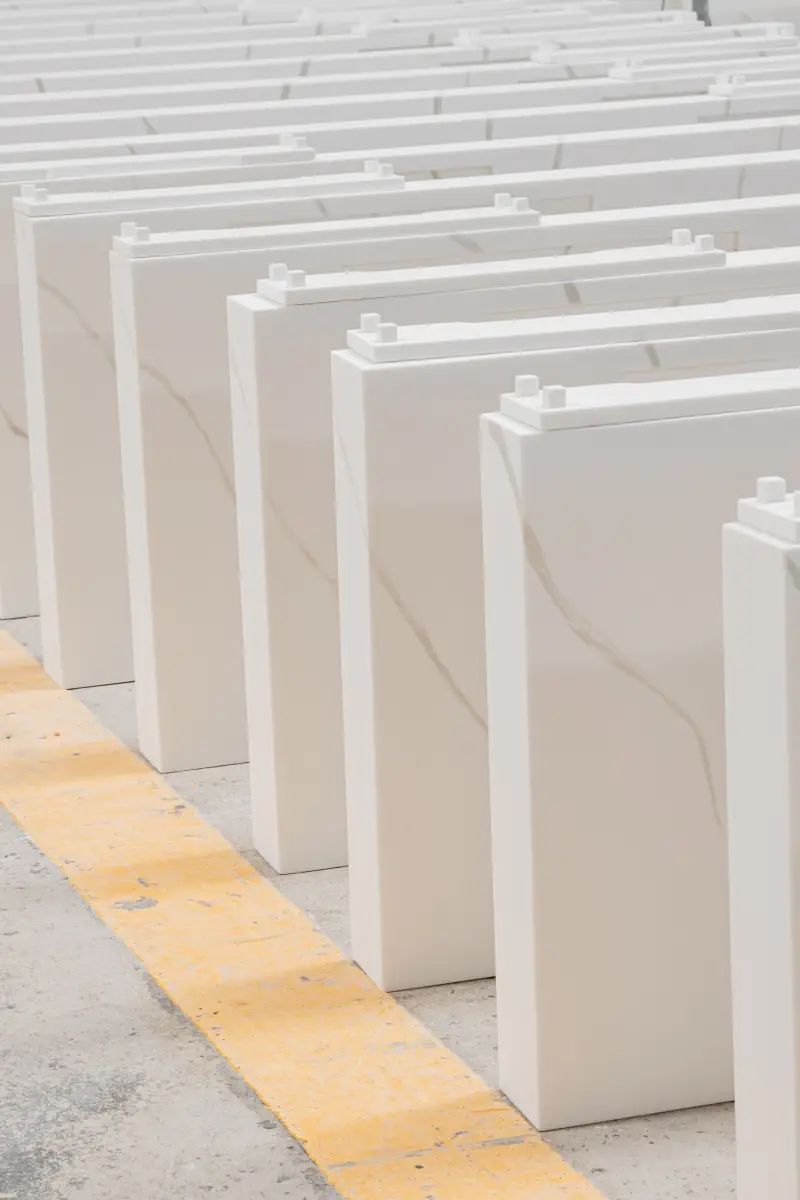
Modern engineered solid surface material offers more versatility in color and patterns. The manufacturer has complete control over the design. It is also the same across the whole cross-section. They allow users to match the color with their interior design and join together several pieces seamlessly. As per modern manufacturing methods and machinery, engineers have successfully copied extremely rare and expensive natural stones like Calacatta or Carrara marble. It gives the home a premium look without the constant upkeep.
Seamless Fabrication and Integrated Features
Invisible Joints
Solid surface material has no seams after it is welded together. Fabricators use special color-matched adhesives to create a homogenized look. The seams are not visible to the average eye. Since the joints are not visible, it makes the countertop look like a giant monolithic block.
In comparison, granite fabrication is limited to the stone that comes in the form of rigid slabs. They always require grout filling or other material, which creates lines interrupting the natural flow. Two adjacent countertops, especially in L-shaped or U-shaped layouts, have visible breaks in the natural pattern.
All-in-One Fluid Designs
As solid surfaces can be chemically fused together, they can integrate sinks and backsplashes with the countertop. It fuses together all the parts into a one smooth continuous area with no visible gaps or caulking lines. They even have water run-off grooves directly incorporated into the solid surface. As the surface is 100% water proof, it makes the material ideal to allow water to flow conveniently towards the sink. It is impossible to replicate with granite.
Practical Considerations for Installation and Maintenance
Weight and Structural Requirements
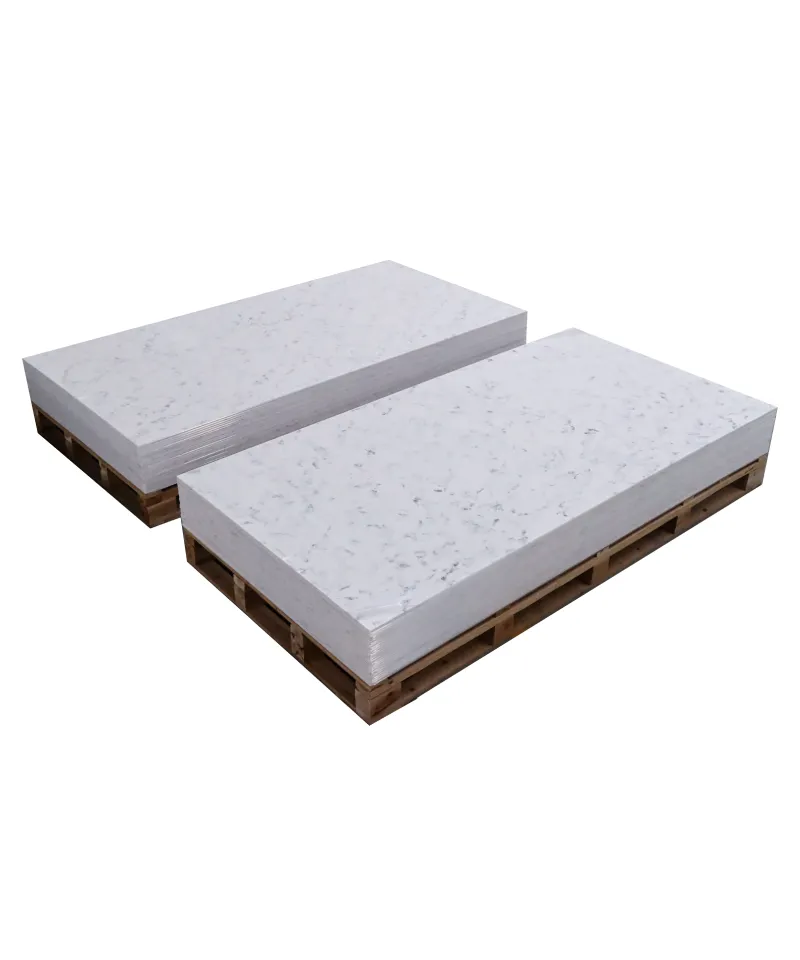
One of the major points that makes solid surfaces a go-to choice for most interior designers is their relatively lightweight, approximately 5 pounds per square foot. In contrast, granite is much more dense with 18 to 20 pounds per square foot. A typical 60 sq ft kitchen would need a granite countertop that weighs 1,300 pounds. That massive weight requires structural integrity. It takes the cost of cabinets up as they need reinforced bases to prevent wood from warping.
Granite is rigid and does not bend during transport; it requires careful handling. A slight fall can cause it to crack. In comparison, solid surface material is bendable. It holds its shape and offers better resistance to cracking under pressure.
Long-Term Care
Owning a granite countertop means regular maintenance. To maintain its polished look, it needs resealing every 6 to 12 months. You have to be careful and avoid the use of acidic and abrasive cleaners that can destroy the stone’s protective strip of sealant.
A solid surface, on the other hand, is essentially maintenance-free. There is no need to apply protective coatings, as the material itself is enough to repel liquid. You only need soap and warm water to clean up the surface.
Cost Comparison: Granite vs Solid Surface
Initial Material Cost
Comparing the initial material cost for solid surface material and granite reveals a massive difference. Granite cost ranges from $60 to $150 per square foot. Solid surface material, on the other hand, costs $50 to $100 fully installed. The price for granite can also drastically increase if you need a complex edge profile or unusual cutouts. In comparison, machining solid surface material or having it pre-built is much more affordable.
Long-Term Value
For resell and financial gains you get from selling your home, granite and high-end natural stones take the top spot. Home buyers will view these natural materials as premium in comparison to solid surface materials. For business and commercial buildings, solid surfaces are more valuable than natural stone. They want a more versatile material that is easy to repair and maintain in fast commercial applications.
Why Commercial Projects Choose KKR Solid Surface Countertops
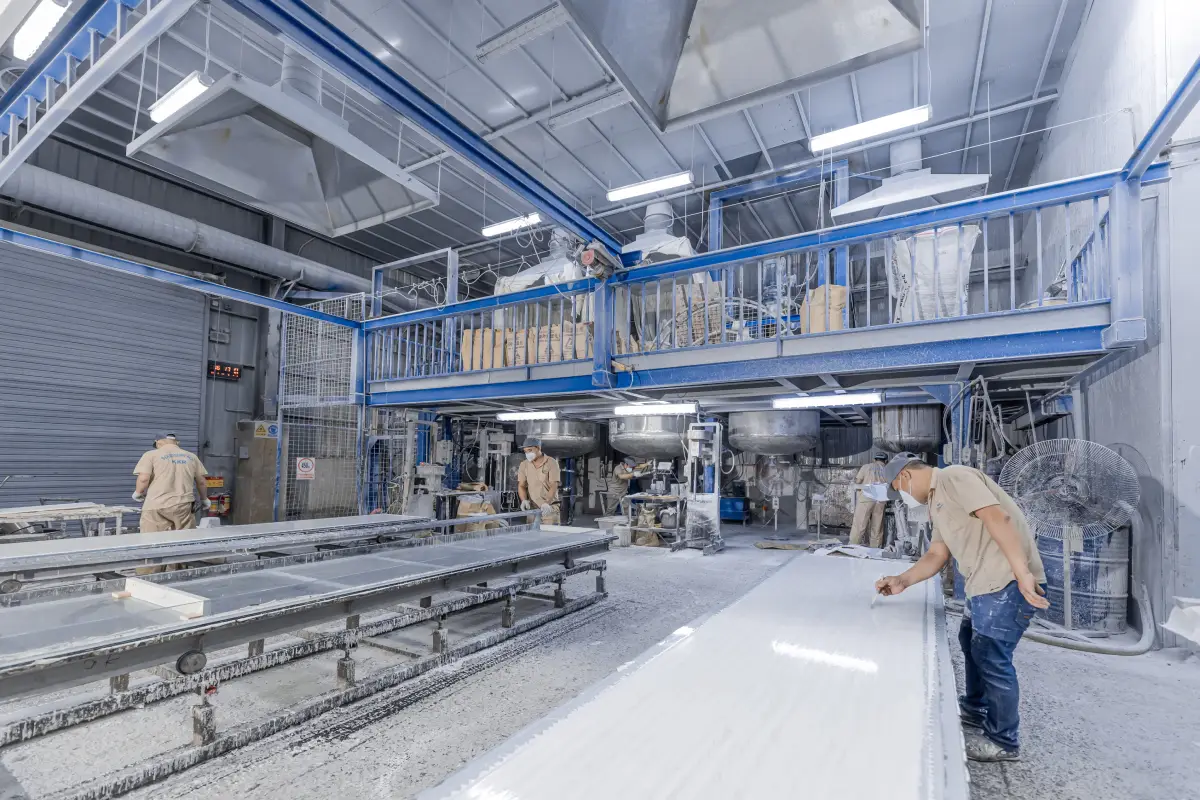
As we have established,working with a reliable solid surface manufacturer like KKR offers distinct advantages in commercial projects. solid surface material is much more versatile, convenient to install, easy to handle, provides a non-porous surface, and offers a seamless countertop. You need a partner that can provide reliable material with industry experience and standardized manufacturing facilities. It makes KKR solid surface countertops the logical go-to move. Here are some reasons why they are exporting products to 100+ countries all over the world:
Reliable Material Performance
- Certified under ISO9001:2015 for a standardized production
- CE and SGS certification through rigorous testing
- Aluminum Trihydrate (ATH) provides flame-retardant properties
- 100% Acrylic Options with Silica-Free Material
- PMMA (Acrylic) Options for Crack-Resistant Material for High-Rise Buildings
- Anti-Yellowing Properties with UV Stabilizers
Advantages for B2B Applications
- Non-Porous Material Ideal for Healthcare and Laboratory Settings
- Seamless Joining to Match Commercial Interiors
- No Chemical Sealing means Maintenance Free Material
- NSF-51 Certification for Hygiene Standards In Commercial Kitchens and Restaurants
- Convenient Maintenance with Mild Detergent and pH-neutral Cleaners
- Absence of Grout Lines Reduces Risk of Healthcare-Associated Infections (HAIs)
- Thermoforming Capability to Create Curved Surfaces
- Integrated Solution for Sinks and Backsplashes
- Constant Supply with 2-4 Week Production Cycles for 20ft Container
- Large-size Slabs up to 3660mm in length
- Develop 300 Colors and Custom Pigments
- Predictable Lifecycle Cost due to Maintenance-Free Nature
- Field Repairability
Conclusion
When selecting between man-made acrylic surfaces and natural granite, buyers need to weigh them in various aspects. It means putting long-lasting, heat-defying nature against the ultra-clean, highly adaptable and joint-free nature of modern polymer composites.
To conclude, we recommend prestigious residential projects to use granite as a classic. Solid surface material is considered an ideal option for healthcare, hospitality and homes where it complements their contemporary seamless design. If you are looking for a top solid surface countertop material, then consider KKR for your project. Visit their website https://www.kingkonree.com/solid-surface.html.
| Feature | Natural Granite | Premium Solid Surface |
| Composition | 100% Natural Igneous Rock | ~66% Mineral / 33% Acrylic |
| Porosity | Porous (Requires Sealing) | Non-Porous (Sealing-Free) |
| Heat Resistance | High (Up to 680°F) | Moderate (Up to 320°F) |
| Repairability | Professional Epoxy Only | Fully Renewable/Sandable |
| Joints | Visible Seams | Inconspicuous/Seamless |
| Weight | 18–20 lbs per sq. ft. | ~5 lbs per sq. ft. |
FAQ
Q: Are granite countertops more durable than solid surface countertops?
The durability depends on the stress that the material is subjected to. Granite offers 7 on the Mohs mineral scale. It means it’s highly resistant to daily wear and tear. However, they are prone to chipping and exhibit a brittle nature. Solid surfaces are susceptible to scratches and heat damage, but it is more flexible and resilient against cracking caused by impacts.
Q: Which material is easier to maintain: granite or solid surface?
Solid surfaces are easier to maintain as they are non-porous materials that do not require any sealing. The material is homogeneous and the same across its cross-section. In comparison, granite is porous and requires sealing every 6-12 months.
Q: Can scratches on solid surface countertops be repaired?
Yes, solid surface countertops have the same material throughout their cross-section. It makes them highly repairable. Any minor nicks, scratches and even surface burns can be sanded and buffed to as-new material.
Q: Do granite countertops require sealing over time?
Yes, with regular use, granite countertops lose their protective synthetic shield. A professional or DIY sealant application is required every 6 to 12 months to maintain its non-porous characteristics.
Q: Which countertop material is more hygienic for hotels and restaurants?
Solid surface material is the most hygienic choice when it comes to non-porous and seamless construction. Its joints are seamless, which eliminates dirt-trapping crevices found in stone installation. They are superior against the accumulation of pathogens, mold and mildew. Granite, if unsealed, harbors bacteria.