







Are you curious about the process behind manufacturing high-quality bathtubs? Understanding this process can enhance your ability to choose the best products for your business.
With years in the bathtub industry, I know what goes into making top-quality products. My insights will give you valuable information.
Manufacturing bathtubs involves a combination of advanced technology and skilled craftsmanship. Each step plays a crucial role in creating durable and stylish bathtubs.
In this guide, you’ll discover the detailed steps involved in making bathtubs. We’ll cover everything from material selection to finishing touches and quality control measures.
So let’s get down to it!
Step#1 Design and Planning Stage
To begin the bathtub-making process, careful design and planning are crucial. Here are the steps involved in this stage:
- Concept Development: Designers start by sketching ideas for the bathtub’s shape and features. They consider aesthetics and functionality to create a product that is both beautiful and practical.
- Material Selection: The next step involves choosing the right materials for the bathtub. Popular choices include acrylic, cast iron, and fiberglass, each offering different benefits.
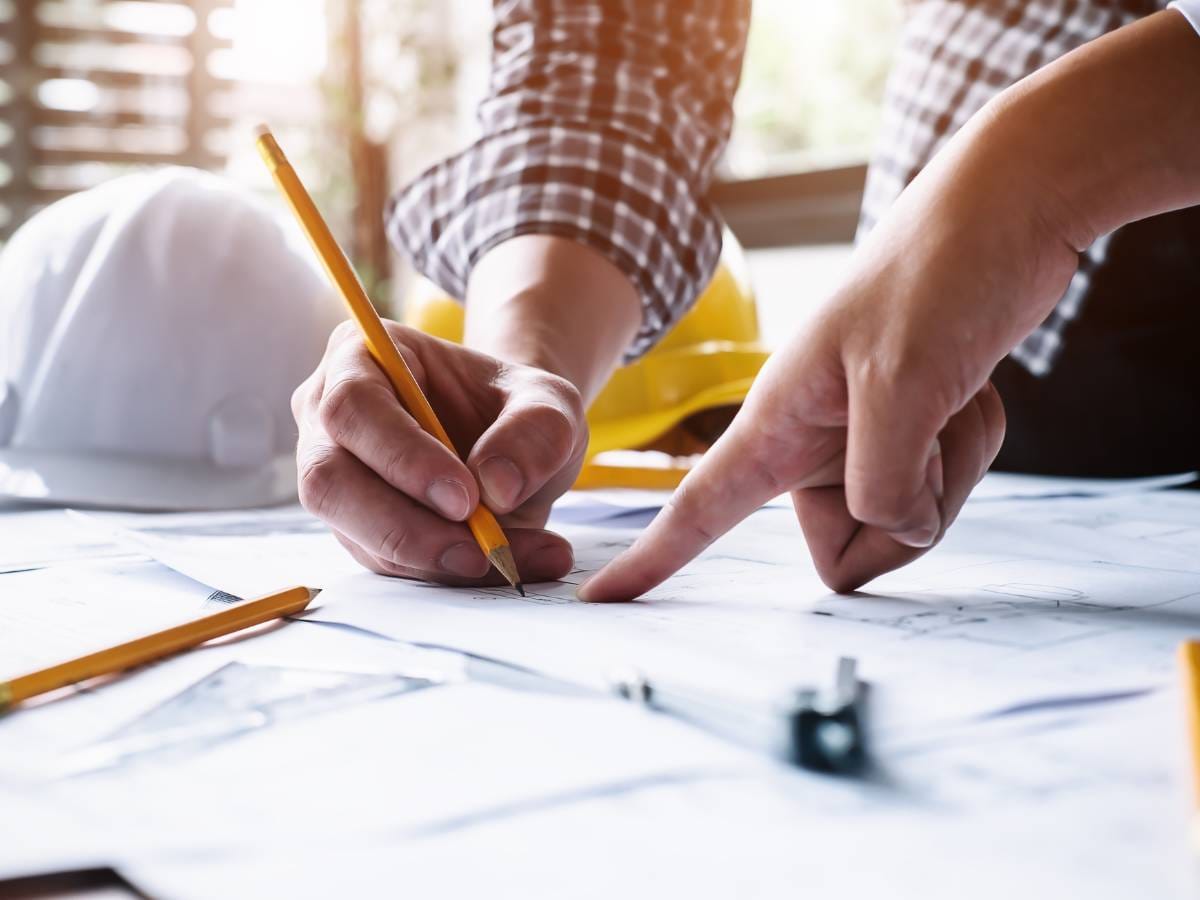
- Technical Drawings: Detailed technical drawings are created to guide the manufacturing process. And on top of that, these drawings include precise measurements and specifications for every part of the bathtub.
- Prototype Creation: Before mass production, a prototype is built based on the design and drawings. This allows designers to test the bathtub’s look and functionality, making any necessary adjustments before final production.
Step#2 Creation of Molds and Templates
After the design and planning stage, the next step is to create molds and templates that will shape the final bathtub. Here are the steps involved in this stage:
- Mold Design: Engineers create the mold design based on the final prototype. This design makes sure that every bathtub produced will have the same shape and dimensions.
- Material Selection for Molds: Durable materials like steel or fiberglass are chosen for making the molds. These materials can withstand the pressure and heat of the production process. Amazing, isn’t it?
- Mold Construction: Skilled workers build the mold following the design specifications. This involves precise cutting, shaping, and assembling to form the mold.
- Template Creation: Templates are also created to help with the cutting and shaping of various bathtub parts. These templates allow all parts to fit together perfectly during assembly.
Here’s a table that outlines the benefits of using templates in the manufacturing process, particularly for assembling bathtubs, where precise fit and alignment are crucial:
| Feature | Description | Benefit |
| Template Creation | Use of precise models or patterns that guide the cutting and shaping of bathtub components. | Ensures all parts are cut and shaped correctly for a perfect fit. |
| Efficient Assembly | Templates streamline the assembly process by providing clear guidelines on how components fit together. | Reduces errors and inconsistencies, leading to quicker and more efficient assembly. |
| Consistency Across Products | Helps maintain uniformity in product dimensions and specifications across multiple units. | Guarantees that each bathtub meets the same standards of fit and finish. |
| Reduced Waste | Precise cutting and shaping minimize excess material use and scrap waste. | Saves materials and reduces costs by limiting waste production. |
| Scalability | Facilitates the replication of designs, essential for mass production settings. | Enables efficient reproduction of designs, crucial for expanding production capacity. |
Step#3 The Forming Process
With the molds and templates ready, the next step is to form the bathtub itself. Here are the steps involved in this stage:
- Heating the Material: The chosen material, like acrylic or fiberglass, is heated until it becomes soft and pliable. Why is this so? It is to allow the material to be easily shaped into the mold.
- Shaping in the Mold: The heated material is placed into the mold, where it takes on the shape of the bathtub. This step requires precision to make sure every detail is formed correctly.
- Cooling: Once the material has taken the shape of the mold, it is cooled to harden. This process helps the bathtub maintain its new shape and structure.
- Removing from the Mold: After the bathtub has cooled and solidified, it is carefully removed from the mold. This step must be done gently to avoid damaging the newly formed bathtub.
Step#4 Reinforcing the Structure
After forming the basic shape of the bathtub, it’s important to reinforce its structure for strength and durability. Here are the steps involved in this stage:
- Adding Layers: Additional layers of fiberglass or resin are applied to the bathtub. And the best part is that these layers increase the bathtub’s strength and help it last longer.
- Reinforcing Specific Areas: Extra reinforcement is added to areas that will bear the most weight, like the bottom and edges. This makes sure these parts are strong enough to support a person’s weight.
- Curing the Reinforcement: The reinforced bathtub is placed in a curing oven to harden the materials. This step makes sure that all the added layers are firmly bonded and solidified.
- Inspecting for Consistency: Once the bathtub has been reinforced and cured, it is inspected for any inconsistencies or weak spots. This final check helps the bathtub to be sturdy and ready for use.
Step#5 Trimming and Modification
After reinforcing the bathtub structure, the next step is to trim and modify it for a perfect finish. Here are the steps involved in this stage:
- Trimming Excess Material: Any excess material left from the forming and reinforcing process is trimmed off. This makes sure the edges are smooth and the shape is precise.
- Smoothing the Edges: Special tools are used to smooth out the edges of the bathtub. This step is important for safety and comfort, making sure there are no sharp or rough areas.
- Drilling Holes: Holes for faucets, drains, and other fixtures are drilled into the bathtub. Here’s the bottom line: this allows for the installation of plumbing components later on.
- Custom Modifications: Any additional features or custom modifications requested are added at this stage. This could include adding jets for a jacuzzi or special grooves for grips.
Step#6 Quality Control and Testing
After trimming and modifying the bathtub, it’s time to make sure everything meets high standards of quality. Here are the steps involved in this stage:
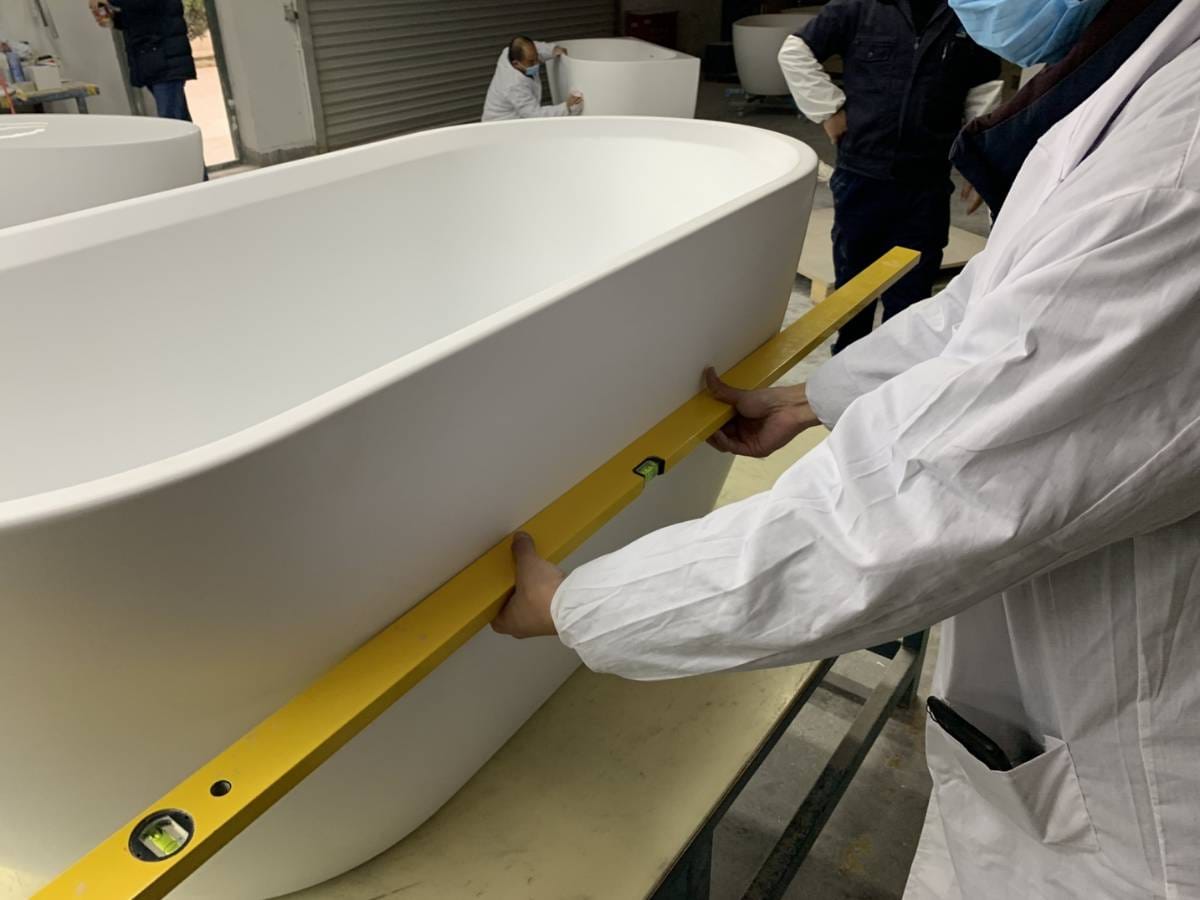
- Visual Inspection: The bathtub is carefully checked for any visible defects or imperfections. For example, inspectors look for cracks, uneven surfaces, or blemishes in the finish.
- Strength Testing: The bathtub undergoes tests to ensure it can support the necessary weight. This involves applying pressure to different areas to check for any signs of weakness or bending.
- Water Tightness Check: The bathtub is filled with water to test for leaks. But what does that mean? If leaks are found, they fix it immediately to make sure the bathtub is watertight.
- Functionality Testing: If the bathtub includes features like jets or lights, these are tested to make sure they work properly. This lets all additional features function as intended before the bathtub is shipped.
Step#7 Finishing Touches and Detailing
After quality control and testing, the bathtub receives its final touches to make it ready for the market. Here are the steps involved in this stage:
- Polishing the Surface: The surface of the bathtub is polished to give it a smooth and shiny finish. At KKR, they take this process a step to enhance the aesthetic appeal and longevity of their bathtub.
- Adding Coatings: Protective coatings are applied to enhance the bathtub’s durability and appearance. For example, an anti-scratch coating can be added to help the bathtub stay looking new for longer.
- Detailing Features: Additional features like decorative accents or logo placements, are added. Here’s the interesting part: this step personalizes the bathtub and can include things like brand logos.
- Final Inspection: A last inspection is conducted to make sure everything is perfect. Fortune Business Insights reported that the bathtub market size is expected to reach S18.22 billion by 2032. Highlighting the importance of checking the finish to certify the bathtub meets all standards and demands.
Step#8 Packaging and Shipping
After the finishing touches and detailing, the bathtub is ready to be packaged and shipped to customers. Here are the steps involved in this stage:
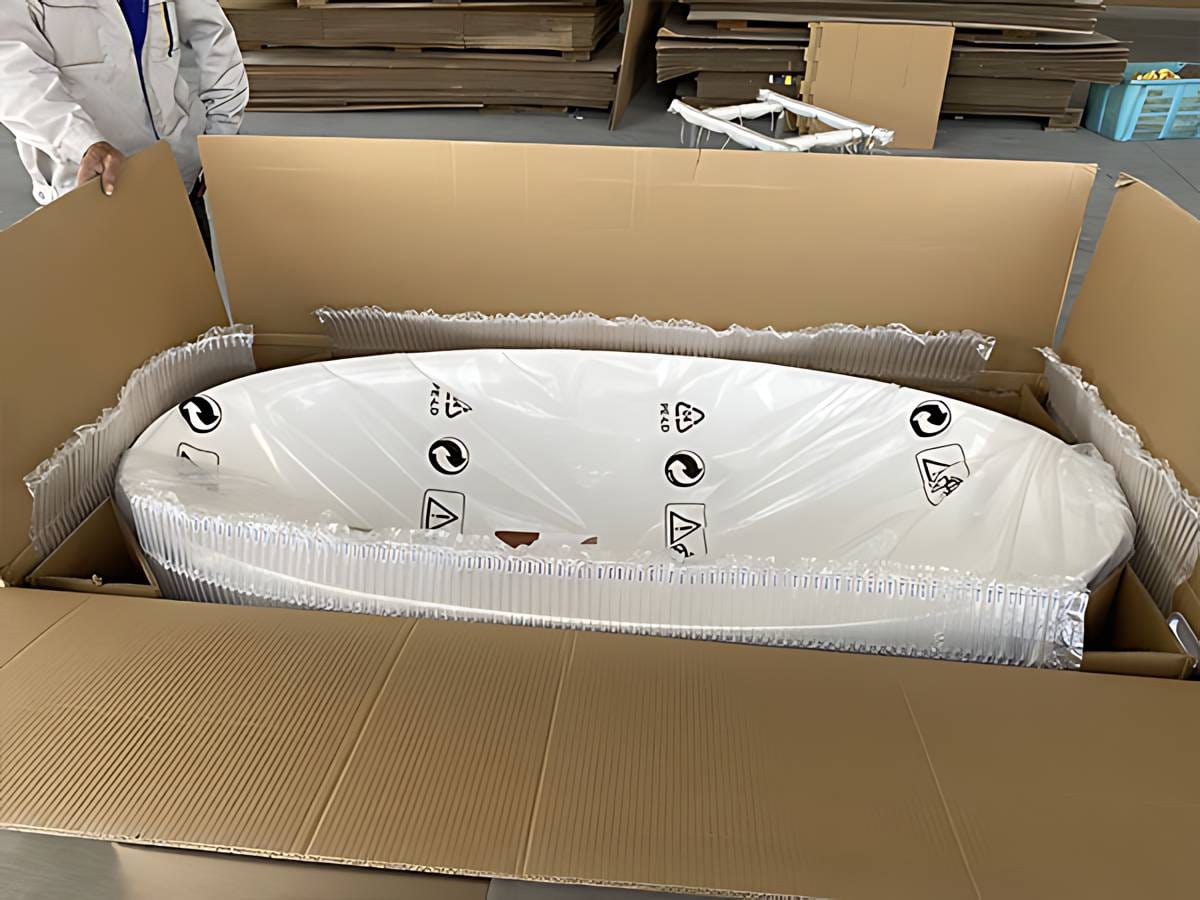
- Protective Wrapping: The bathtub is wrapped in protective materials like bubble wrap and foam. This helps prevent any damage during transportation.
- Boxing: The wrapped bathtub is placed into a sturdy box that fits it snugly. This box often includes extra padding to keep the bathtub secure. Sounds impressive, right?
- Labeling: Each box is labeled with important information, such as the model, color, and shipping address. If a bathtub is being shipped the box will have specific labels and instructions for delivery.
- Shipping Arrangements: At KKR, shipping arrangements are made with reliable carriers to ensure the bathtub reaches its destination safely. The bathtub is loaded onto shipping containers and sent out.
Conclusion
Understanding how bathtubs are made gives insight into the craftsmanship involved in creating these essential fixtures. From design and planning to the final touches, each step is crucial in ensuring a high-quality product. At KKR, our bathtubs illustrate this process, combining durability and aesthetic appeal.
This article outlines each stage of bathtub production, helping you appreciate the work behind these everyday items. Choosing KKR as the manufacturer of your bathtub needs means opting for top-notch quality and innovative designs. To learn more about our products and services, please contact us directly.
Recommended Reading
Looking for more diverse product options? Browse through our handpicked selections:
Still haven’t found what you’re looking for? Don’t hesitate to contact us. We’re available around the clock to assist you.