






If you’re skimming:
- Solid surface is basically resin + mineral filler, made as a non-porous, homogeneous sheet you can fabricate into counters, sinks, and curved features.
- You pick it when you want clean joints, easy sanitation, and repairability—especially in hotels, healthcare, retail, and multi-site rollouts.
- You don’t pick it because you love putting scorching-hot cast iron straight on countertops. Use trivets. Always.
Introduction
The ugliest thing in a nice interior isn’t the lighting. It’s not the tile. It’s that one grimy joint line at the sink where the “easy-clean” countertop quietly gives up on life.
That’s the reason solid surface keeps showing up in places that can’t afford gross details—hospital wash stations, hotel vanities, retail cash wraps, office reception counters, student housing… all the spots where a million hands + cleaning chemicals + time will find your weakest link.
Solid surface isn’t magic. It’s an engineered material—typically acrylic (or polyester) resin blended with mineral filler—sold in sheets and fabricated into counters and integrated features. The pitch is simple: a smooth, non-porous surface with joints that can be made visually quiet, plus the ability to reshape it with heat for curves and custom forms.
You get real upsides. You also get a few “yeah, don’t do that” limitations (heat, scratching, impact). Let’s talk about both like adults.
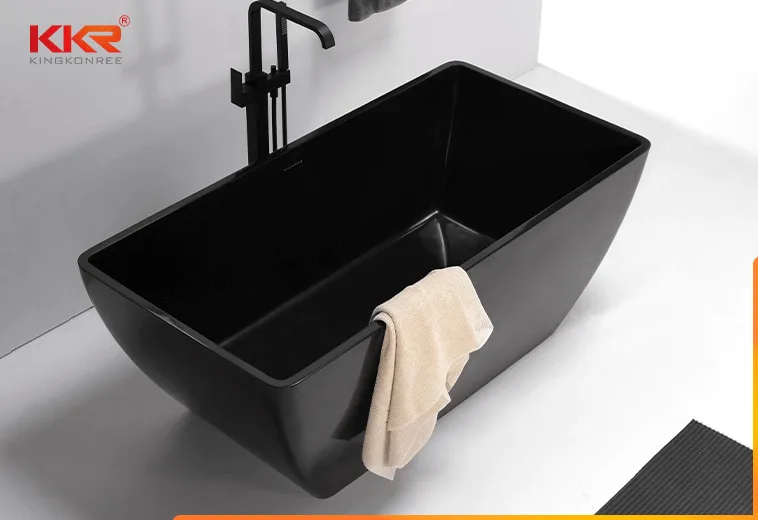
What Are Solid Surface Countertops Made Of?
Core Composition of Solid Surface Materials
Acrylic resin + natural minerals is the classic recipe. DuPont’s Corian technical bulletin, for instance, describes solid surface as a non-porous, homogeneous material made of roughly one-third acrylic resin (PMMA) and two-thirds natural minerals (with alumina trihydrate as a major component).
Industry explanations line up with that: solid surface is commonly described as a resin binder (acrylic or polyester) plus a mineral filler (often alumina trihydrate/ATH), which is why the material feels “stone-ish” but machines more like a dense plastic-mineral composite.
Non-Porous Surface Structure
Non-porous is not just a buzzword; it’s the whole point. In healthcare-oriented documentation, Corian is described as non-porous and, with proper cleaning, not supporting microbial growth—exactly why designers like it for sinks, vanities, and wash areas.
KKR leans on the same principle: their “Why Solid Surface” page describes their solid surface as non-porous, limiting moisture/air intrusion that can feed bacteria-friendly conditions.
Manufacturing Process and Material Consistency
Because solid surface is homogeneous (same composition all the way through), you don’t have the “pretty top layer / cheap core” problem you get with some materials. That homogeneity is also why chips, scratches, and light burns can often be sanded out—you’re not sanding through a decorative film.
Color and pattern also tend to be consistent across batches compared to many natural stones (which are gorgeous… and also wildly variable). That consistency matters when you’re building, say, 40 hotel bathrooms and the owner wants them to look like they belong to the same planet.
Thermoforming and Fabrication Flexibility
Solid surface can be heated and shaped—thermoforming is a big deal here. KKR product pages explicitly describe pure acrylic solid surface sheets that bend and shape using heat, which is how you get curved counters and sculpted forms without playing a stone-cracking lottery.
Healthcare material also calls out shaping/thermoforming for workstations and integrated designs.
Difference Between Solid Surface and Other Countertop Materials
Solid Surface vs Quartz
Quartz (engineered stone) is usually chosen when you want a more stone-like look and stronger scratch/heat tolerance in normal use. Solid surface is chosen when you want clean joints, integrated sinks, and repairability. Even solid surface guides frame acrylic-based sheets as easier to thermoform and better for joint adhesion/repair, while quartz wins on “rock feel.”
Solid Surface vs Granite
Granite is a heat-handling beast compared to most resin-based materials. Solid surface, meanwhile, is easier to renew when it gets scratched and doesn’t need sealing in the way many natural stones do. (Granite can be low-fuss, but it’s still stone: it behaves like stone.)
Solid Surface vs Laminate
Laminate is basically a decorative layer over a substrate. Solid surface is solid-through. That’s why a laminate chip can become a permanent eyesore, while a solid surface scratch can often be refinished.
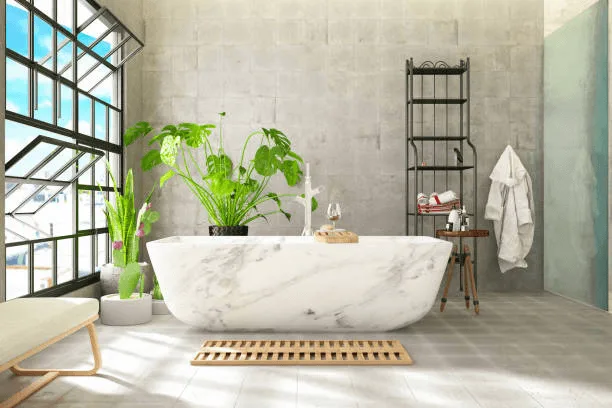
The Main Advantages of Solid Surface Countertops
Invisible-Joint Looks and Design Flexibility
This is the part designers actually care about: you can build long runs, wrap corners, and integrate bowls/backsplashes without turning your counter into a roadmap of lines.
In healthcare materials, “inconspicuous seams” show up as a hygiene and cleanability advantage, especially around wet zones and sink transitions.
Custom Shapes and Integrated Features
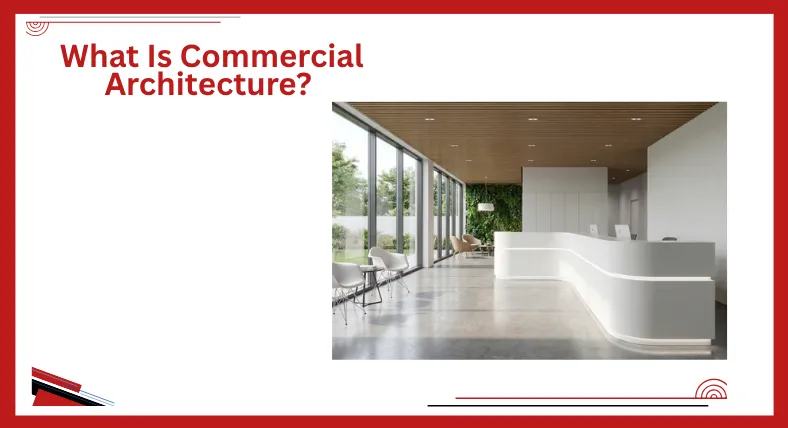
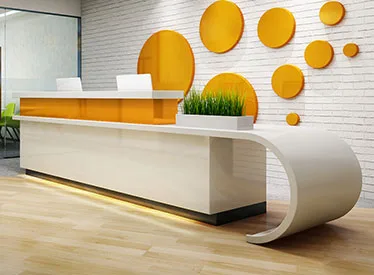
Curved reception counters. One-piece sink + deck. Backsplashes that aren’t a caulk-and-prayer situation.
Those are not “nice extras” in commercial work; they’re how you keep maintenance sane. KKR’s commercial application page talks directly about integrated sink solutions and custom shapes for commercial projects.
Hygienic and Easy-to-Maintain Surfaces
Non-porous means you’re not relying on sealers to stay perfect forever. Corian’s healthcare documentation is blunt about the “does not support microbial growth” angle (with proper cleaning).
Easy Cleaning and Repair
Scratches happen. The real question is whether you’re stuck with them.
Corian’s own repair and care documents discuss repairing minor cuts/scratches and professional refinishing guidance—because the surface can be abraded and restored rather than replaced.
And yes, that matters in high-traffic spaces where “perfect forever” is a fairy tale you tell people selling marble.
Commercial Durability and Long-Term Value
Solid surface is built for daily wear, and the repair/refinish angle is part of the lifecycle math. Solid surface references describe it as homogeneous and restorable—meaning damage isn’t automatically a replacement event.
The Limitations of Solid Surface Countertops
Heat and Scratch Sensitivity
Look, it’s resin-based. Heat can mark it.
Corian’s use-and-care guidance is very clear: use trivets/heat pads and don’t put hot pans directly on the surface.
Scratches are also part of the deal, especially with darker colors and higher-sheen finishes (they show everything). The upside is you can often refinish; the downside is you might have to.
Material Strength Compared to Stone Surfaces
Stone generally wins on hardness and heat tolerance. Solid surface wins on fabrication freedom and serviceability.
If you’re specifying for heavy abuse (think industrial impacts, not normal kitchens), pick accordingly. Even solid surface guides position granite as harder and more heat resistant.
Thickness and Structural Support
Don’t cheap out on support and then act surprised when physics shows up. Follow proper substrate/support practices and use qualified fabrication—especially around cutouts and long spans.
Cost and Project Planning Factors
Solid surface sits above laminate and often competes with quartz depending on brand, thickness, and fabrication complexity. Custom thermoformed details and integrated features can add lead time because you’re not pulling a commodity slab off a rack; you’re fabricating components.
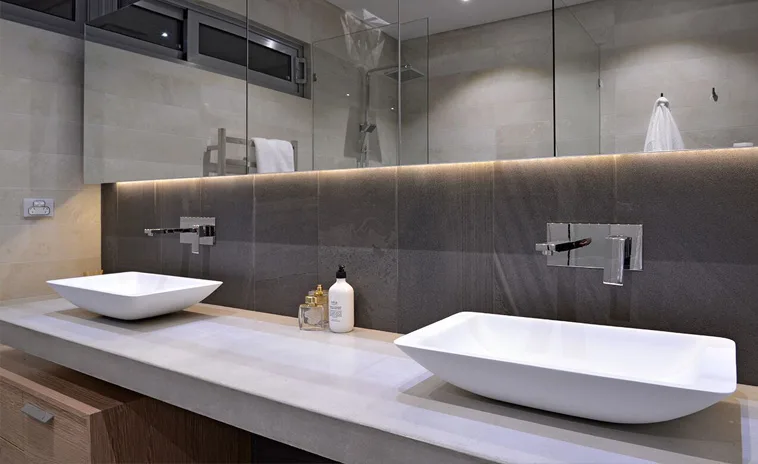
Why Commercial Buyers Choose KKR Solid Surface Solutions
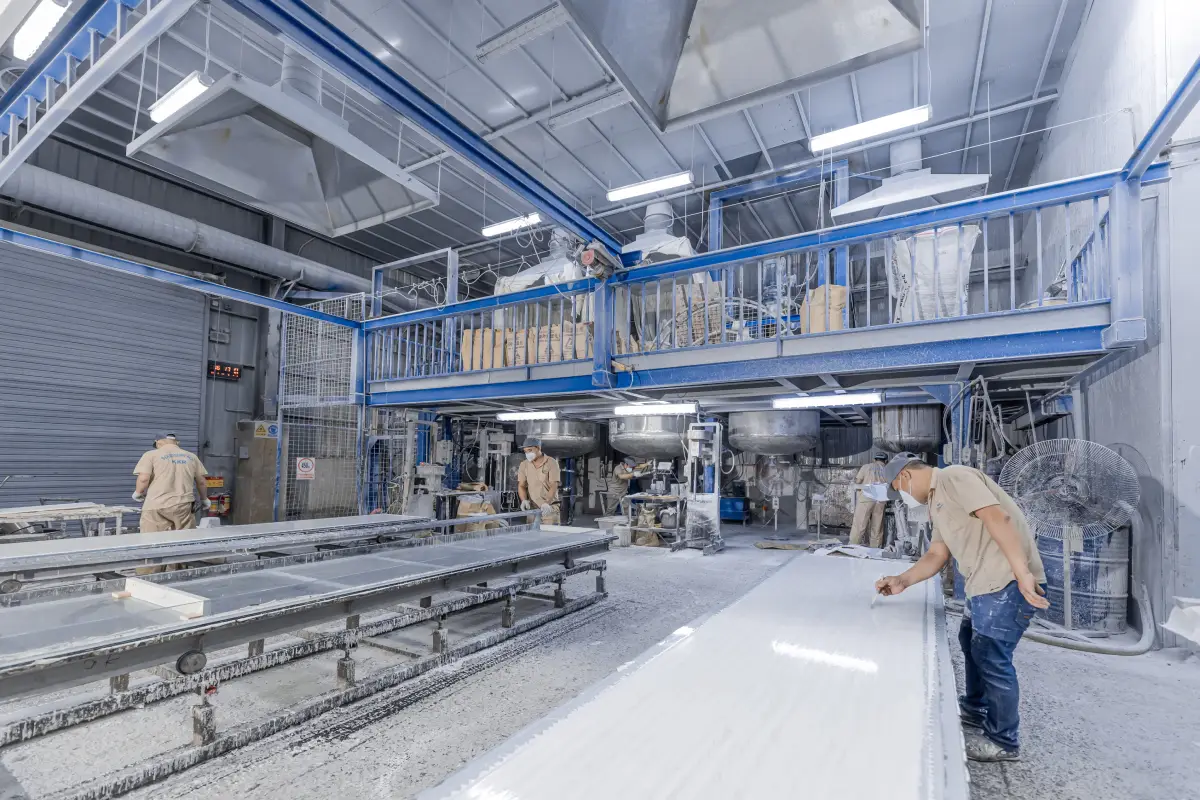
KKR’s Manufacturing Advantages
KKR states it’s ISO9001:2015 certified, and that products have passed CE and SGS tests—useful signals for commercial procurement teams that live in a world of submittals, documentation, and repeatable quality.
(Quick translation for non-procurement humans: ISO 9001 is a quality management system standard used by organizations that want consistent processes and output. It doesn’t make a product “perfect,” but it’s a real baseline that serious buyers look for.)
KKR also talks about maintaining SGS-authorized test reports across categories like stain resistance, high-temperature resistance, chemical resistance, abrasion resistance, dimensional stability, and more.
KKR Acrylic Solid Surface Countertops for Commercial Applications
KKR positions its commercial solid surface offering around counters, vanity tops, integrated sinks, reception elements, and other custom pieces—basically the stuff architects draw that’s annoying to execute in brittle materials.
A few places to point people (real links, not vague “click here” nonsense):
- Solid surface countertops: https://www.kkrstone.com/product-category/solid-surface-countertops/
- Integrated vanity tops with sink: https://www.kkrstone.com/product-category/integrated-vanity-top-with-sink/
- Solid surface reception tables: https://www.kkrstone.com/product-category/solid-surface-reception-table/
- Example sheet product (pure acrylic): https://www.kkrstone.com/product-item/pure-acrylic-solid-surface-etb-m2665/
- Example sheet product (translucent): https://www.kkrstone.com/product-item/translucent-solid-surface-sheet-etb-a001/
Benefits for Procurement and Construction Teams
KKR describes scale factors that matter in rollouts: a 15,000 m² factory, shipping to 100+ countries, and production volume claims geared for repeat work.
On lead times, KKR also claims the ability to complete production of a 20’ container within 7 days for urgent orders (helpful when schedules go sideways—as they always do).
Recommended Applications for KKR Solid Surface Products
- Hospitality and hotel interiors: vanity tops, bathroom counters, lobby/reception elements.
- Healthcare and commercial wash areas: non-porous surfaces that clean up fast and don’t rely on grout lines.
- Retail and office spaces: branded desks, cashier wraps, curved features, quick refresh cycles via refinishing instead of ripping everything out.
Conclusion
Solid surface is the material you specify when you want cleanable surfaces, visual continuity, and fabrication freedom—and you’re willing to treat it like a resin-based material (because it is).
It won’t beat granite in a heat fight. It will save your sanity when the client wants an integrated sink, a curved front, and joints that don’t scream for attention.
FAQ
What are solid surface countertops made of?
Usually resin (often acrylic/PMMA) plus mineral filler; many are roughly 1/3 resin and 2/3 minerals.
Are solid surface countertops durable?
Yes for daily use—non-porous and maintainable; scratches can often be refinished instead of replaced.
Are solid surface countertops better than quartz?
Depends: quartz usually wins on stone-like look and hardness; solid surface wins on repairability and complex fabrication (curves, integrated bowls).
Can solid surface countertops be repaired if scratched?
Often, yes—manufacturer guidance discusses sanding/refinishing for minor scratches and repairs.
Are solid surface countertops suitable for commercial kitchens?
They’re used widely in food-service-adjacent spaces, but you must manage heat correctly (trivets/hot pads; don’t drop hot pans straight on it).