







Introduction
Scratches in a kitchen aren’t a “maybe.” They’re a schedule. First it’s the breakfast rush in a hotel. Then someone drags a mixer across the prep run because the trolley’s missing—again. Then night shift “cleans” with something that sounds like it belongs in a garage, not a food space.
And the annoying part isn’t just the look. Scratches turn into grime traps. In a commercial kitchen (or any high-use residential job that gets treated like one), that’s a hygiene problem wearing an aesthetics costume.
So this guide stays practical: identify what you’re dealing with, fix what you can without making it worse, and know when you’re wasting time and should call a pro. I’ll also point out why repairable acrylic solid surface—like KKR’s—often ends up being the least painful option on real projects where downtime costs money.

Identifying the Type of Scratch and Material
Surface Material Matters
Before you touch sandpaper, figure out what the top actually is. People guess wrong all the time—and that’s how you end up “repairing” a quartz counter into a dull patch you can see from space.
- Acrylic solid surface (KKR): Non-porous, repairable, and designed to be sanded/polished back when it gets beat up. KKR explicitly sells its solid surface as repairable and non-porous, which is exactly what you want in food areas.
- Quartz: Tough, but the finish is not your playground. Caesarstone (a major quartz brand) straight-up says they don’t recommend DIY polishing in the true sense. That’s not them being precious—that’s them avoiding warranty nightmares.
- Granite: Natural stone varies, but scratch removal usually means abrasives (often diamond) and a controlled honing/polishing process. It’s doable, but spot fixes can telegraph.
- Laminate: You’re dealing with a thin decorative layer. Some marks are cosmetic; some are permanent because you can’t “refinish” what isn’t there. Wax can help; deep gouges are a different story.
Scratch Severity
Call it what it is:
- Light scratches: You feel them with a fingernail? Usually no. These are often haze, utensil rub, or surface scuffs.
- Moderate scratches: Visible under downlights, catch your nail slightly, but not a trench. Often fixable with sanding/polishing on repairable materials.
- Deep scratches/gouges: You can hook a nail in it, or it’s discolored because the top layer’s compromised. Expect filler, resurfacing, or replacement—depending on material and finish expectations.
Methods to Remove Scratches
For Acrylic Solid Surface Worktops
DIY minor scratch repair (the “don’t mess this up” version):
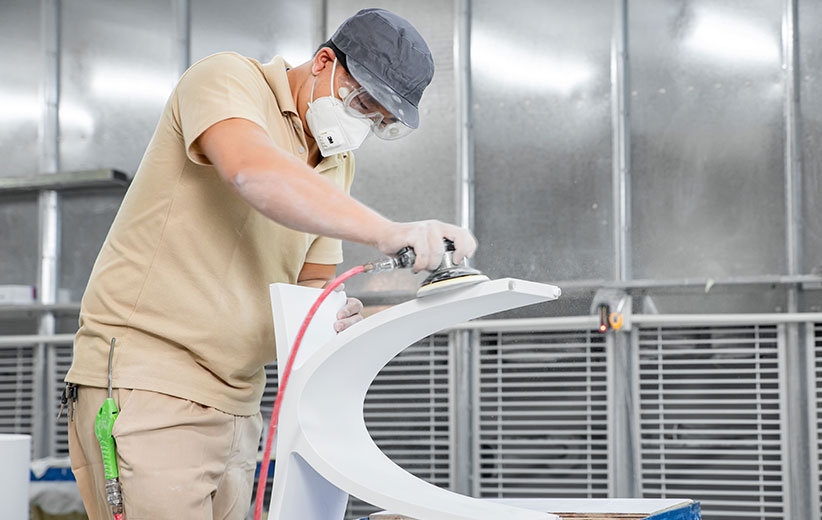
Start gentle. KKR’s own repair guidance uses stepped sanding (example grits like ~120 → 220 → 400) and then finishing to blend. Keep your work clean, and don’t skip grits unless you enjoy swirl marks.
A field-tested approach for commercial sites:
- Clean and degrease first (food oils hide scratches until you sand, then surprise—you’ve got more damage than you thought).
- Use a fine abrasive pad or fine paper, and work a wider area than the scratch so you don’t create a “repaired dot.”
- Step up through finer grits, wipe between steps, and finish by buffing to match the surrounding sheen (matte vs satin vs gloss matters). Corian’s facility guidance also points out refinishing is a known route for worn solid surface, and pros often handle deeper work.
Professional repair options:
Deeper scratches, burn marks, or large zones in a hotel pantry run? Pros can refinish the surface on-site with the right abrasives and polishers, and the point is you don’t have to rip out the whole top. That “refinish instead of replace” reality is why solid surface shows up in facilities work again and again.

For Quartz Worktops
Quartz owners often call everything a scratch. A lot of it is metal transfer or surface marking.
- For light marks, Caesarstone’s care guidance talks about using non-abrasive cleaners (they even cite Soft Scrub Liquid Gel in multiple places) and warns against products that mess with the finish.
- For actual scratches: don’t assume you can “just polish it.” Caesarstone explicitly discourages DIY polishing, and their pro library warns against polishing to remove imperfections because you can end up with a finish mismatch. Translation: one shiny spot, one factory spot, and now the countertop looks like it’s been spot-repaired forever.
If it’s a commercial job and appearance matters under strong lighting, get a fabricator/restoration pro involved early. Quartz repairs are less forgiving than solid surface.
For Granite Worktops
Granite scratch removal is abrasion work: honing and polishing, usually with diamond abrasives and controlled grit progression. The maintenance specs and stone-care training docs typically stress the same basic idea: each step removes the scratch pattern from the last step—skip steps and the scratches just get “smoother,” not gone.
For deeper scratches, pros may:
- hone a broader area to blend,
- polish back to the required sheen,
- and in some cases fill chips/scratches with a color-matched resin/epoxy before finishing.
This is very finish-dependent. Polished granite shows mistakes. Honed granite hides them better, but you still need an even field.
For Laminate Worktops
Laminate is cosmetic-first. So the “fix” is usually cosmetic too.
- For scuffs and light scratches, manufacturers like Formica talk about polishing/restoring shine using appropriate products (spray-and-wipe waxes, etc.).
- Some technical guidance also mentions periodic wax to help reduce future marking (and yes, it can make light scratches less obvious).
Deep gouges are the wall you hit: you can’t sand like you would on a thick, repairable surface without blowing through the decorative layer. In high-traffic commercial areas, patching or replacing the section is often the least-worst option.
Preventing Scratches in High-Use Environments
Protective Practices
If you want fewer scratches, don’t rely on “be careful.” Rely on systems.
- Put boards where people actually prep—at the prep stations, not in a drawer across the room.
- Stop dragging equipment. Use rubber feet, sliders, or mats under small appliances (blenders, slicers, countertop ovens).
- Heat: quartz brands warn against placing very hot items directly on the surface; trivets are cheap, callbacks aren’t.
Regular Maintenance
Two rules that save counters:
- Clean with mild, non-abrasive products (KKR states this directly for its solid surface care).
- Treat “mystery pads” like a controlled substance. If a cleaner can strip a grill, it can wreck a countertop finish.
Benefits of Choosing Repairable Surfaces
On commercial projects, the real cost isn’t the sandpaper. It’s downtime, access, and how fast you can return a kitchen to service.
High-quality solid surface sheets are popular in facilities work for a reason: it’s built around the idea that scratches happen, and the surface can be brought back by sanding/polishing instead of replacement. KKR positions its solid surface exactly that way—repairable, long service life, lower maintenance cost over time.
Why KKR Acrylic Solid Surface Countertops Are Ideal for B2B Projects
Durable and Repairable
For commercial kitchens, “pretty” is nice. Cleanable is mandatory.
KKR calls out non-porous performance (less moisture ingress, fewer places for stains/odors to sit) and repairability as core features. That combination is the whole point in food service and hospitality back-of-house areas.
And KKR’s own manufacturing notes show they understand finishing: they describe sanding through multiple grit stages up to very fine grits for glossy finishes—so refinishing isn’t some magical art, it’s a controlled process.
Feel free to check out KKR’s product categories and specs here.
Customizable and Consistent
When working with a reliable solid surface manufacturer, big projects hate surprises. Solid surface tends to be consistent across runs compared to natural stone variation, and it’s practical for integrated details (curves, built-in sink runs, long prep lines) where you don’t want open joints and gunk-catching edges.
On certifications: KKR’s main site lists compliance markings like CE and SGS (among others), and KKR also references ISO 9001:2015 status in its regional content.
Reliable Project Support
If you’re managing multiple kitchens (hotel rooms, serviced apartments, a campus project), you care about repeatability: templates, fabrication consistency, and clear repair guidance your facilities team can actually follow.
We’ve published repair walkthroughs you can hand to a contractor or maintenance lead. Start here.
Conclusion
Scratches don’t mean a countertop failed. They mean the kitchen is being used.
The trick is picking the right response for the material: quartz and granite can look amazing, but they’re less forgiving for DIY scratch fixes; laminate hides sins until it doesn’t. Acrylic solid surface stands out because it’s meant to be repaired, not mourned—sand, blend, move on, keep the kitchen open.
FAQ
How do I remove scratches from acrylic solid surface countertops?
Clean, then sand in steps (don’t jump grits), then buff to match the existing sheen. KKR’s repair guide lays out a stepped sanding approach.
What is the best material for worktops that can be repaired easily?
Acrylic solid surface is generally the most straightforward to refinish on-site because it’s designed to be repairable and re-finished.
Are deep scratches on acrylic surfaces permanent?
Usually not, but deep damage may need professional refinishing to avoid obvious “spot repair” halos.
Can KKR acrylic countertops be refinished multiple times?
KKR markets its solid surface as repairable, and solid surface systems are commonly refinished over their service life rather than replaced after surface wear.
What is the most cost-effective way to deal with scratches in hotels or restaurants?
Prevent with boards/mats and staff habits, then choose a surface you can refinish on-site when (not if) wear shows up—so you’re not paying for tear-out and lost service time.