






Introduction
Kitchen islands in the 18th and 19th centuries were purely regarded as a worktable separate from the main house. As time passed, kitchen islands began to merge with the dining area. Today, these islands with solid surface tops are the centerpiece of a modern kitchen. They provide aesthetics, functionality, and space for social interaction.
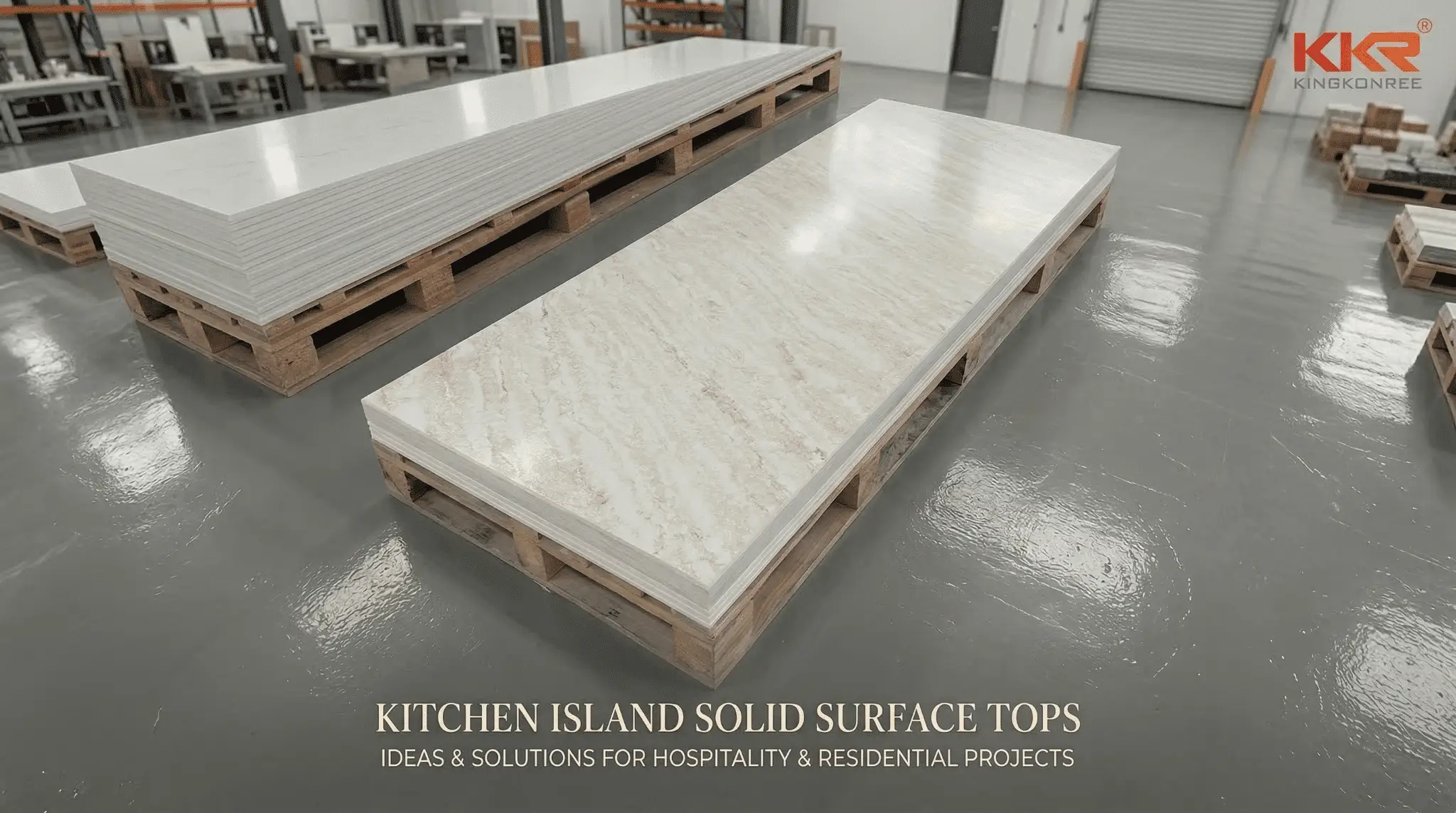
Architects and designers are selecting solid surface tops mainly due to their versatility and sleek aesthetics. Unlike granite or quartz kitchen island tops, solid surface provides a seamless surface with shapes and color consistency that are almost impossible with natural stones. The non-porous nature makes it ideal for a hygiene-critical environment like a kitchen.
This article is a comprehensive guide that will unlock the true potential of kitchen island solid surface tops for hospitality and residential projects. It will help you understand why it’s a superior choice when it comes to daily wear and tear. Then explain how to creatively incorporate them into the kitchen island of a commercial or high-end estate for premium aesthetics.
Choosing the Right Solid Surface for Your Kitchen Island
Solid surface tops are made using a combination of resin and mineral filler. They give strength to the material and make it thermoformable. Pigments are then added to the mixture to generate the desired color and pattern. Finally, it’s molded into the final solid surface form. To find the right solid surface material for
Material Benefits of Solid Surface Islands
The reason for the popularity of solid surface islands is their appearance. Instead of two solid surface slabs being placed adjacent to each other and filled with grout or caulk, it showcases a seamless appearance. The joints are chemically bonded and invisible to the human eye. It creates a smooth look that goes all the way across the crossection of the slab.
Natural stones require sealing to protect them against oil or daily kitchen chemicals. Solid surface islands do not require sealing. They are inherently non-porous due to the polymerization of acrylic or polyester resins mixed with natural minerals. The final form is resistant to minor scratches, scotch marks, and stains. Even in the case of slight damage, the material is highly repairable. Light sanding and polishing are enough to restore the material to as new.
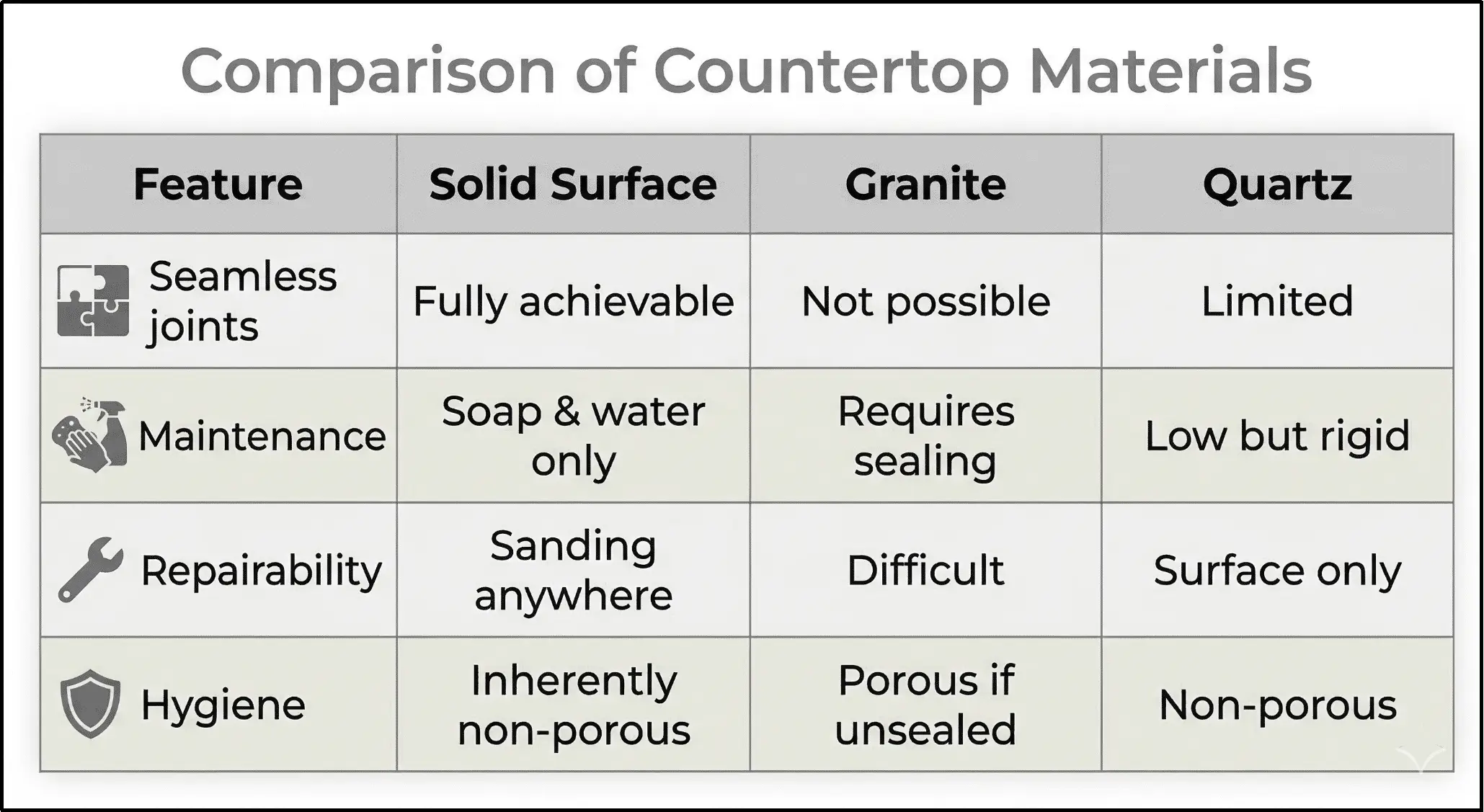
Heat and Chemical Resistance
Solid surface tops are capable of handling the predictable exposure to high temperatures. It resists damage from cooking spills or direct contact with 100 C (212 F) water. Using a high oxygen index formulation of a solid surface can make the material flame-retardant.
The non-porous nature of the material allows routine chemical applications for cleaning. It can handle mild cleaners and commercial sanitizers without causing discoloration, etching, and clouding. Chemicals cannot penetrate and take hold of the materials. Which means that food preparation zones are kept uncontaminated and safe after a simple wipe down. In some cases where sterility is key, advanced copper oxide enhanced variables can be used. As per a 2014 BMC Microbiology study, these can kill 99.9% of bacteria within two hours.
Exceptional repairability of solid surface tops enables their 20 to 30+ years lifespan. If the kitchen island top is not discolored from heat, these blemishes can be buffed out with ease.
Design Flexibility
Natural stones are quarried and sawn into slabs for a kitchen island top. These limit any flexibility in design. In comparison, solid surface tops allow creative freedom for the designers to use their thermoforming capability. They can create soft curves, rounded edges, and make the shape complex, which rigid stones cannot replicate. The material needs to reach 150 C to become elastic enough for shaping. It’s a chemical property that is ideal for hotels and modern commercial kitchens where unique designs are valued.
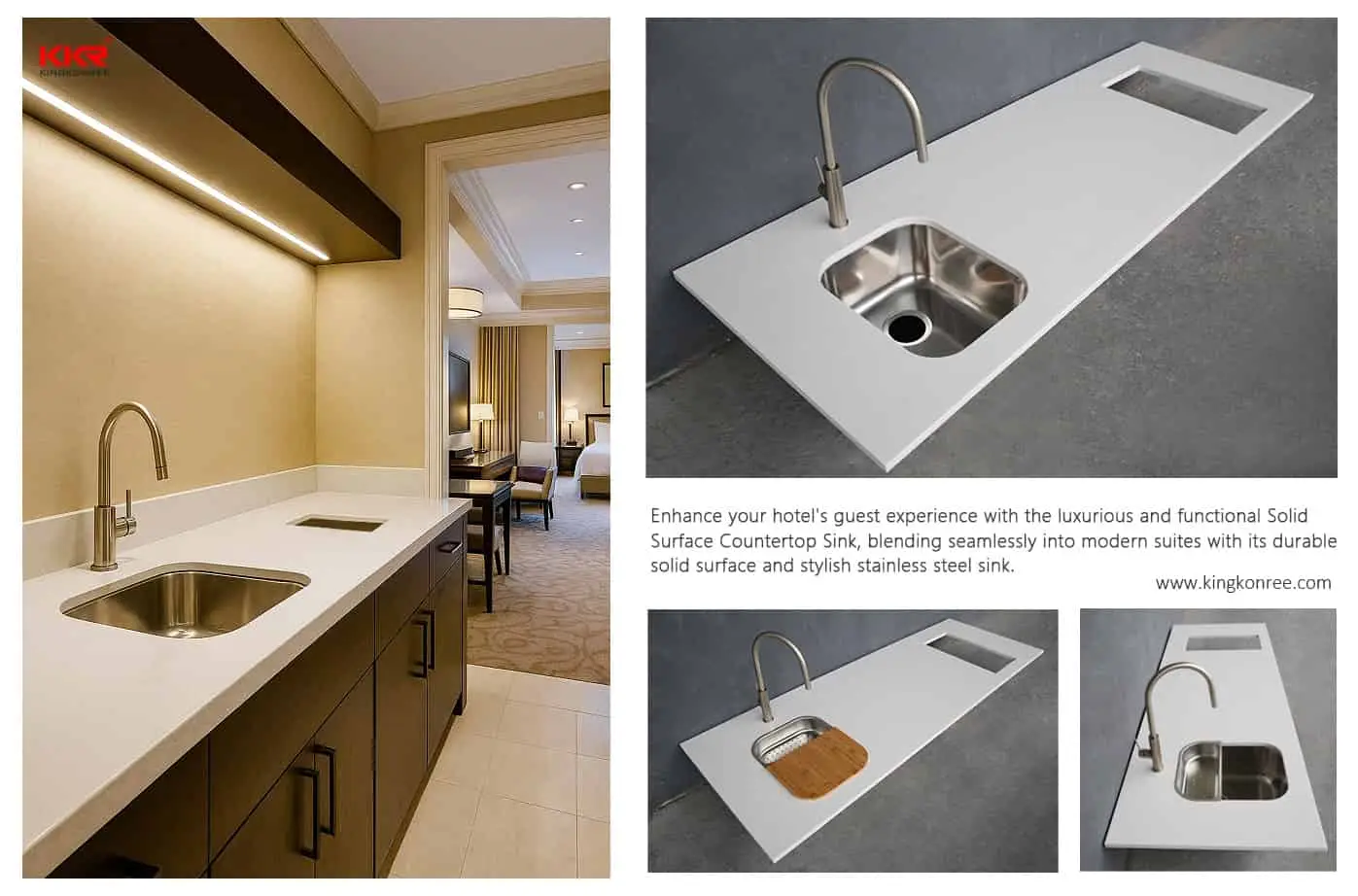
Solid surface is not limited to kitchen island tops, it is used in drain boards, backsplashes, basins, cutting boards, and cloth hangers. Using a solid surface for the kitchen island top allows seamless integration of sinks and accessories. All the accessories are seamlessly joined, leaving no crevices or joints for mold, mildew, or bacteria to take hold and grow.
Creative Solid Surface Island Ideas
Choosing a versatile solid surface top enables designers to explore a wider range of design options to find the one that fits perfectly in your real estate. Here are some of their creative uses:
Minimalist and Sleek Islands
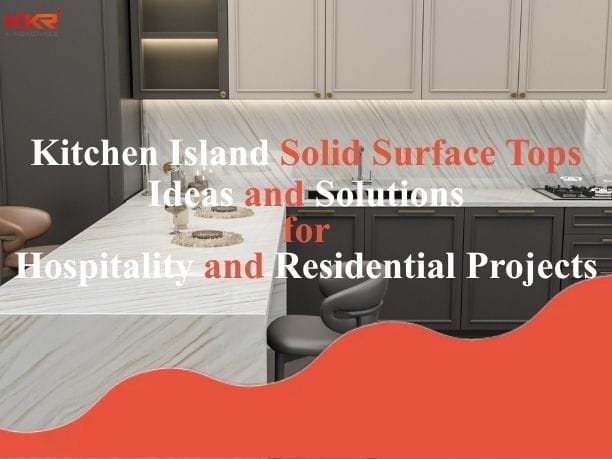
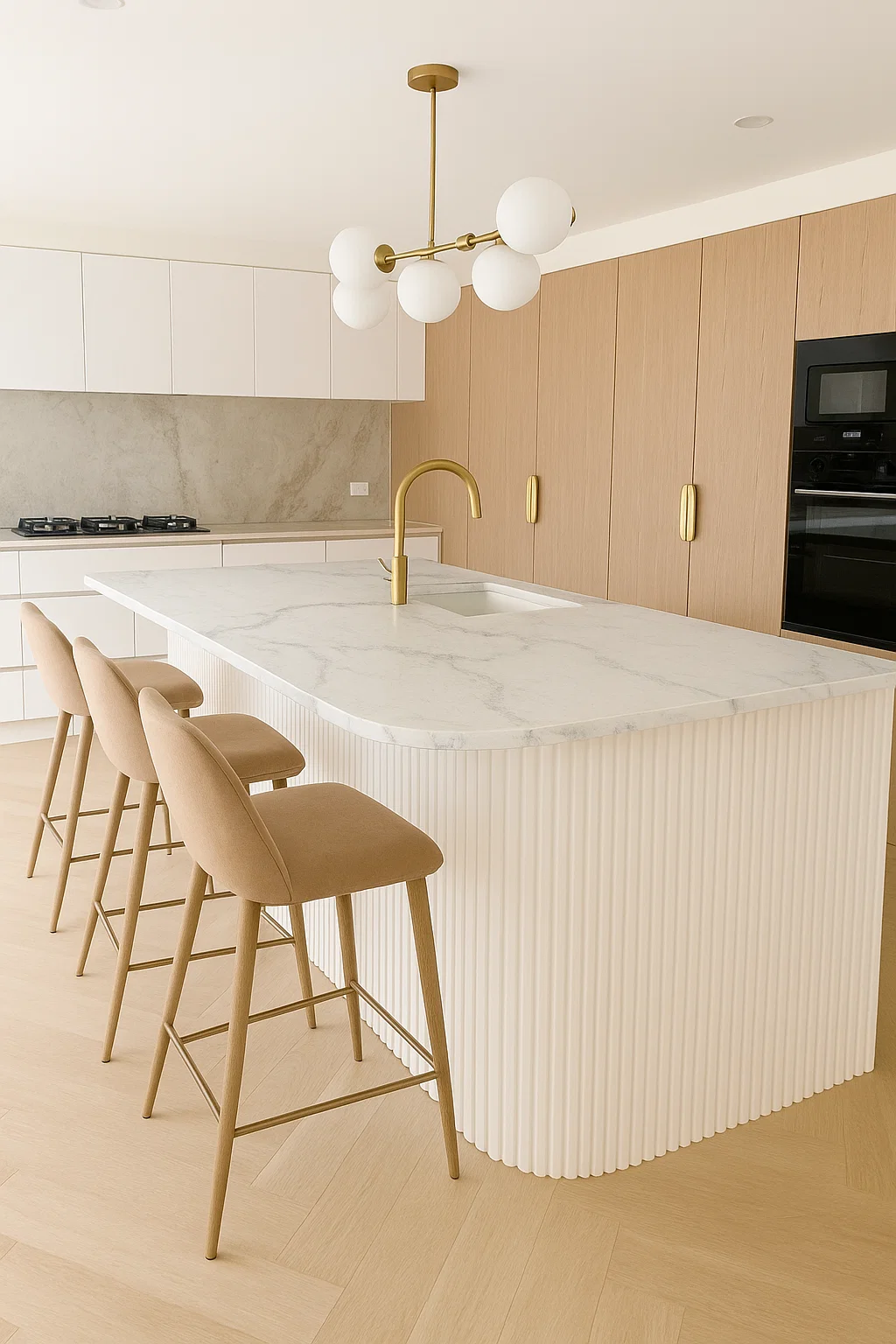
For compact spaces, designers like to utilize soft whites or warm beiges. It allows light to shine back and make the space look more open. These are single-tone and simply designed with rounded edges, ideal for contemporary kitchen designs. Using matte finish adds elegance to the kitchen, preventing harsh glare. High gloss is usually not preferred on such a large surface area, as it can feel overwhelming.
The shape of the kitchen island top also impacts the minimalist aesthetics. Using a single piece continuous plane with no joints creates a floating effect that speaks of luxury. Using a slim countertop over the heavy cabinetry enhances the visual impact that is standard in hotel bars and modern residential islands.
Multi-functional Islands
Modern kitchen islands are not just an aesthetic element inside a functional space. It is the core piece of furniture that acts like a hub. They are a food preparation area with deep seating. Users can perform multiple tasks, such as preparation of ingredients, cooking, and dish washing, in a single space with no worries of unhygienic conditions.
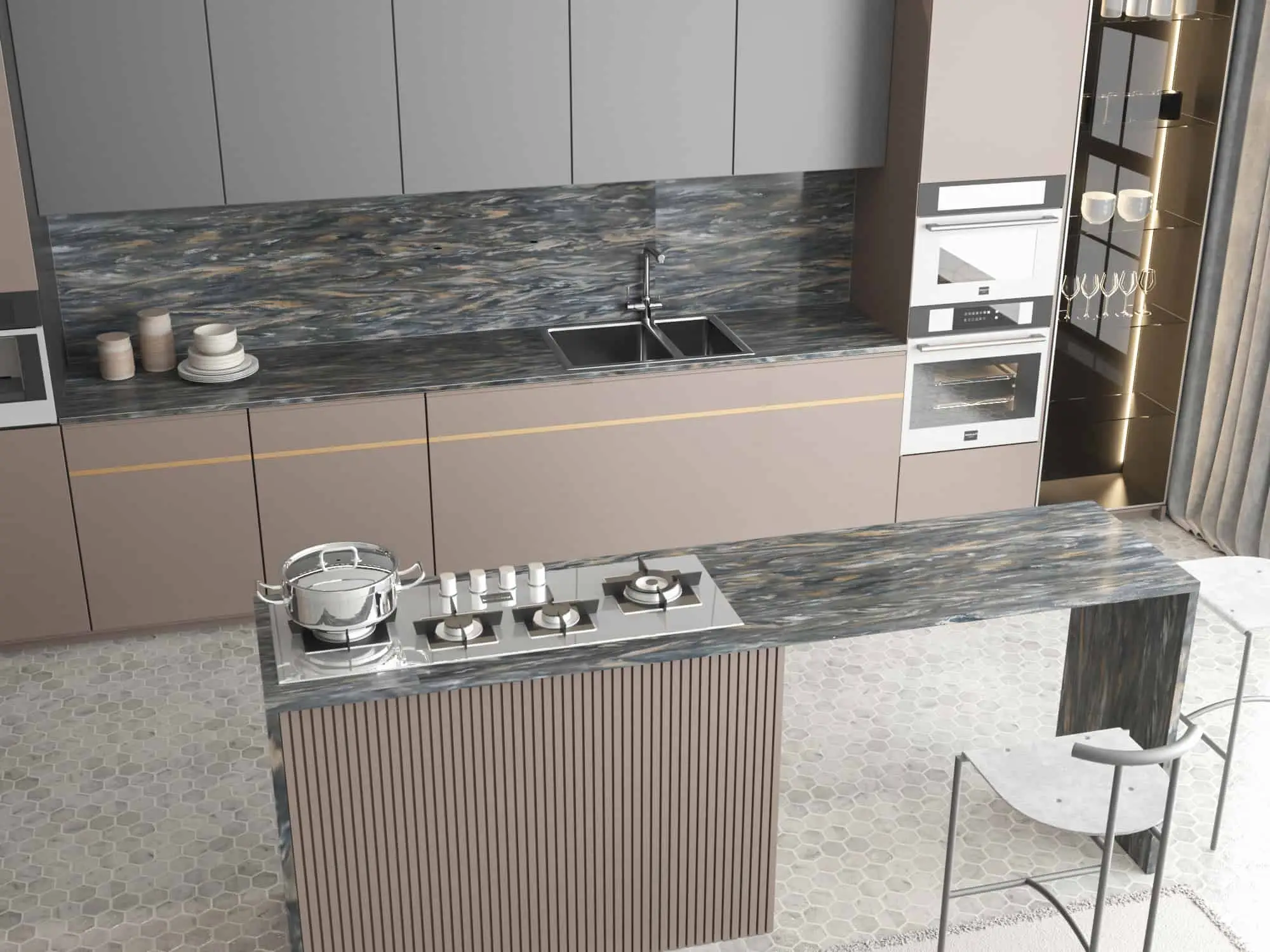
These islands come with appliance cutouts, integrated sinks, and storage options. In the case of hospitality venues, they can significantly improve the staff performance and ensure smooth workflow. The solid surface material handles the wear and tear of high-traffic commercial use effortlessly. It also offers space for seating to integrate dining space into the kitchen. Most designers use a high contrast between the top and the cabinetry. Using warm wood or ribbed metal base material with a solid surface top is trending for luxury hotels and modern homes.
Color and Texture Exploration
There are almost limitless choices for colors in kitchen island solid surface tops. Engineers can mimic the aesthetic elements of natural stone by incorporating veining and color patterns. These are so precise that they can easily be replicated across many batches for large scale hospitality or BTR projects. Solid surface manufacturers offer over 300+ colors and patterns to choose from.
Engineers at the solid surface manufacturing facility have found methods to replicate textures that are impossible by nature. They may use the pattern of natural stone but apply a wood like grain structure. Even textures like rugged chip stone are also achievable with the moulding technique. The incredible versatility that unlocks with solid surface material gives unlimited freedom to the designers. Manufacturers now offer customization for B2B, OEM, or ODM services.
Why Commercial Projects Choose KKR Solid Surface
In commercial projects, consistent quality and aesthetics are key to ensuring successful completion. Everyone involved from procurement, transportation, installation, construction, and fabrication can benefit from a consistent product dimensions, color, pattern, mechanical, and chemical properties. That is why choosing KKR solid surface for a commercial project works.
High-Quality Materials for B2B Clients
Solid surface sheets can be made with different materials and compositions. KKR uses the highest quality Polymethyl methacrylate (PMMA) and pure Alumina Trihydrate (ATH) for their product. Typically, the mixture is made using 66% PMMA and 33% ATH. Then, some pigments, curing agents, accelerators, and UV stabilizers are added to give the solid surface material its unique aesthetics and non-yellowing property.
Certification and Compliance
KKR solid surface kitchen island tops are in line with international certification and standards. It enables them to export to any region in the world.
- ISO 9001: It is a quality management compliance standard. It ensures that the brand has a significant managerial infrastructure to produce a quality product.
- CE Marking: It is Conformité Européenne, which means that the product conforms to the European Union health, safety, and environmental protection standards.
- SGS Testing: Société Générale de Surveillance is the world’s leading organization that provides standards and certification for quality & management, food safety, and industry-specific requirements.
- ANSI Z124 Standards: It is the key standard developed by the American National Standards Institute for plastic and solid surface materials. It ensures that the product is physically durable and suitable for heavy commercial use.
- NSF Food-Contact: The National Sanitation Foundation (NSF) tests the products against health and safety criteria.
- Greenguard or Low-VOC Certifications: Ensure that the chemicals in the product do not emit harmful gases, causing poor air quality in hospitality and residential projects.
Customization and Project Support
KKR has a developed end-to-end project support team. They provide full customization options through their B2B, OEM, and ODM services. Buyers can specify shapes, colors, sizes, and any other integrated features to fully utilize the potential of solid surface material. KKR can reduce your risk and ensure on-time project delivery.
Conclusion
A modern kitchen requires minimalist aesthetics and a durable kitchen island. Solid surface tops ensure that the most visible part of the kitchen seamlessly integrates into the interior design. It provides a non-porous hygienic surface and thermoforming capability that architects and designers utilize to create unique shapes.
Solid surface tops are durable to resist minor scratches, chemicals, and heat from common household kitchen use. These are ideal for high-traffic areas like hospitality and residential projects. For product quality and as described specification, you need a trusted partner like Kingkonree (KKR). They offer extensive certifications and adherence to standards that exhibit their strict policy on product performance against international requirements.
If you want to explore high-end and premium kitchen island solid surface tops, then visit our website..
FAQs
Q: Can solid surface countertops be customized for curved or unusual island shapes?
Yes, solid surface countertops are thermoformable, which enables them to take curved or unusual island shapes. Heating the countertop to 150 C makes it elastic enough to curve or bend into shapes that are impossible to achieve with natural stone.
Q: Are solid surface kitchen islands easy to maintain in commercial kitchens?
Yes, as in commercial settings, maintainability means long-term value and profitability. Solid surface kitchen islands are non-porous, minor scratch and heat resistant. They are easy to repair using light sanding and polishing to bring them back to their original state. Expert repairmen can fill chipped areas as new using color matching fillers and apply a mechanical process.
Q: Can sinks and accessories be integrated into solid surface islands?
Solid surface sinks and accessories are readily available. The installers can seamlessly chemically bond these components to the solid surface island. A naked human eye would not be able to distinguish their boundaries.
Q: What are the design trends for solid surface islands in hotels or restaurants?
Using thin material with contrasting cabinetry combination is the trending design for solid surface islands in hotels or restaurants. Curved organic forms for shapes and colorful textured finishes are trending. Use of islands as a multi-functional hub for prep, serving, and seating is the modern living lifestyle.
Q: How long do solid surface kitchen islands typically last?
Solid surface kitchen islands last 10 to 20 years with proper maintenance. Cleaning the surface with mild soap and polishing to remove the micro scratches will restore the solid surface top to new condition.