







Introduction
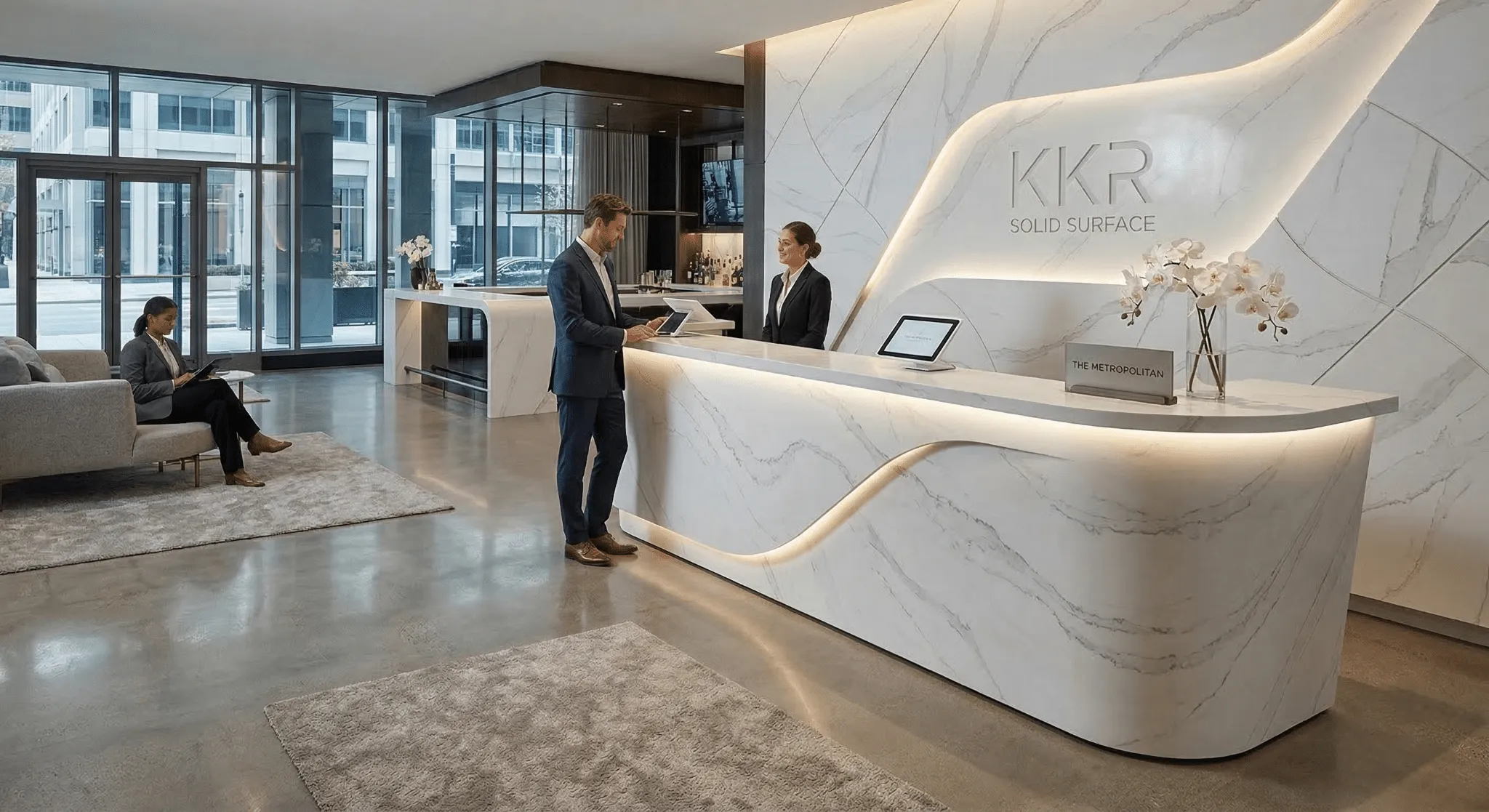
Solid surface countertops are the go to option for modern architects and designers. Its versatility allows them to create complex shapes. Also, they can simply utilize the seamless and non-porous nature of the material to create a countertop that feels like it’s floating mid-air. The solid surface countertops are used in hospitality and commercial applications that require durability and maintenance properties to save money in the long term.
Picking solid surface material has its nuances. Architects and project buyers may come across the two types of countertops: acrylic or polyester resin based. Both of them are plastics and incorporate Aluminium Trihydrate (ATH) from bauxite ore through the Bayer process. This article will help you understand why acrylic solid surface is the premium choice for use in kitchen countertops. The harsh conditions that the top will be subjected to in hospitality and commercial projects require a robust medium like acrylic solid surface. We will start with the fundamental knowledge of acrylic and polyester resin in solid surface:
Understanding Acrylic and Polyester Resin Solid Surface Materials
Acrylic and polyester resin are both derived from petroleum based chemicals. They both have their distinctive features because of the molecular structure and their curing process. We shall examine their different aspects:
Composition and Manufacturing
Acrylic Resin Solid Surface
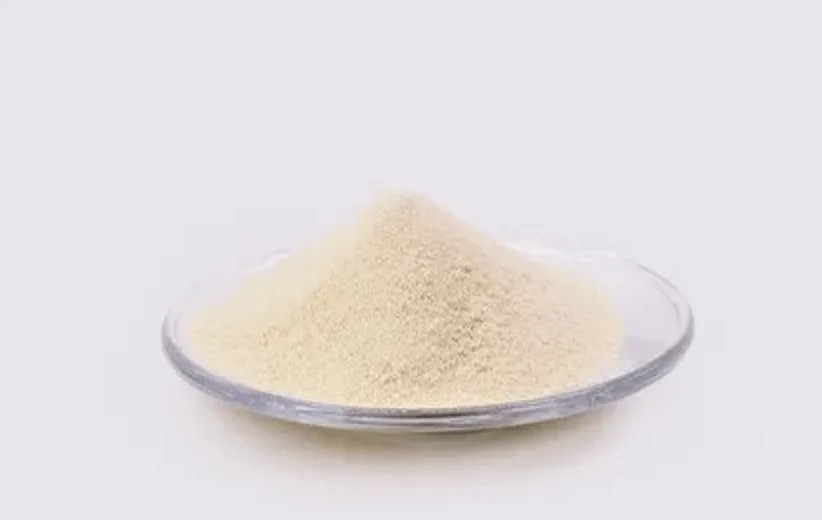
In solid surface countertops, acrylic is considered the premium choice. It is made using 40 to 45% methyl methacrylate (MMA) and 55 to 60% ATH. The mixture is homogenized, which results in a countertop that has the same aesthetics and composition throughout the crossection. Manufacturers prioritize flexibility and stability when producing acrylic resin solid surface. Here are its key properties:
- Density: 1712 kg/m3
- Flexural Modulus: 7700 to 9400 MPa
- Quasi-Brittle Strain: 0.6 to 1.1%
Polyester Resin Solid Surface
With polyester resin, the priority is a budget friendly product with special emphasis on aesthetic elements. It uses 29 to 32% unsaturated polyester resin (UPR) and 58 to 60% ATH. After curing, the material is much harder and stiffer than acrylic. It can hold deep and vivid pigments. The color and pattern versatility of polyester resin solid surface material is superior to that of acrylic. Owing to their rigid nature, they are more likely to develop cracks or snap during transportation. Here are the key properties:
- Density: 1680 kg/m3
- Flexural Modulus: 8500 to 11500 MPa
- Quasi-Brittle Strain: 0.3 to 0.7%
Appearance and Design Possibilities
Acrylic Countertops
- Visuals: Owing to the color, particularly, and pattern going all the way through across the cross-section, the light diffuses through the material. It creates a three dimensional appearance of natural onyx or veined stone.
- Seamless Design: Acrylic items can be chemically bonded together using adhesive of similar color. It allows the creation of integrated solid surface countertops.
- Thermoforming: The material requires heating to 150 C before it begins to bend, and because of that the designers can make complex three dimensional shapes.
- Uniformity: The acrylic solid surface retains its color in several batches after curing processes.
Polyester Countertops
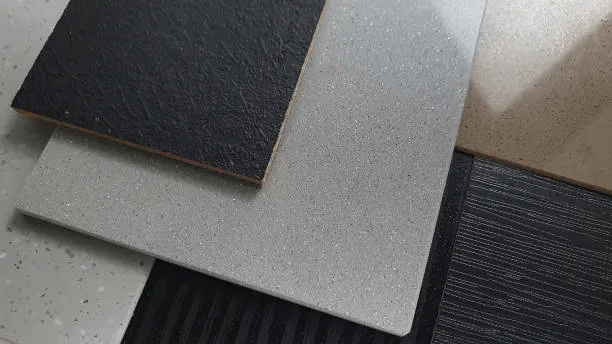
- Vibrant Colors: If you require bright and vibrant colors for your project, then utilize a polyester countertop. They are able to absorb thick and dense pigments.
- Difficulties of Batching: Due to the chemical curing process, the material is prone to some color variation between batches.
- Surface-Level Light Diffusion: The light does not diffuse all the way through, which reduces the visual depth of the polyester resin solid surface countertop.

Everyday Use Performance Differences
In hospitality and commercial settings, durability is key. It is expected that the countertop will be subjected to harsh conditions, which may involve heat, chemicals, impact, and scratching. Let’s compare acrylic with polyester solid surface to see which is better against daily rough use:
Durability and Impact Resistance
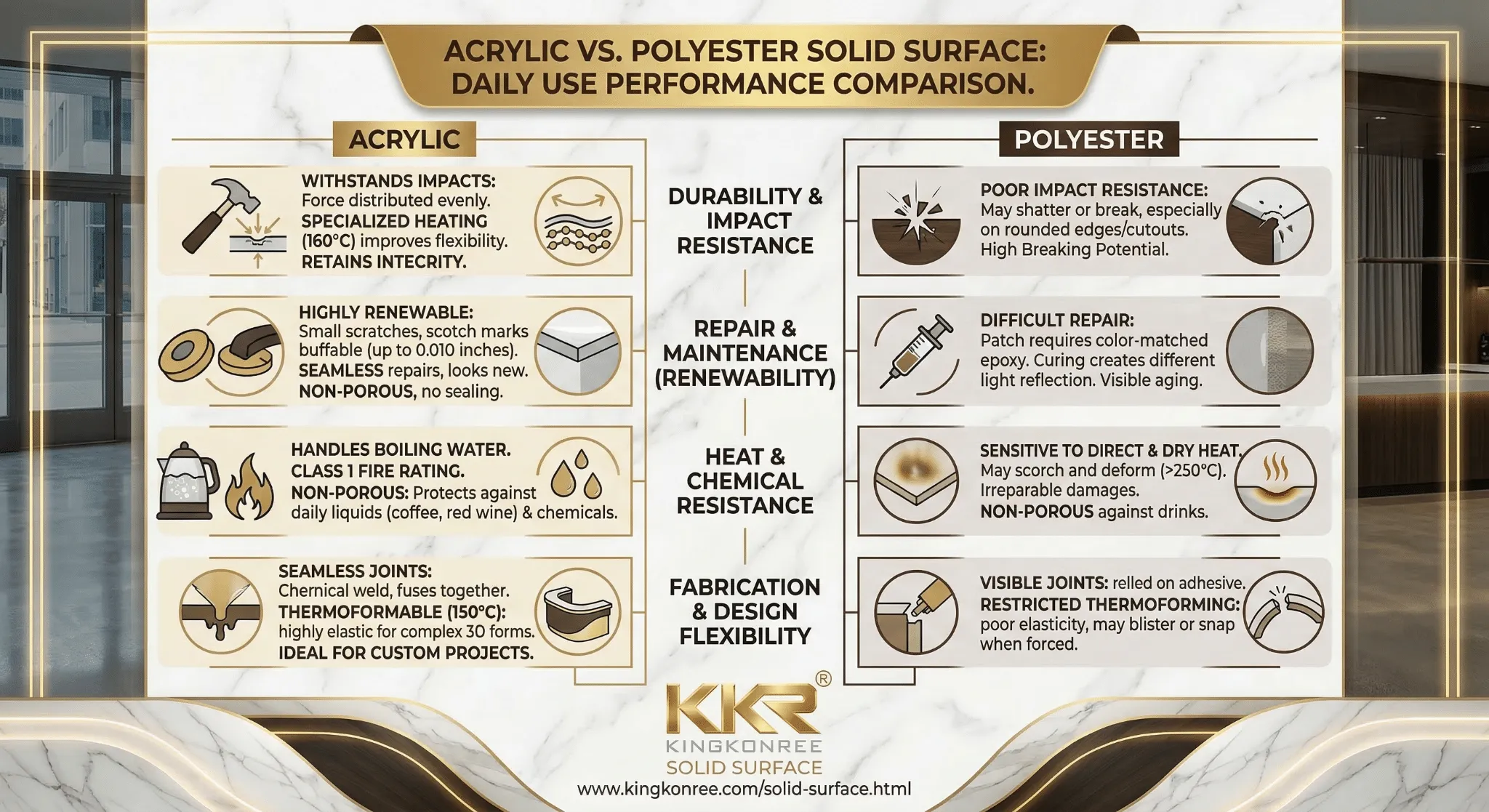
Acrylic solid surface countertops can withstand impacts much better than their alternatives. If a heavy object drops onto the surface, it distributes the force evenly owing to its dense material and elasticity. With specialized controlled heating to 160 C the polymer chains settle, improving its flexibility and strain capacity.
Polyester cannot withstand the shock of sudden impact. It may shatter or break into pieces. The most vulnerable points are rounded edges and cutouts. The breaking potential is also a liability for fabrication and transport. The loss associated with these breakages is so big that 80% of them have abandoned the use of polyester in its pure form for solid surface countertops.
Repair and Maintenance
The ability of the material to go back to the aesthetics of day one is called renewable. Acrylic solid surface material holds this superpower. Small scratches, scotch marks, and small chips can be managed effectively. A fabricator can buff away the defect, sanding away up to 0.010 inches (0.25mm). As the color and pattern are all the way through the polish, it results in a new object. Owing to its non-porous nature, an acrylic countertop does not require any sealing.
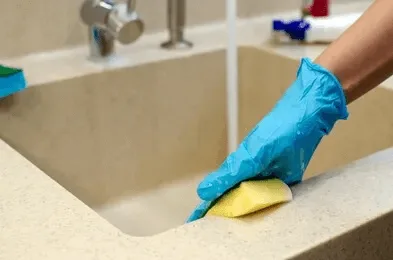
Polyester, on damage, will have some of its surface material buffed away. The patch requires color-matched epoxy, which can be challenging. After matching the curing process, a different light reflection can be created than the original. Cleaning day to day is easy using a mild soap and hot water combination, but its inability to provide seamless repair will make it age visibly.
Heat and Chemical Resistance
Acylics can conveniently handle boiling water and maintain their integrity. Particularly in a kitchen where the chances of heat exposure are high, the acrylic solid surface countertop will retain its shape much longer than polyester. They are protected against a Class 1 fire rating. The surface is also non-porous, which protects it from daily chemicals and liquids like coffee, red wine, and harsh cleaners.
In comparison, polyester is sensitive to direct and dry heat. It can scotch the resin and leave inconsistencies that are irreparable. Over 250 C the material will start to deform or melt. Maintainers also have to deal with the problem of surface restoration as these damages are almost permanent in a polyester solid surface countertop. Like acrylics, it also provides a non-porous surface to prevent contamination from coffee, wine, or other colored drinks.
Fabrication and Design Flexibility
One of the greatest advantages of using solid surface countertops is their ease of fabrication and flexibility of design. They allow the designer creative freedom to create complex shapes that are impossible with natural stone. But there is a difference when we compare polyester and acrylic solid surface materials.
Seamless Installation
The key to the premium aesthetics is the acrylic solid surface material’s ability to fuse together, not glue together. Fabricators use a matching adhesive that melts and chemically welds the two slabs of acrylic material. The finish is smooth, and the edges become indistinguishable. It becomes one even at the microscopic level. Owing to the similar color and pattern across multiple sheets, they can be combined to form a large countertop ideal for hospitality and commercial designs.
Polyester cannot fuse to form a weld. They rely on two part epoxy adhesives to join multiple sheets together. As the adhesive and sheet are made from different materials, they will reflect light differently, making the joints appear to the naked eye.
Thermoforming Capability
Heating an acrylic solid surface sheet in a specialized industrial oven at 150 C (302 F) for about 25 minutes makes it more elastic. They can be draped, twisted, and pressed to create unique shapes that are a signature of modern interior design. Once the sheet cools down to room temperature, it maintains its molded shape and returns to its rigid, stone like state. The heating also acts like an annealing process that removes internal stresses, giving strength to the material.
Polyester does not become as highly elastic as the acrylic solid surface. Instead, it may scotch, blister, or snap when forced into a tight curve. For modern hospitality and commercial design, flowing and organic shapes are highly valued, which makes polyester inferior to acrylic.
Suitability for Custom Projects
Owing to the immense flexibility of acrylic solid surface countertops, they are ideal for custom projects. They provide the freedom to fabricate integrated designs and complex 3D shapes. Acrylic surfaces are widely used for:
- Curved Reception Counters
- Integrated Wash Basins
- Custom Hospitality Furniture
- Complex Retail Installations
Why Many Commercial Projects Choose Acrylic Solid Surface
Acrylic solid surface is becoming the new norm for architectural design in large-scale commercial environments. Hotels, airports, and retail spaces are utilizing the flexibility of the medium to create mesmerizing countertops that the alternative polyester cannot achieve.
Consistency for Large Installations
One of the biggest advantages of using acrylic solid surface sheets for countertops is their color, design, and pattern consistency. Picking a batch of sheets months apart offers similar aesthetics, which are not possible with natural stones. The light diffusion across the material depth remains the same. It allows flexibility in project execution any upgrades or modifications to the existing structures look seamless. Their consistent mechanical properties allow fabricators to use the same techniques across multiple batches, resulting in a consistent quality of output.
In comparison, the polyester curing process makes it challenging to achieve similar light reflection properties as acrylic solid surface. If you need a large batch of 100 sheets for a hospitality project, the sheets may not even match, as they may be from different production batches. Batch to batch variation is the biggest drawback of polyester sheets.
Hygienic and Non-Porous Surface
Acrylic solid surface countertops have no microscopic gaps, and their ability to chemically weld together two sheets makes the joints non-porous. The material does not allow mold, mildew, and bacteria to take root within the gaps and grow. As per the latest research, specialized acrylic variants do not just resist bacteria, they actively take part in killing it with a >99.9% of kill rate. They can eliminate pathogens like MRSA and E. coli within just two hours of contact.
UPR is inherently porous, which will cause any spills or organic matter to soak into the slab. The epoxy that joins the two sheets of polyester solid surface may also degrade before the actual material starts to degrade. Nonetheless, polyester also offers convenient daily cleaning, long-term ROI, and healthcare applications.
KKR Acrylic Solid Surface Solutions
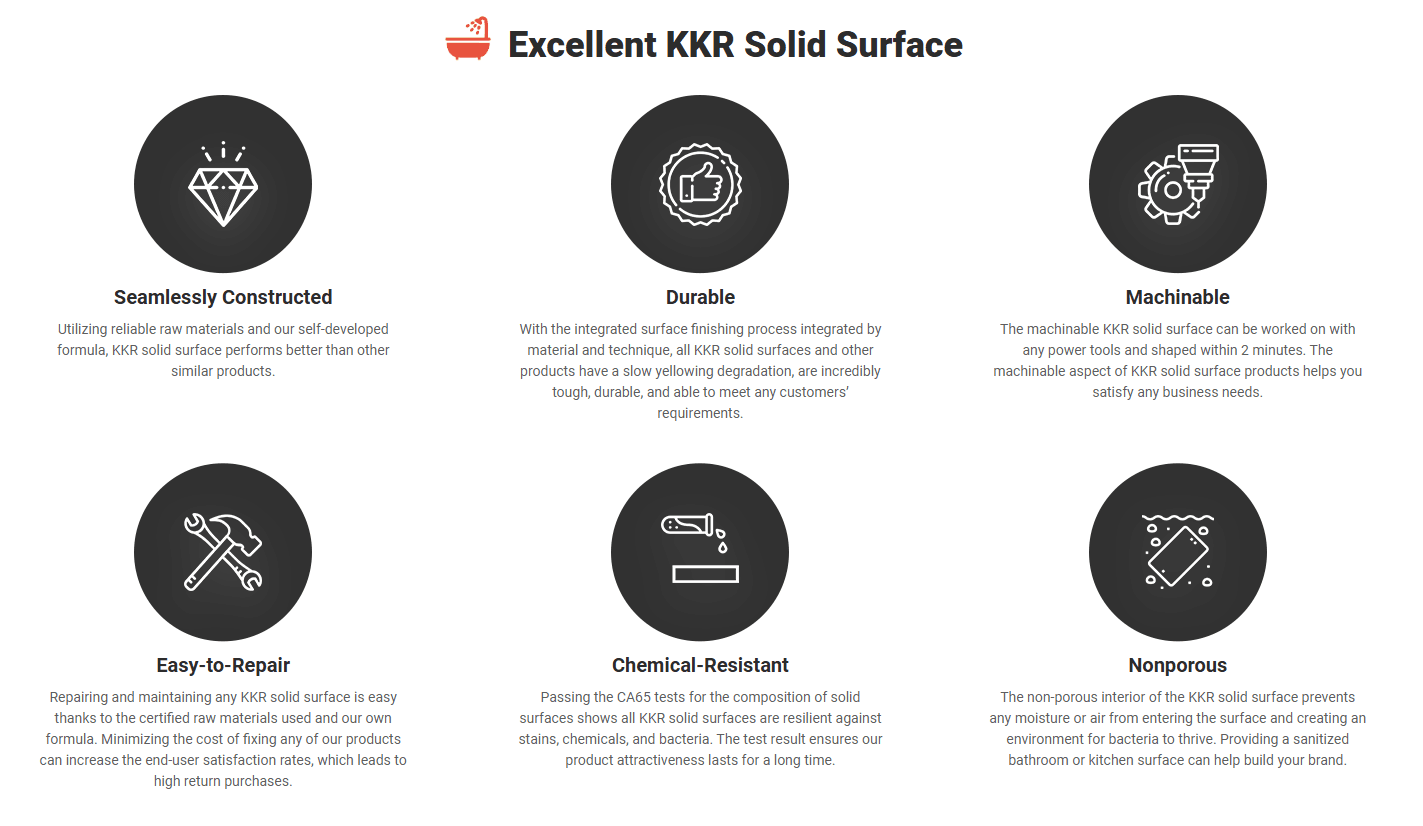
Manufactuerers may use different techniques to produce acrylic solid surface countertops. Kingkonree (KKR) uses an advanced manufacturing process that is standardized as per ISO 9001. They provide CE/SGS test certification, which ensures that the product is suitable for the global market and follows the key safety standards. Here are the key areas where KKR outshines its competition:
Quality Framework
- Inspection: 100% multi-stage QC
- Certifications: ISO 9001:2015, CE, CUPC, SGS, UV testing.
- Standard: Zero-tolerance for bubbles, cracks, or visible defects.
Dimensional Precision
- Thickness Tolerance: +-0.5 mm.
- Verification: Laser scanning, digital calipers, and micrometers.
- Sizing: CNC-trimmed up to 3660×1220 mm.
Color & Surface
- Accuracy: 99% color match consistency (Spectrophotometer verified).
- Materials: LR pigments + UV stabilizers (Anti-yellowing).
- Composition: 99.9% pure Chinalco ATH + PMMA acrylic resin.
- Finish: Progressive sanding (P120 to P800+) for pore-free surface.
Drainage & Fabrication
- Slope: Engineered 2 to 4 degree gradient for integral sinks.
- Flow: CNC-routed channels to prevent water pooling.
- Curing: Vacuum-mixed; 60-100 C+ controlled post-cure for stability.
Performance Standards
- Fire Rating: EN 13501 Class B-S1.
- Resistance: Verified against acids/dyes, impact, and UV weathering.
- Safety: Non-porous, radiation-free, and NSF-compliant hygiene.
Conclusion
Hospitality and commercial designs require versatility, durability, and long-term performance. They are subjected to harsher conditions than domestic use. Acrylic solid surface countertops outshine polyester or other alternatives in all respects. While they share similarities, acrylic is considered premium. Its non-porous, consistent color/pattern, seamless chemical welds, flexibility in design, light reflection, chemical resistance, and maintainability are all features that make acrylic solid surface an ideal choice for project execution.
For premium grade solid surface sheets, consider KKR, a leading solid surface manufacturer. They offer a variety of colors and thicknesses with B2B, OEM, and ODM services for ultimate customization. Visit https://www.kkrstone.com/ to explore all their options.
FAQs
Q: What are acrylic countertops made of?
These are made using a mixture of 40 to 45% methyl methacrylate (MMA) and 55 to 60% ATH. The mixture is molded into a sheet and cut into its final form with precise thickness, slope, color, and pattern consistency.
Q: What is the difference between acrylic and polyester solid surface?
Acrylic is a premium, thermoformable, and impact resistant material that chemically welds for seamless joints. Polyester is a budget oriented, brittle alternative offering vibrant colors but visible seams and lower heat resistance.
Q: Can acrylic kitchen countertops be repaired if scratched?
Yes, acrylic kitchen countertop can be repaired using simplesanding and polishing process. The material is the same throughout the cross-section. The repaired part is as good as new.
Q: Are acrylic countertops considered a plastic countertop material?
Yes, acrylic countertops are made using petroleum-based material. They are mixed with Aluminium Trihydrate (ATH) from bauxite ore through the Bayer process. The result is an environmentally friendly, low-VOC product that is suitable for kitchen and healthcare applications.
Q: Do acrylic solid surface countertops require sealing?
No, the acrylic solid surface countertops are inherently non-porous. It allows the material to prevent liquid spills, color, or any other household fluid from penetrating into the material. There are no microscopic gaps in the acrylic solid surface sheet, which means it does not require any sealing like natural stone.