







What are solid surface countertops? It is a versatile and durable surface made from a blend of acrylic, polyester resins, and natural minerals used in kitchens and bathrooms.
As a solid surface fabricator, I often encounter questions about its benefits and applications.
Don’t worry, all the necessary information will be explained clearly.
In this guide, we will learn about the characteristics of these surfaces, their advantages and disadvantages, the range of colors and patterns available, and much more.
So let’s get started!
1. What are Solid Surface Countertops?
According to Precision Business Analysis, solid surface countertops are made from engineered quartz composite (93 to 97 percent ground quartz combined with resins, binders, and pigments) and natural materials, creating a smooth and non-porous surface. They are super easy to clean and affordable, making them a popular choice for kitchens and bathrooms.
These countertops also come in many colors and patterns, offering so many design options. They are also durable and can be repaired easily if scratched, which is a big plus for busy areas. Additionally, their seamless appearance and ability to integrate sinks and backsplashes make them a favorite for both aesthetic and practical reasons. Amazing right?
2. Pros & Cons of Solid Surface Countertops
When considering solid surface countertops, it’s important to weigh their benefits and drawbacks to determine if they are the right choice for specific needs. I recommend creating a list of priorities to help make the best decision for the space. Here are the key pros and cons to better understand solid surface countertops:
Pros
- Scratch and Impact Proof: Its homogeneous composition provides a durable surface.
- Stain and Bacteria-Resistant: The non-porous material prevents liquid and bacteria absorption.
- Easy To Clean: A simple wipe with soap and water keeps them looking new.
- Seamless Appearance: Joints are fused, creating a smooth, continuous surface.
- Customizable: Available in various shapes, sizes, and colors to suit specific design preferences.
- Heat Resistant: Can withstand moderate heat, making them suitable for kitchens.
- Consistent Color: The material is uniform throughout because the pigments are evenly distributed throughout the entire material, maintaining uniformity from top to bottom.
- Moldable: Can be shaped into different designs, including integrated sinks.
Cons
- HighCost: More expensive because of the advanced manufacturing process and the premium materials used.
- Chemical Sensitive: Some harsh chemicals, such as bleach or paint stripper can damage the surface and cause discoloration.
- Professional Installation Required: DIY installation is challenging due to the need for precise fitting.
- Heavy: Requires strong support structures.
- Not As Hard As Stone: Less hardness compared to granite or quartz.
3. Solid Surface Countertop Colors and Patterns
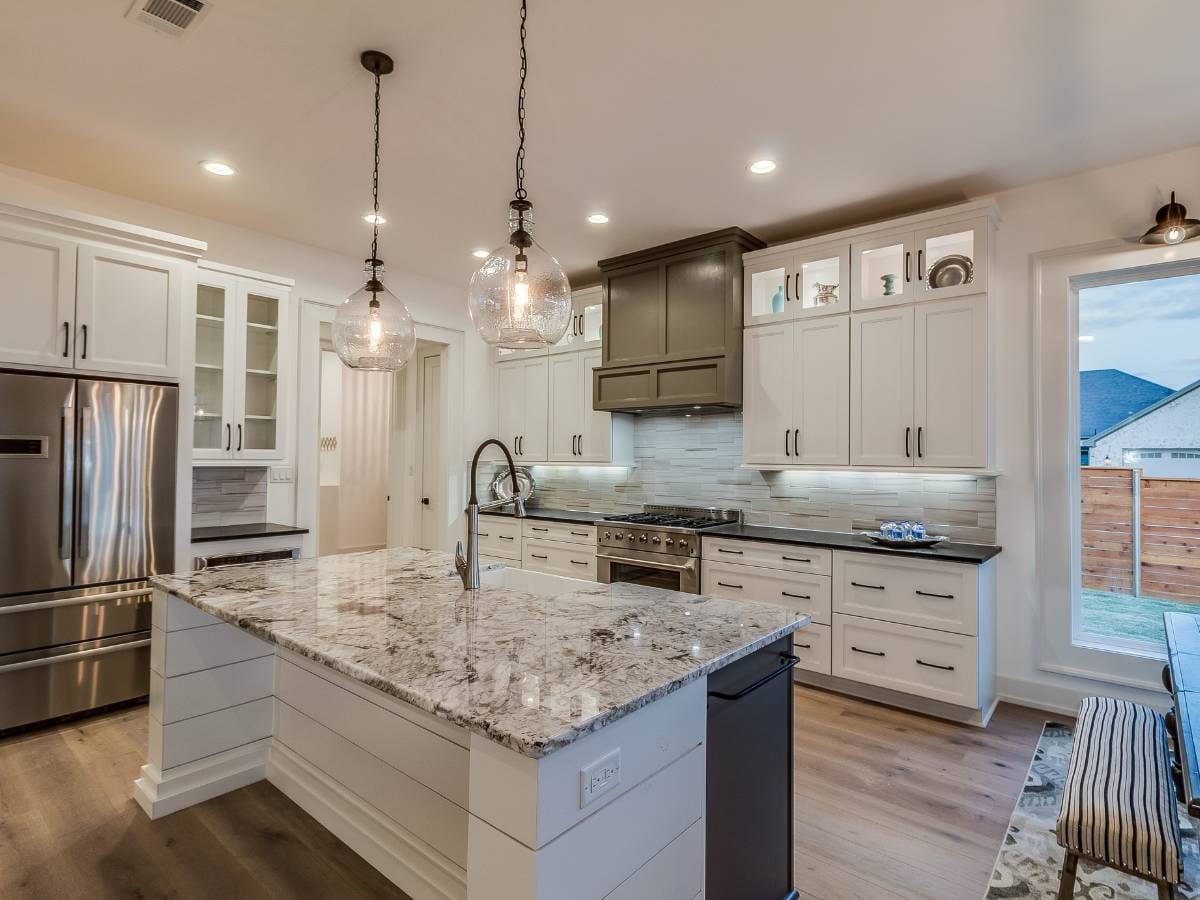
KKR solid surface countertops offer a wide range of colors and patterns, allowing for endless design possibilities. Whether the preference is for something classic or contemporary, there is an option to suit every style. For me, the variety of choices makes it easy to find the perfect match for any kitchen. Here are some popular choices:
Solid Surface Countertop Colors
- Bright Whites: Perfect for a clean and modern look.
- Deep Blacks: Adds a touch of elegance and sophistication.
- Vibrant Hues: Ideal for making bold design statements.
- Neutral Tones: Versatile and easy to match with any decor.
- Earthy Shades: Brings a natural and warm feel to the space.

Solid Surface Countertop Patterns
- Veined Patterns: Mimics the look of natural stone for an elegant touch.
- Speckled Designs: Adds a dynamic and visually interesting surface.
- Textured Finishes: Provides a distinctive and tactile feel.
- Marbled Effects: Offers a luxurious and timeless appearance.
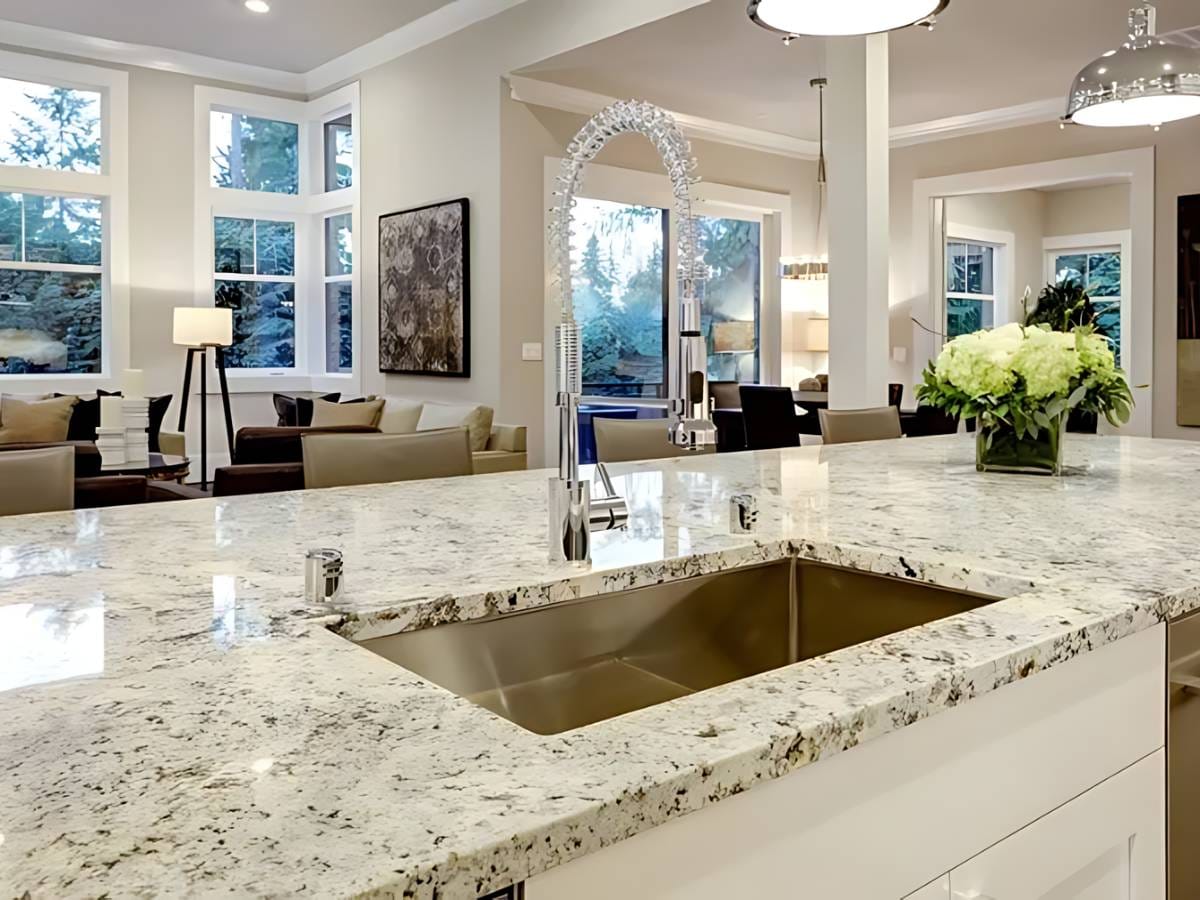
- Granite-like Patterns: Combines durability with a classic look.
4. Solid Surface Countertop Installation
Installing a solid surface countertop can seem daunting, but with the right steps and materials, it can be a straightforward process. Here are the key steps to follow for a successful installation:
Step#1 Measure the Area
The installation begins by measuring the area where the countertop will be installed. Accurate measurements help the countertop fit perfectly. A tape measure is used to get the dimensions of the cabinets, accounting for any overhangs or cutouts needed for sinks or appliances. My tip is taking time with this step saves a lot of trouble later.
Step#2 Cut the Material
Using the measurements, the material is cut to the required size. Proper tools, such as a circular saw with a fine-toothed blade, are used to achieve clean and precise cuts. Measurements are double-checked before cutting to avoid any mistakes.
Step#3 Prepare the Surface
The base cabinets are cleaned and leveled to prepare for a smooth installation. A level is used to check that the cabinets are even, making any necessary adjustments. This step is crucial for a secure and stable countertop.
Step#4 Apply Adhesive
A strong adhesive is applied to the top of the cabinets. This is to hold the countertop in place and prevent movement. The adhesive is spread evenly using a notched trowel to create a strong bond.
Step#5 Position the Countertop
The countertop is carefully placed on the cabinets, and aligned with the edges. It is pressed down firmly to secure it to the adhesive. A helper may be needed to make sure the countertop is placed correctly and to avoid any damage.
Step#6 Secure the Countertop
Clamps are used to hold the countertop in place until the adhesive sets, creating a tight bond between the countertop and the cabinets. The clamps are left in place for the recommended amount of time, usually at least 24 hours, to allow the adhesive to fully cure.
Step#7 Seal the Edges
A sealant is applied around the edges of the countertop to prevent water damage and create a seamless finish. A caulking gun is used to apply a bead of silicone sealant, then smoothed out with a caulk tool or finger for a clean look. Make sure the sealant is waterproof and matches the color of the countertop.
Step#8 Finish and Clean
Once the adhesive and sealant are dry, the clamps are removed, and the countertop is cleaned. A non-abrasive cleaner is used to remove any dust or residue from the installation process. Any imperfections are checked and necessary adjustments are made so that the countertop looks perfect and is ready for use. At KKR, we provide detailed product information for smooth and efficient installation.

5. Average Cost of Solid Surface Countertops
When considering solid surface countertops, understanding the cost is crucial for budgeting and planning. The price depends on factors such as the brand, color, and finish of the material. In my opinion, it is possible to achieve a beautiful, functional countertop that fits within the budget with proper planning.
On average, solid surface countertops cost between $13 – $67 per square foot. They are affordable and mimic the look of actual stone due to their composition. Furthermore, a rising preference for eco-friendly and low-maintenance materials has further boosted the demand for acrylic and polyester resin surfaces among consumers.
6. Solid Surface vs. Other Countertop Materials
Choosing the right countertop material involves comparing different options to see which best suits specific needs. I find that each material has its strengths and weaknesses to consider. Here are some key comparisons between solid surface countertops and other popular materials:
| Feature | Solid Surface Countertops | Granite Countertops | Quartz Countertops | Laminate Countertops |
| Durability | Durable, repairable | Highly durable, less repairable | Extremely durable, non-repairable | Less durable, prone to scratches and burns |
| Maintenance | Easy to clean and maintain | Requires sealing and periodic maintenance | Low maintenance, easy to clean | Easy to clean, but susceptible to damage |
| Appearance | Wide range of colors and patterns available | Natural stone look with distinctive patterns | Consistent patterns and colors | Variety of designs, but less natural appearance |
| Cost | Moderate to high, $13 – $67 per sq. ft. | High, $39 – $149 per sq. ft. | High, $38 – $157 per sq. ft. | Low, $17 – $41 per sq. ft. |
| Installation | Professional installation recommended | Professional installation required | Professional installation required | Can be DIY-friendly |
| Seamlessness | Seamless appearance | Visible seams | Visible seams | Visible seams |
| Heat Resistance | Moderate, can be damaged by hot items | High, resistant to heat | High, resistant to heat | Low, easily damaged by heat |
7. 4 Cleaning and Maintenance Tips for Solid Surface Countertops
Proper cleaning and maintenance are essential to keep solid surface countertops looking their best and lasting longer. Regular care helps maintain their appearance and durability. Here are some key tips:
#1 Use Mild Soap and Water
Clean with mild soap and water to prevent dirt buildup. A non-abrasive cleaner can also be used for a more thorough cleaning. For instance, gentle dish soap like Dawn or an all-purpose cleaner like Method effectively removes grease and grime without harming the surface.
#2 Remove Stains with Baking Soda
For tough stains, use a paste of baking soda and water. Apply this paste to the stained area and gently scrub with a soft cloth or sponge, using circular motions to lift the stain without damaging the surface. In my experience, baking soda is a mild abrasive, making it effective for stain removal while still being gentle on the countertop.
#3 Use Cutting Boards and Trivets
Use cutting boards instead of chopping directly on the countertop, as this will protect the surface from knife marks and potential scratches. Additionally, place hot pots and pans on trivets or heat-resistant pads to prevent heat damage and potential burns. It’s also important to avoid placing sharp objects, such as knives or metal utensils, directly on the surface to maintain its smooth, unmarred appearance.
#4 Use a Fine Abrasive Pad or Hire a Professional
Check for wear or damage periodically. Buff out scratches with a fine abrasive pad and seek professional repair for deeper damage. For example, a Scotch-Brite pad can smooth out minor scratches, and a professional repair kit can fix deeper gouges.
Conclusion
Understanding the benefits of solid surface countertops can greatly enhance any space. At KKR, we create high-quality, durable surfaces that are both beautiful and functional. With expertise in advanced manufacturing, we guarantee top-tier products customized to specific needs.
In conclusion, this guide offers a comprehensive understanding of solid surface countertops, aiding in informed decision-making for various projects. If you have any questions or need more information, contact us at KKR. We’re here to help you find the perfect countertop for your needs.
Recommended Reading
Looking for more diverse product options? Browse through our handpicked selections:
For some insightful reads, we’ve curated a list of recommended articles just for you:
Still haven’t found what you’re looking for? Don’t hesitate to contact us. We’re available around the clock to assist you.