








Are you trying to determine the material of a bathtub to offer the best recommendations for your clients? Identifying the correct material can impact the maintenance and overall satisfaction of the bathtub.
With years in the bathtub industry, I know how to identify various bathtub materials. My insights will help you make accurate and informed decisions.
Identifying bathtub materials involves examining specific features like weight and texture. Knowing these details can help you make informed decisions for quality and client satisfaction.
In this guide, you’ll learn how to tell the material of a bathtub by looking at key indicators. We’ll cover the different types of materials and their unique characteristics.
So let’s get down to it!
1. Visual Inspection
Visual inspection is a straightforward method to determine the material of a bathtub. By carefully examining specific features, you can often identify the type of material used. Here are the key aspects to look for during a visual inspection:
Surface Appearance
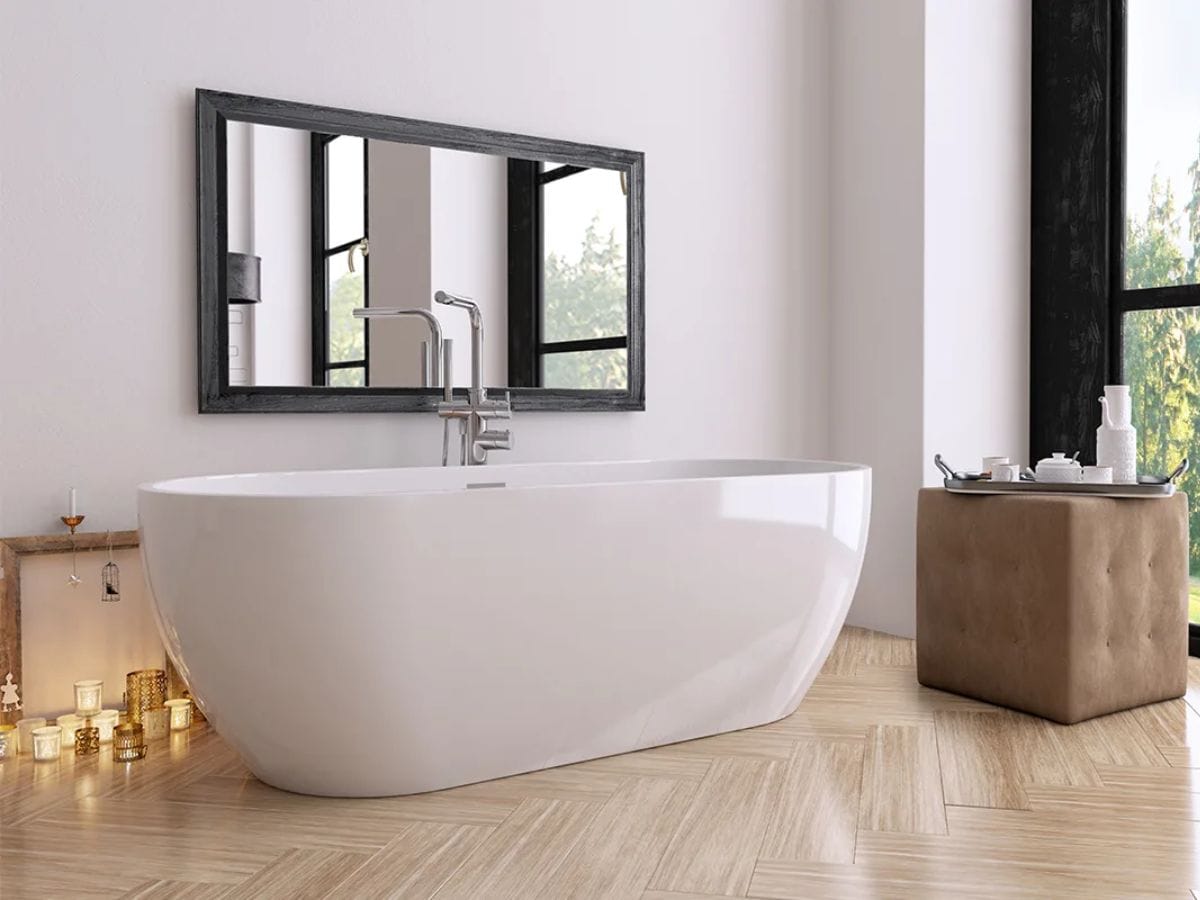
The surface of the bathtub can provide important clues about its material. Acrylic and fiberglass tubs usually have a smooth, glossy finish. Cast iron tubs often have a more matte look and may show signs of wear. Stone and cultured marble tubs have a unique, natural pattern that is easy to spot.
Color Consistency
Check for consistent color throughout the bathtub. Acrylic and fiberglass tubs often have a uniform color. Cast iron tubs may have variations if the coating applied has worn off in places. But that’s not all! Stone and marble tubs typically display natural color variations and veining patterns.
Wear and Tear
Examine any signs of wear and tear on the bathtub. Acrylic and fiberglass can show scratches and minor dents. Cast iron might have rust spots if the enamel is chipped. Stone and cultured marble can display chips or cracks, revealing their true nature underneath.

2. Perform a Tap Test
Performing a tap test is a simple way to identify the material of a bathtub. By tapping the surface and listening to the sound it makes, you can often determine what the tub is made of. Here are the steps to perform a tap test:
- Choose a Tool: Use a small metal object like a coin or a spoon for tapping. These tools are easy to handle and produce a clear sound.
- Tap the Surface: Gently tap different areas of the bathtub with your chosen tool. Listen carefully to the sound produced with each tap.
- Listen for Differences: Different materials produce distinct sounds. For example, acrylic may sound hollow, while cast iron produces a deeper, solid sound.
- Identify Patterns: Note any consistent sound patterns from your tapping. This can help distinguish between materials like fiberglass, steel, or cast iron.
- Use Online Resources: Compare the sounds you hear with online examples. Many videos and audio samples are available to help match the sound to a specific material.
3. Check for Weight
Checking the weight of a bathtub is an effective way to identify its material. Different bathtub materials have distinctive weights, helping to determine what the tub is made of. Here are the ways to check:
Lift and Move
Try lifting one end of the bathtub. Acrylic tubs are light and can be easily lifted by 1 or 2 people. Fiberglass tubs are slightly heavier but still manageable. Cast iron and stone tubs are very heavy and often require multiple people to lift.
Comparing Installed Tubs
If you have experience with different bathtubs, compare the weight of the current tub to others you’ve handled. Acrylic and fiberglass tubs are similar in weight and much lighter than cast iron or porcelain. Cast iron tubs are the heaviest, often requiring multiple people to install. This comparison can be useful if you’re familiar with various materials.
Moving the Bathtub
Try to shift the bathtub slightly from its position. Lighter tubs made from acrylic or fiberglass can be moved with less effort. Heavy tubs like those made from cast iron or porcelain require significant force to move. It all boils down to this: it gives you a clear indication of the material based on the effort needed.
4. Examine the Edges
Examining the edges of a bathtub can help determine its material. Different materials have unique edge characteristics that can provide important clues. Here are some key points to consider:
Smoothness and Flexibility
Check if the edges are smooth and slightly flexible. Acrylic bathtubs usually have smooth, rounded edges that can flex a bit when pressed. This flexibility is due to the plastic nature of acrylic. The tub is likely acrylic if the edges feel smooth and give slightly.
Sharpness and Rigidity
Feel the edges for sharpness and rigidity. Cast iron bathtubs have very sharp, defined edges that do not flex at all. The edges will feel solid and heavy, indicating the dense material. If the edges are hard and immovable, the tub is likely cast iron.
Texture and Pattern
Observe any texture or fiber patterns on the edges. Fiberglass bathtubs often have slightly rougher edges compared to acrylic, with visible fiber patterns. These edges may feel lightweight and have a small amount of give. Think about this: if you notice a textured edge with some flexibility, the tub is like fiberglass.

5. Inspect the Underside
Inspecting the underside of a bathtub can provide important clues about its material. Different materials have unique features on the underside that can help identify them. Here are some key points to consider:
Visible Reinforcements
Look for visible reinforcements underneath the bathtub. Fiberglass and acrylic tubs often have extra layers or mesh reinforcement visible on the underside. These reinforcements are added for strength and stability. If you see this mesh or layered material, the tub is likely fiberglass or acrylic.
Surface Coating
Check the surface coating on the underside. Cast iron bathtubs typically have a rough, black coating called porcelain enamel. This coating helps prevent rust and gives the tub a solid feel. If you see a rough, black coating, the tub is likely cast iron.
Material Texture
Feel the texture of the material on the underside. Stone and marble bathtubs will have a natural, rough texture. The surface might feel like unpolished rock or have small imperfections. And you know what? If the underside feels like natural stone, the tub is likely made of stone or marble.

6. Look for Labels or Markings
Looking for labels or markings on a bathtub can help identify its material. Manufacturers often leave specific labels or stamps that indicate the type of material used. Here are the key points to consider:
Manufacturer Labels
Search for labels from the manufacturer. Acrylic and fiberglass tubs usually have labels that are easy to find, often placed on the side or underside of the tub. These labels can include the brand name, model, and material. Cast iron tubs may also have manufacturer labels, though they might be less prominent.
Imprinted Markings
Look for imprinted markings on the bathtub surface. Some tubs have the material type or manufacturer details imprinted directly into the material. For example, a cast iron tub might have “CAST IRON” stamped into the metal. These markings might be found on the underside or along the edge.
Serial Numbers
Search for serial numbers or product codes. These numbers can often be traced back to the manufacturer’s information. You can look up the serial number online to find out the material of the bathtub. With KKR’s bathtubs, serial numbers are typically located on the underside or near the drain.
Compliance Markings
Look for compliance markings indicating safety and quality standards. These markings can be found on all types of tubs, including acrylic, fiberglass, cast iron, and porcelain. They often include information about the material, manufacturing date, and compliance with industry standards. And the best part is that compliance markings can provide a reliable way to identify the bathtub material.
7. Perform a Magnet Test
Performing a magnet test is a simple and effective way to determine the material of a bathtub. Magnets can help identify metal materials like cast iron and steel. Here are the steps to perform a magnet test:
- Choose a Magnet: Select a strong magnet for the test. Refrigerator magnets might work, but a stronger magnet will give better results. Below is a table of appropriate magnets fitted for testing:
| Magnet Type | Description | Typical Use Case |
| Neodymium | Very strong, rare-earth magnet. | Ideal for detecting subtle ferrous content. |
| Ferrite (Ceramic) | Moderately strong and more resistant to demagnetization. | Suitable for general testing in industrial settings. |
| Alnico | Made from aluminum, nickel, and cobalt. | Useful for high-temperature applications. |
| Samarium Cobalt | Another rare-earth magnet, highly resistant to heat. | Perfect for environments with varying temperatures. |
- Attach the Magnet: Place the magnet on the surface of the bathtub. If the magnet sticks firmly, the tub is likely made of a metal like cast iron or steel. Amazing, isn’t it?
- Test Different Areas: Move the magnet to different areas of the bathtub. This helps ensure that the entire tub is made of the same material. For example, try the magnet on both the side and the bottom of the tub.
- Check for Resistance: Notice how strongly the magnet sticks to the bathtub. A strong resistance indicates a dense metal material. If the magnet barely sticks or doesn’t stick at all, the tub is probably made of acrylic, fiberglass, or stone.
- Confirm the Material: Compare the results of the magnet test with other clues. If the magnet sticks and the tub is heavy, it is likely cast iron. If the magnet doesn’t stick and the tub is light, it might be acrylic or fiberglass.
8. Seek Professional Assistance
Seeking professional assistance can help accurately determine the material of a bathtub. Different professionals have the expertise and tools to provide reliable identification. Here are the professionals to consider:
Plumbers
Plumbers are knowledgeable about various bathtub materials. They can quickly identify the material based on their experience with different types of tubs. Plumbers also have tools to inspect the bathtub more closely. Here’s the thing: if unsure, contacting a plumber is a good first step.
Bathtub Manufacturers
Reaching out to the bathtub manufacturer can provide specific information. Manufacturers like KKR can often identify the material based on the model and serial number. According to Grand View Research, the bathtub market is expecting a CAGR of 4.1% from 2024 to 2030. Highlighting the importance of contacting the manufacturer to get accurate and detailed information about the bathtub material.
Renovation Contractors
Renovation contractors frequently work with different bathtub materials. They can identify the material based on their experience with installations and repairs. Contractors also have access to specialized tools for material identification. Consulting a renovation contractor can offer practical and accurate insights.

Conclusion
Knowing how to tell bathtub material helps you choose the best one for your home and renovations. From examining the weight and texture to understanding the different types of finishes, each material offers unique characteristics. By understanding these aspects, you can select a bathtub that meets your functional needs.
This guide is designed to help you make informed decisions when choosing a bathtub. At KKR, we pride ourselves on providing high-quality, durable, and beautifully crafted solid surface bathtubs. For more information and personalized assistance, please contact us directly.
Recommended Reading
Looking for more diverse product options? Browse through our handpicked selections:
For some insightful reads, we’ve curated a list of recommended articles just for you:
Still haven’t found what you’re looking for? Don’t hesitate to contact us. We’re available around the clock to assist you.