






Yes, you can polish Corian countertops, but the right method depends on their existing finish. Start by washing the surface with warm, soapy water and drying it completely. If it still looks dull or scratched, identify whether it has a matte, semi-gloss, or high-gloss finish before using a polishing product, abrasive pad, or sandpaper. The goal is to restore an even appearance, not make every countertop mirror-shiny.
Corian® is a specific brand of solid-surface material. Many other solid-surface countertops can also be refinished, but their manufacturers may specify different products and procedures. The guidance below focuses on Corian and explains when professional refinishing is the safer choice.

Why Polish Corian Countertops?
Daily use can leave countertops looking cloudy, uneven, or scratched. Before polishing, determine what has changed. Hard-water film and grease are cleaning problems, while scratches and an uneven finish may require controlled surface refinishing.
Restore the Original Sheen
A properly finished Corian countertop may look matte, softly reflective, or glossy. Cleaning often restores its appearance when dried mineral deposits or cleaner residue are responsible for the dullness. Abrading the surface unnecessarily may change its intended sheen.

Reduce Visible Minor Scratches
Knives, dragged objects, and everyday contact can produce fine scratches. Because Corian is solid throughout, some surface scratches can be removed by carefully abrading and blending the affected area.
However, ordinary countertop polish does not reliably fill deep scratches or permanently repair gouges. Removing actual scratches may require a manufacturer-approved refinishing process rather than simply applying polish.
Keep the Surface Easy to Clean
Corian is nonporous, so routine cleaning helps remove residues without the need to seal the surface. A smooth, properly maintained countertop is also easier to wipe clean.
However, polishing is not a substitute for cleaning or disinfecting, and a shiny finish does not make a countertop sterile.
Check the Finish Before You Start
Before polishing Corian countertops, identify their original finish. The finishing method should match the intended appearance of the surface.
A matte finish has little obvious reflection, a semi-gloss finish reflects light softly, and a high-gloss finish shows more distinct reflections. Darker colors often reveal scratches and inconsistent buffing more readily than lighter colors.
| Corian Surface Condition | Recommended Action |
| Cloudy patches or water marks | Clean, rinse, and dry before considering polish. |
| Light scratches on a matte finish | Use the manufacturer-approved scratch-removal method and blend the finish. |
| Uneven semi-gloss sheen | Avoid aggressive spot polishing; larger areas may require professional refinishing. |
| Deep scratches or damaged high-gloss finish | Ask a qualified Corian repair professional. |
If you are unsure which finish you have, consult the countertop supplier before attempting repairs.
How to Polish Corian Countertops Step by Step
The best way to polish Corian countertops is to start with gentle cleaning and use additional restoration methods only when necessary.
Step 1: Clean the Countertop Thoroughly
Before applying any polish, remove dirt, grease, dust, and residue from the surface.
Start by removing loose debris. Wipe the countertop with warm water and mild dish soap using a clean microfiber cloth. An ammonia-based household cleaner or a cleaner recommended for Corian is another option.
Rinse the surface thoroughly to remove any cleaning residue, then dry it with a separate, clean cloth.
This step is important because dried water and mineral deposits can create a cloudy appearance that looks like lost shine. Sometimes, cleaning and drying are enough to restore the countertop’s original appearance.
For more detailed maintenance guidance, see KKR Stone article on cleaning solid-surface countertops.
Step 2: Choose a Product That Matches the Finish
Once the surface is clean, determine whether polishing or scratch repair is actually necessary.
A non-abrasive countertop polish specifically labeled as compatible with solid-surface materials may improve the appearance of certain polished surfaces. However, it will not remove physical scratches.
For minor scratches on matte Corian, the manufacturer allows specific mild abrasive cleaners and restoration pads.
These same abrasive methods can visibly dull a glossy countertop if they are used incorrectly.
Do not assume that granite polish, furniture wax, or automotive polishing products are suitable simply because they add shine to other materials.
Always check compatibility with your countertop’s finish and test an approved treatment in an inconspicuous area first.
Step 3: Apply or Buff Gently
If you are using a compatible non-abrasive countertop polish, follow the product manufacturer’s instructions.
Apply the recommended amount using the specified cloth or applicator. Work evenly across the designated area instead of repeatedly polishing one small spot.
If you are using a manufacturer-approved abrasive cleaning treatment, follow its specific procedure, including rinsing and drying.
Afterward, inspect the countertop under good lighting.
If one section becomes noticeably shinier or duller than the surrounding surface, stop polishing. Continuing may make the finish harder to match.

How to Remove Scratches and Restore the Original Finish
Corian countertops can develop minor scratches through everyday use. Fortunately, many surface marks can be reduced or removed because Corian is a homogeneous solid-surface material.
However, scratch removal is different from applying countertop polish. The appropriate method depends on the existing finish, scratch depth, and countertop color.
Matte Corian: Minor Scratch Repair
Matte Corian generally offers the most accessible surface-refinishing options for homeowners.
Start by cleaning the affected area and identifying the scratch.
According to the official Corian use and care instructions, restoring a matte finish may involve P240-grit abrasive paper or the specified micron-paper alternative, followed by cleaning and buffing with a Scotch-Brite 7447 maroon pad.
The repaired area must blend with the surrounding surface. Concentrating abrasive work in one small location can create a noticeable patch.
If you are unfamiliar with abrasive refinishing or cannot confirm the original finish, professional help is the safer option.
Semi-Gloss Corian: Match the Surrounding Sheen
Semi-gloss countertops require more attention because the restored area must match the surrounding level of reflection.
Corian provides different sanding sequences for light and dark colors, with a Scotch-Brite 7448 gray pad used during finishing.
For larger areas, professional refinishing may be necessary to achieve a consistent appearance.
Do not use random sandpaper grades or assume that P-grade sandpaper and micron-paper grit numbers are interchangeable.
High-Gloss Corian: Know When to Call a Professional
High-gloss Corian countertops require more specialized restoration techniques.
Professional refinishing generally involves progressively finer abrasives, polishing compounds, and appropriate equipment to create a uniform reflective surface.
Corian recommends professional restoration for high-gloss finishes.
Using an ordinary household buffer without the correct technique can leave swirl marks, dull patches, or uneven reflections.
Deep cuts, chips, cracks, and heat damage also deserve professional assessment rather than an attempt to conceal them with a polishing compound.
What Is the Best Polish for Corian Countertops?
There is no single best Corian countertop polish for every surface.
The correct product depends on whether you are removing residue, restoring the original sheen, or repairing scratches.
For ordinary dullness caused by grease or mineral deposits, warm soapy water and complete drying should be the first choice.
For minor scratches on matte Corian, use the manufacturer’s recommended abrasive and restoration-pad method rather than expecting liquid polish to repair the damage.
For high-gloss finishes, professional refinishing is usually the better option when the surface has significant visible scratches or has lost its uniform shine.
A Corian countertop polishing kit may be useful when its abrasive grades, polishing pads, and instructions match the finish being restored.
Before selecting a countertop cleaner or polish, check its compatibility with solid-surface materials and the particular finish.
Avoid products that do not clearly identify the surfaces they are designed to treat.
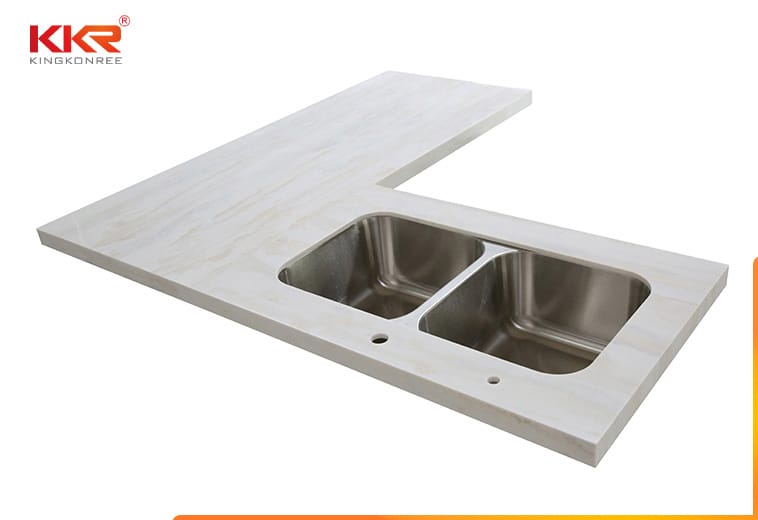
Can You Use Baking Soda to Polish Corian?
Baking soda paste is sometimes recommended as a homemade solution for cleaning or polishing countertops.
However, baking soda is mildly abrasive and is not a dependable substitute for a finish-specific polishing process.
Using a thick paste over a large area may leave an uneven appearance, particularly on dark or glossy surfaces.
Instead of immediately applying a homemade polishing mixture, start with warm water, mild dish soap, and a clean microfiber cloth.
If stubborn marks remain, consult the manufacturer’s care instructions to select an appropriate cleaning or restoration method.
This approach helps avoid unnecessary abrasion while preserving the original finish.
Tips for Maintaining the Shine and Appearance of Corian Countertops
Polishing is only one part of maintaining Corian countertops. Proper daily care can reduce visible wear and help preserve the intended surface finish.
Use Gentle Cleaning Products
Regularly clean the countertop with mild dish soap and warm water.
Wipe away spills promptly, rinse off cleaning residue, and dry the surface to help prevent water marks.
Avoid window cleaners that may leave a dulling film. Stronger cleaning products should be used only when the manufacturer permits them and the product label supports the application.
Avoid Scratches and Direct Heat
Use a cutting board rather than cutting directly on the countertop.
Lift heavy appliances instead of dragging them across the surface, and avoid abrasive cleaning pads that are not approved for the finish.
Hot pots, pans, and heat-generating appliances should be placed on suitable trivets or heat pads.
Although Corian is durable under normal use, direct exposure to excessive heat can damage its appearance and may require repair.
Protect the Surface From Strong Chemicals
Keep harsh chemicals such as paint removers, oven cleaners, and acetone-based products away from Corian countertops.
If a strong chemical accidentally comes into contact with the surface, follow the manufacturer’s cleanup instructions promptly.
Do not mix cleaning chemicals or experiment with products intended for other countertop materials.
Address Dull Patches Before They Spread
If part of the countertop begins to look dull, determine the cause before applying polish.
Mineral buildup, cleaning residue, surface scratches, and heat-related marks can produce different changes in appearance.
Cleaning may resolve a buildup problem, while scratches or damaged finishes may need controlled refinishing.
Using the appropriate treatment early can help prevent unnecessary work and preserve an even appearance.
Frequently Asked Questions
Can You Polish Corian Countertops Yourself?
Yes. Homeowners can clean away residue and may repair small scratches on a verified matte finish by following Corian’s instructions. Matching semi-gloss and high-gloss surfaces is more difficult, so extensive restoration is generally better handled by a professional.
Can I Use a Buffer to Polish Corian Countertops?
Professional finishers may use polishing machines with specified abrasives and compounds. However, a household buffer is not a shortcut to restoring high-gloss Corian. Incorrect pads, pressure, or polishing techniques can leave visible swirls and uneven patches.
How Often Do Corian Countertops Need Polishing?
Corian countertops do not require polishing on a fixed schedule. Routine cleaning and proper maintenance are usually sufficient. Consider refinishing when scratches or finish damage remain after cleaning, rather than repeatedly polishing a surface that is already in good condition.
Explore Solid-Surface Countertops From KKR Stone
If you are planning a new kitchen, bathroom, or commercial project, choosing the appropriate countertop material and finish can make ongoing maintenance easier.
KKR Stone offers solid-surface countertops and solid-surface kitchen countertop options for different applications.
You can also explore KKR Stone guide to solid-surface materials and applications to understand their characteristics and design possibilities.
Before selecting a countertop, ask about its intended finish, cleaning requirements, and recommended restoration methods.
Learning how to polish Corian countertops correctly begins with understanding the surface. Clean and dry it first, match any restoration method to its original finish, and seek professional assistance when necessary. Maintaining a consistent finish is more important than adding extra shine.