






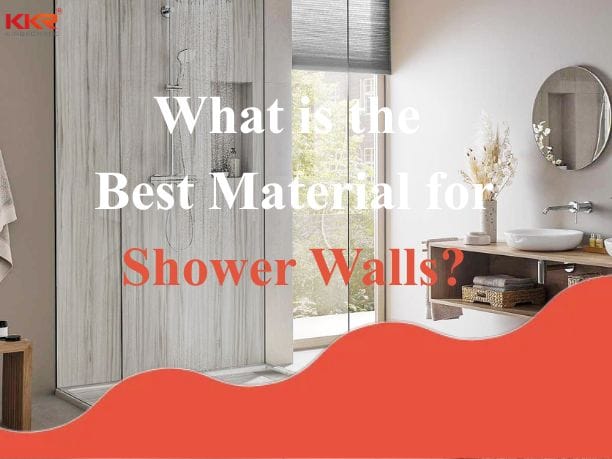
If you are starting a new building or renovation project and have the pressure of creating the perfect bathroom, the one where you need a shower wall that looks like a million dollar luxury for your guests, then this article is for you.
You as a contractor, architect, designer or builder must know that behind the beautiful and polished look of your bathroom is a big decision. A resolution that impacts hygiene, durability, maintenance and long‑term cost. Selecting the best material for shower walls.

Which material will last decades? Which material will remain hygienic with heavy use? And still look beautiful?
This guide answers that question and more. Below we explore the most common shower wall materials used in 2026, compare their pros and cons, and explain why acrylic solid surface panels are becoming a top pick for commercial environments.
Why Selection of the Right Material for Shower Walls Important?
When you walk into a bathroom the first thing you would notice or that would catch your eye are the walls. Walls that look clean, smooth and seamless create a much more appealing outlook than those with grout, moisture or mold.
We all know that in the world of hotel and luxury development, the bathroom is often where the guest’s opinion of the property is won or lost. Most first time travelers enter the room, drop their bags and walk straight to the bathroom. They then judge the space by the walls and the floor. If they see moldy grout or stained tiles, the luxury experience is over before it even starts.
So you see, the bathroom may be a basic utility room. But at the same time it is the under-rated haven where your guests decide if your property is actually worth the nightly rate.
Popular Shower Wall Materials: Pros and Cons
Shower walls are mostly subjected to constant moisture and heat. They undergo frequent cleaning as well. The material you choose for the shower walls should be waterproof. It should be durable, low‑maintenance and visually appealing. Hence it should fulfill some the given criteria.
Here are some of the different materials available for installation on shower walls of the bathroom. We will take a look at how each material performs and what are its strengths and weaknesses.
1. Acrylic Solid Surface Panels
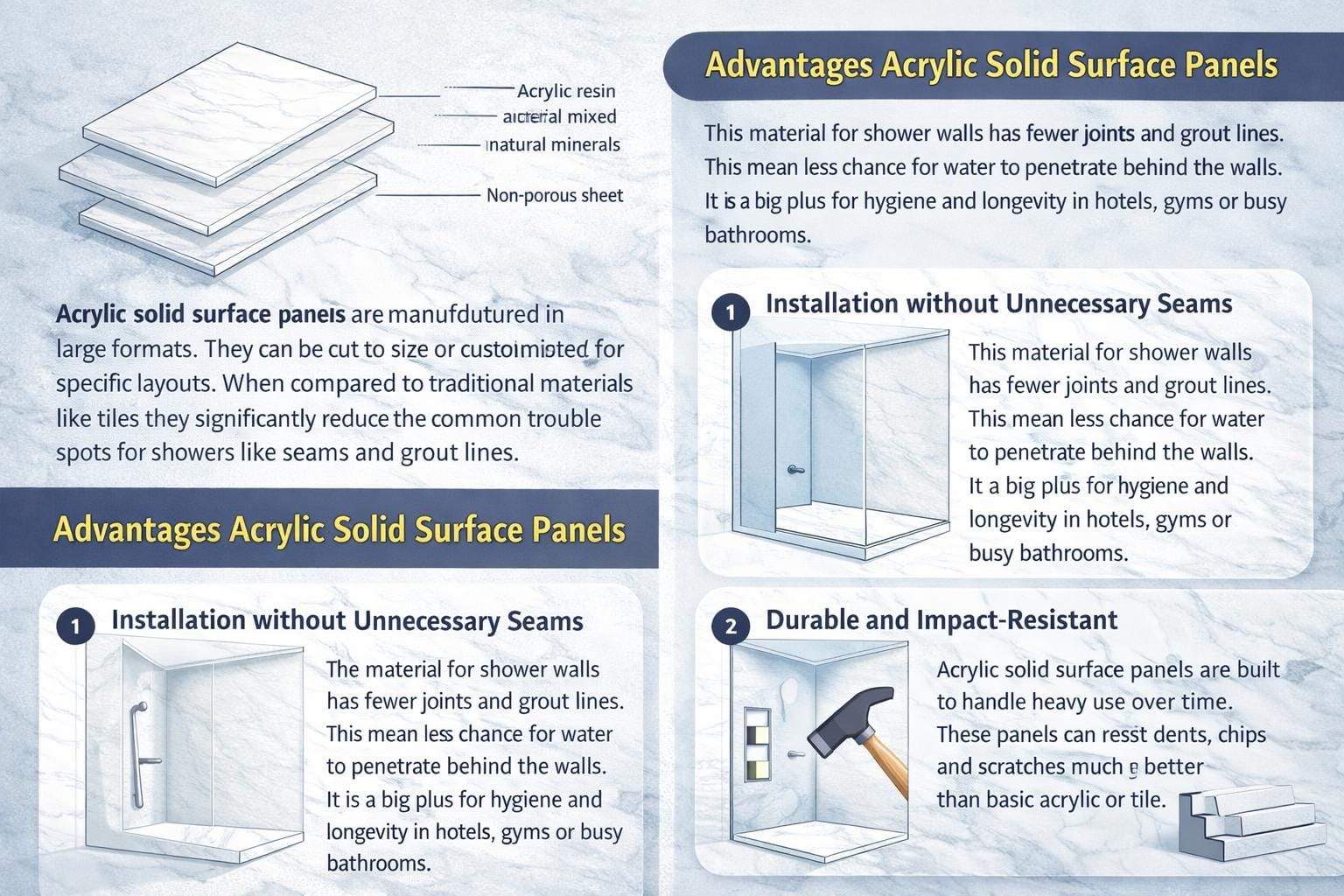
Acrylic solid surface panels are made from high‑quality acrylic resin that is mixed with natural minerals. This forms a durable and non‑porous sheet.
The acrylic solid surface panels are manufactured in large formats. They can be cut to size or customized for specific layouts. When compared to traditional materials like tiles they significantly reduce the common trouble spots for showers like seams and grout lines.
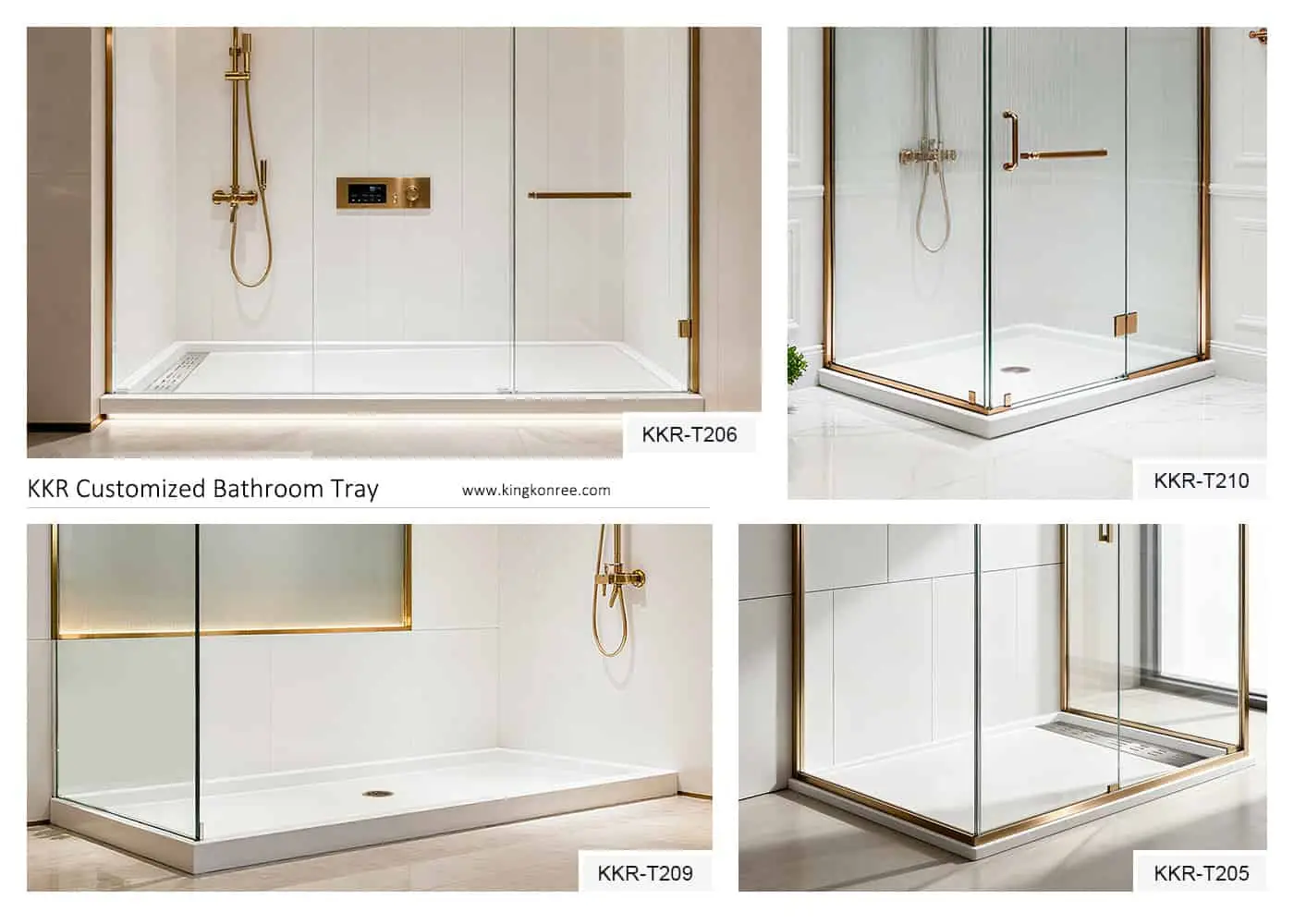
Advantages Acrylic Solid Surface Panels
● Installation without Unnecessary Seams:
This material for shower walls has fewer joints and grout lines. This mean less chance for water to penetrate behind the walls. It is a big plus for hygiene and longevity in hotels, gyms or busy bathrooms.
● Durable and Impact‑Resistant:
Acrylic Solid Surface panels are built to handle heavy use over time. These panels can resist dents, chips and scratches much better than basic acrylic or tile.
● Custom Sizes and Finishes:
Acrylic solid surface panels can be customized to fit various requirements like large panels with a marble look or custom niches. Additionally they can be cut‑outs for shelves.
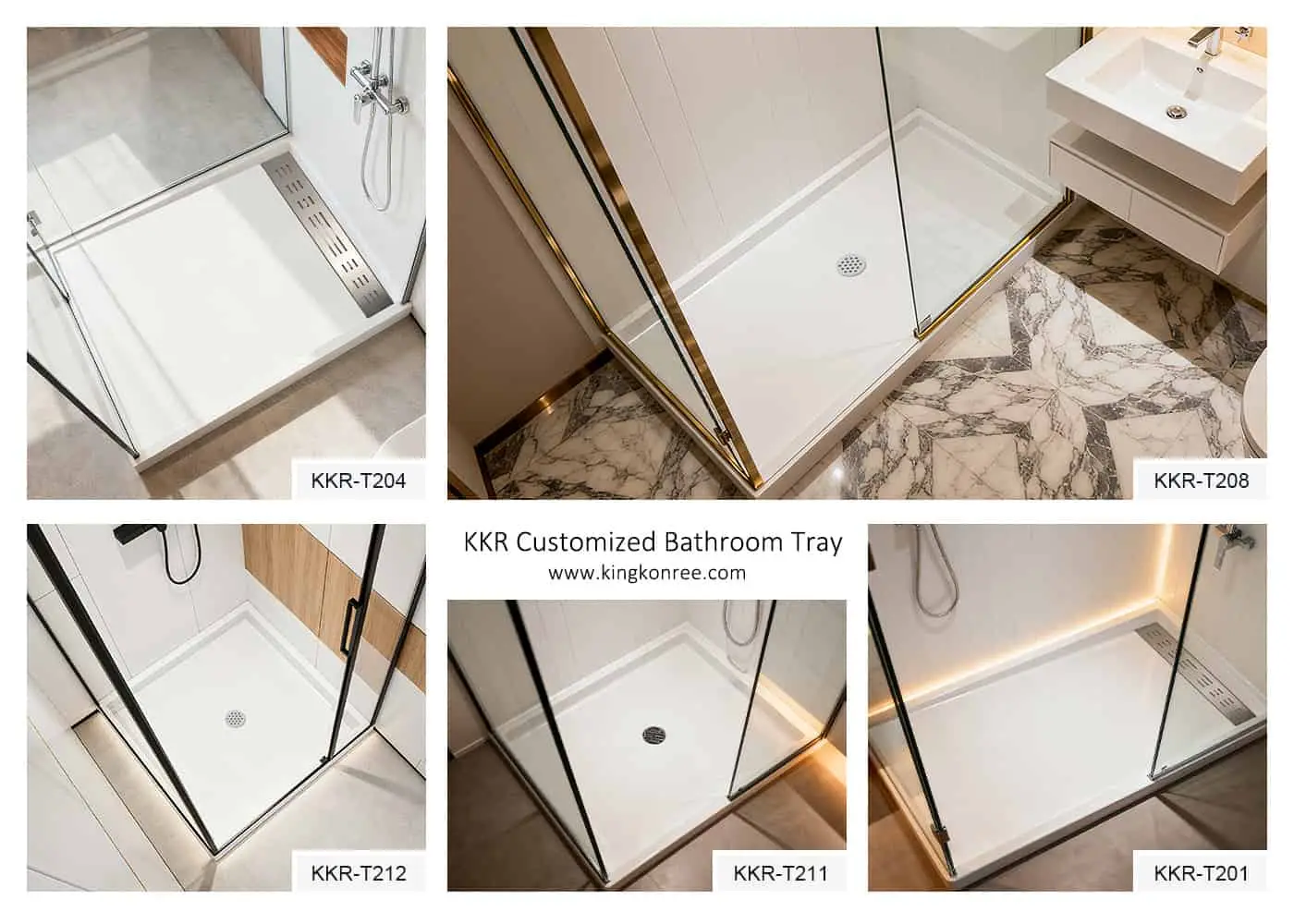
Limitations of Acrylic Solid Surface Panels
● Higher Upfront Cost:
If you compare these shower wall panels with basic tiles or standard acrylic panels, the cost is more initially. But in the long term its durability makes it more cost effective.
● Professional Fabrication Recommended:
Complex or curved installations are best handled by experts. This is important to ensure tight seams and best performance.
2. Tiles that are Ceramic or Porcelain
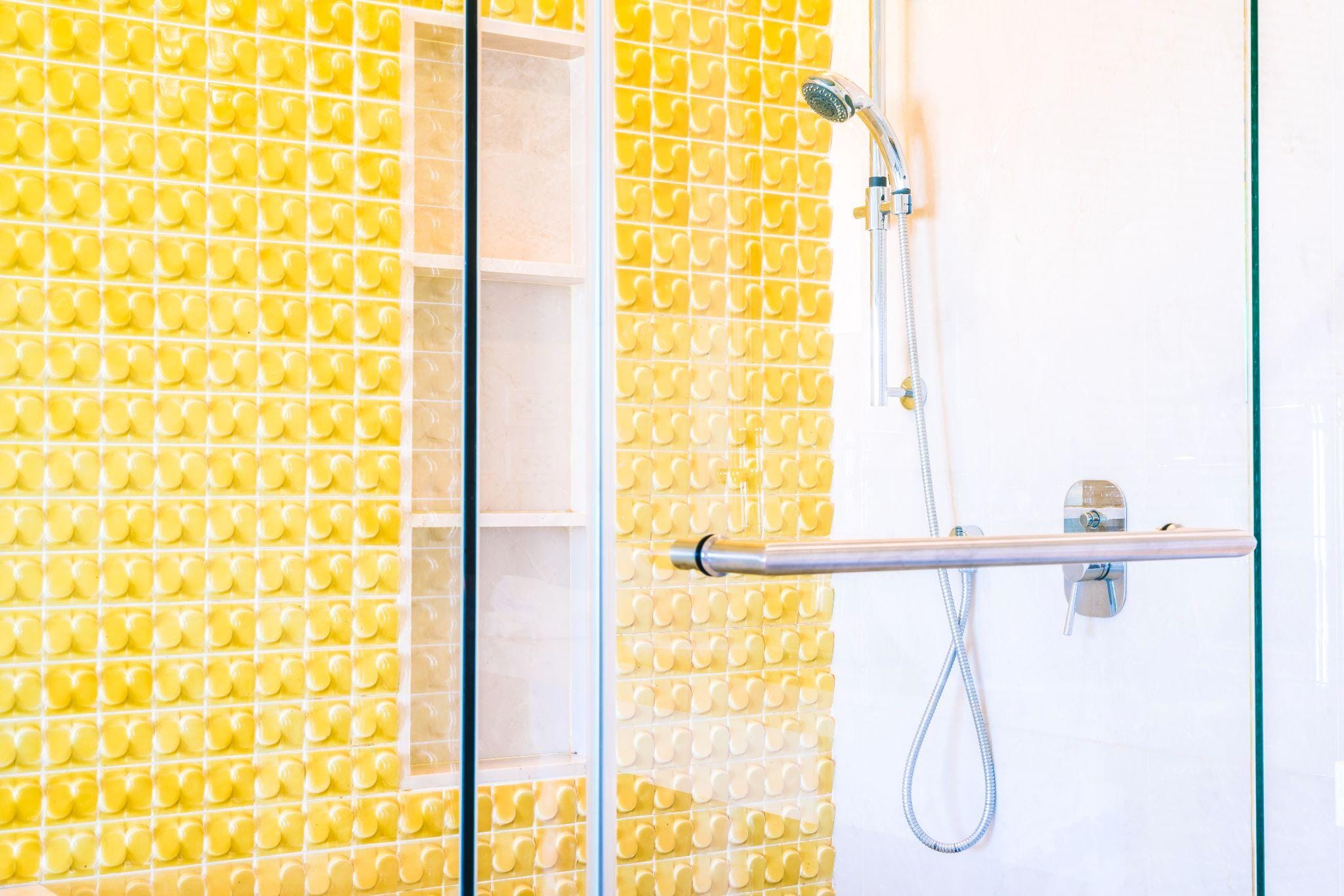
For a very long time tiles have been the preferred choice for shower walls. They come in countless sizes. You can choose from unlimited colors, patterns and textures.
Ceramic and porcelain tiles require grout lines to fill the spaces between them. This creates a traditional tiled effect.
Advantages of Using Tiles as Shower Walls
● Wide Variety Available:
Tiles are easily available everywhere. You can source them from local and international markets. They come in almost unlimited design options.
● Cost Effective Material:
Basic ceramic or porcelain tiles are often more affordable as compared to other materials.
● Design Flexibility:
You can create unlimited designs with tiles. Patterns, mosaics and textured tiles create unique looks. These are often hard to replicate with panel systems.
Limitations of Using Tiles on Shower Walls
● Grout Maintenance:
Grout between the tiles is essential. These can harbor mold and mildew if not sealed and cleaned regularly, especially in high‑traffic commercial showers.
● Labor Intensive Installation:
Tile installation requires careful grouting, sealing, and leveling. This is a long process. It can slow down project timelines and increase labor costs.
● Potential Leak Points:
If not sealed properly, every grout line can be a potential water entry point.
3. Glass and Composite Panels
Glass panels are made from tempered glass sheets. They can provide a very clean and modern look. Composite wall panels use different engineered materials to mimic stone or solid colors while offering a sleek surface.
Advantages of Using Glass and Composite Panels on Shower Walls
● Modern Minimal Look:
Glass walls give bathrooms an open and contemporary feel. This is something that many modern designers are looking for.
● Easy to Clean:
The surface of these materials is smooth. Hence these surfaces can be wiped down easily. This is especially good in commercial environments where sanitation is critical.
Limitations of Using Glass on Shower Walls
● Heavy and Fragile:
Glass is a heavy material. It requires reinforced framing and careful handling to prevent chips or cracks.
● Scratches or Marks:
Composite panels may get scratched easily. They can show damage if not cared for properly.
4. Cultured Marble Panels
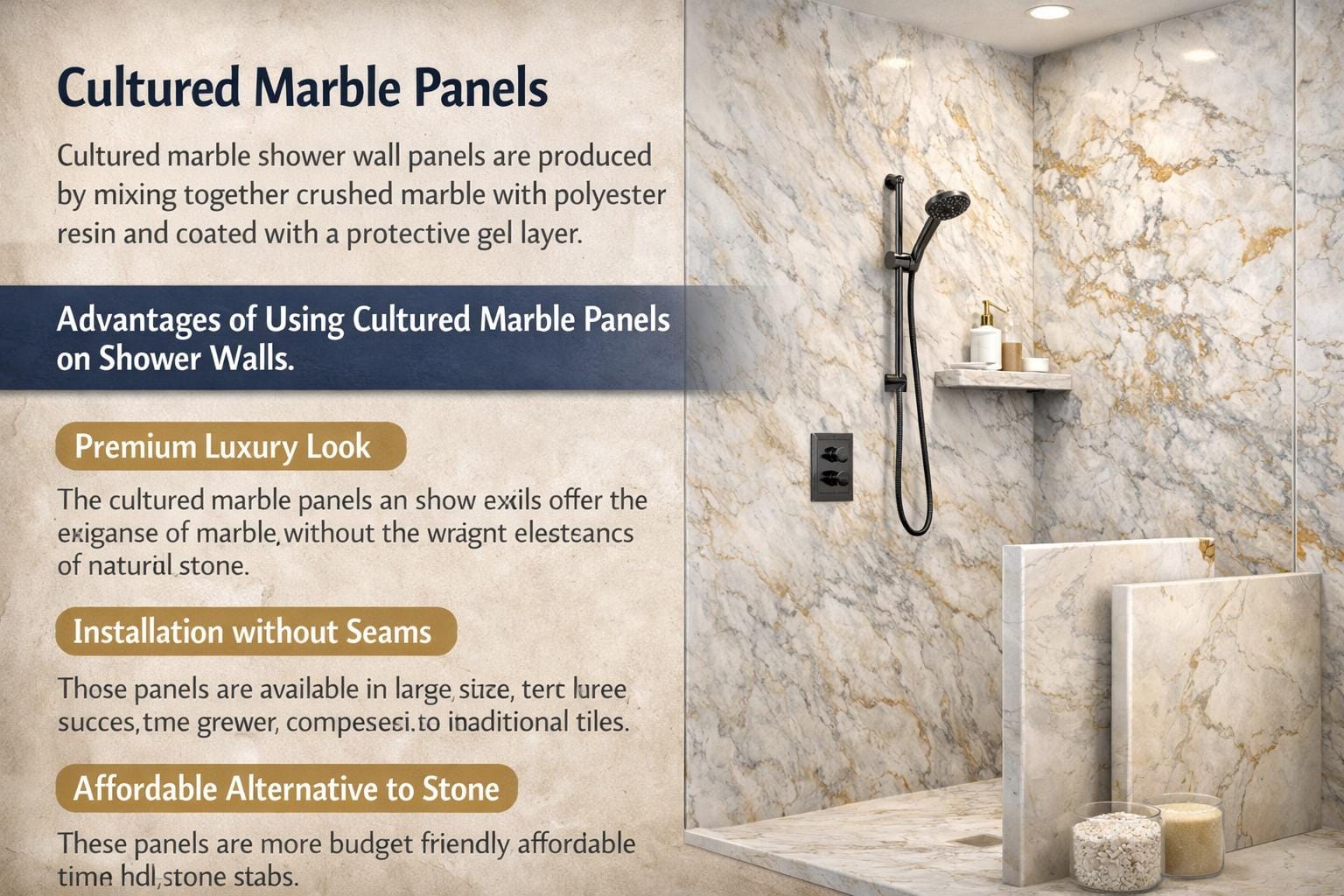
Cultured marble shower wall panels are produced by mixing together crushed marble with polyester resin. These panels are then coated with a protective gel layer.
This process creates a rich and glossy finish that resembles natural stone. However, it comes at a lower price.
Advantages of Using Cultured Marble Panels on Shower Walls
● Premium Luxury Look:
The cultured marble panels on shower walls offer the elegance of marble without the weight and cost of natural stone.
● Installation without Seams:
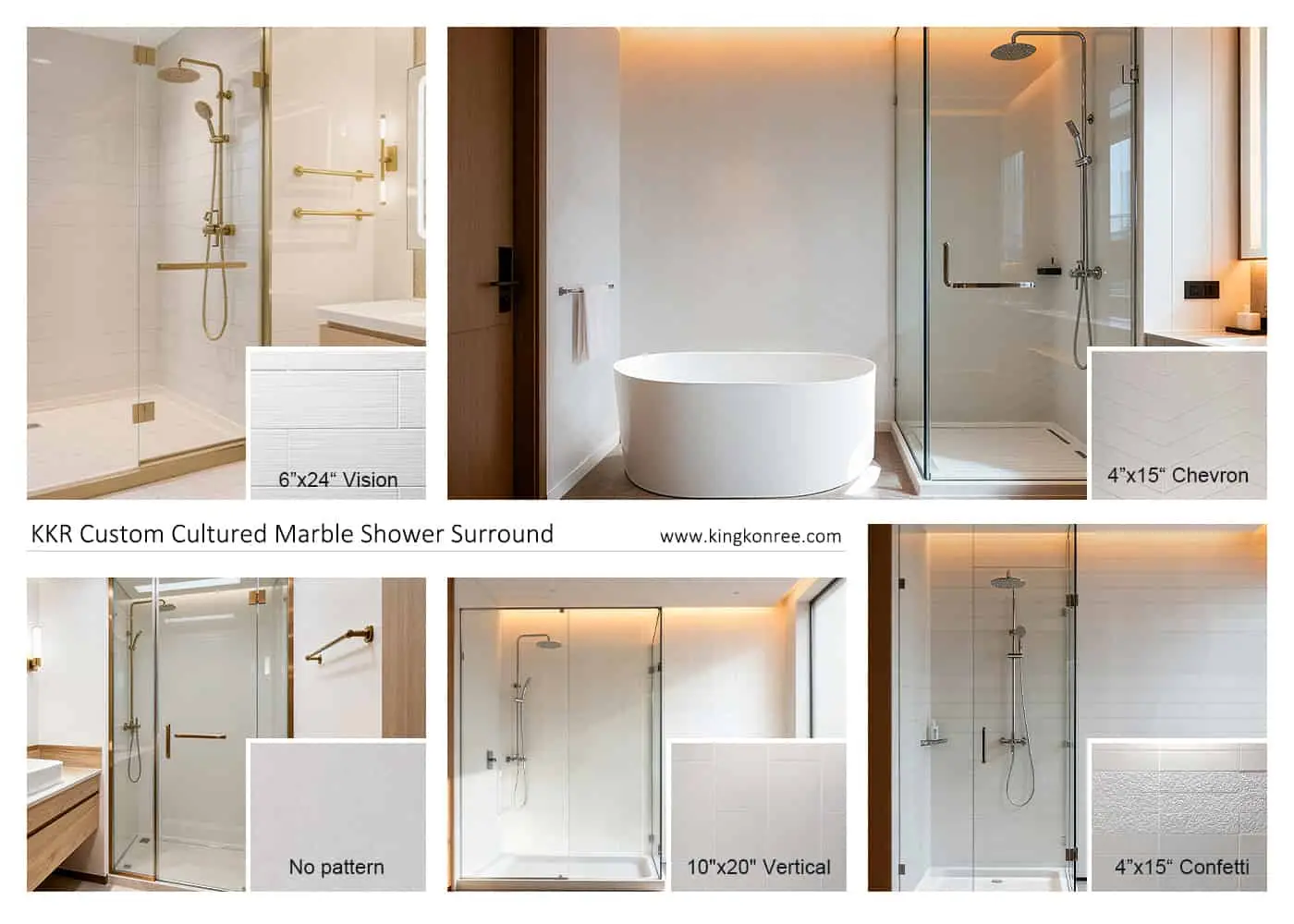
These panels are available in large sizes. Hence they reduce grout lines compared to traditional tiles.
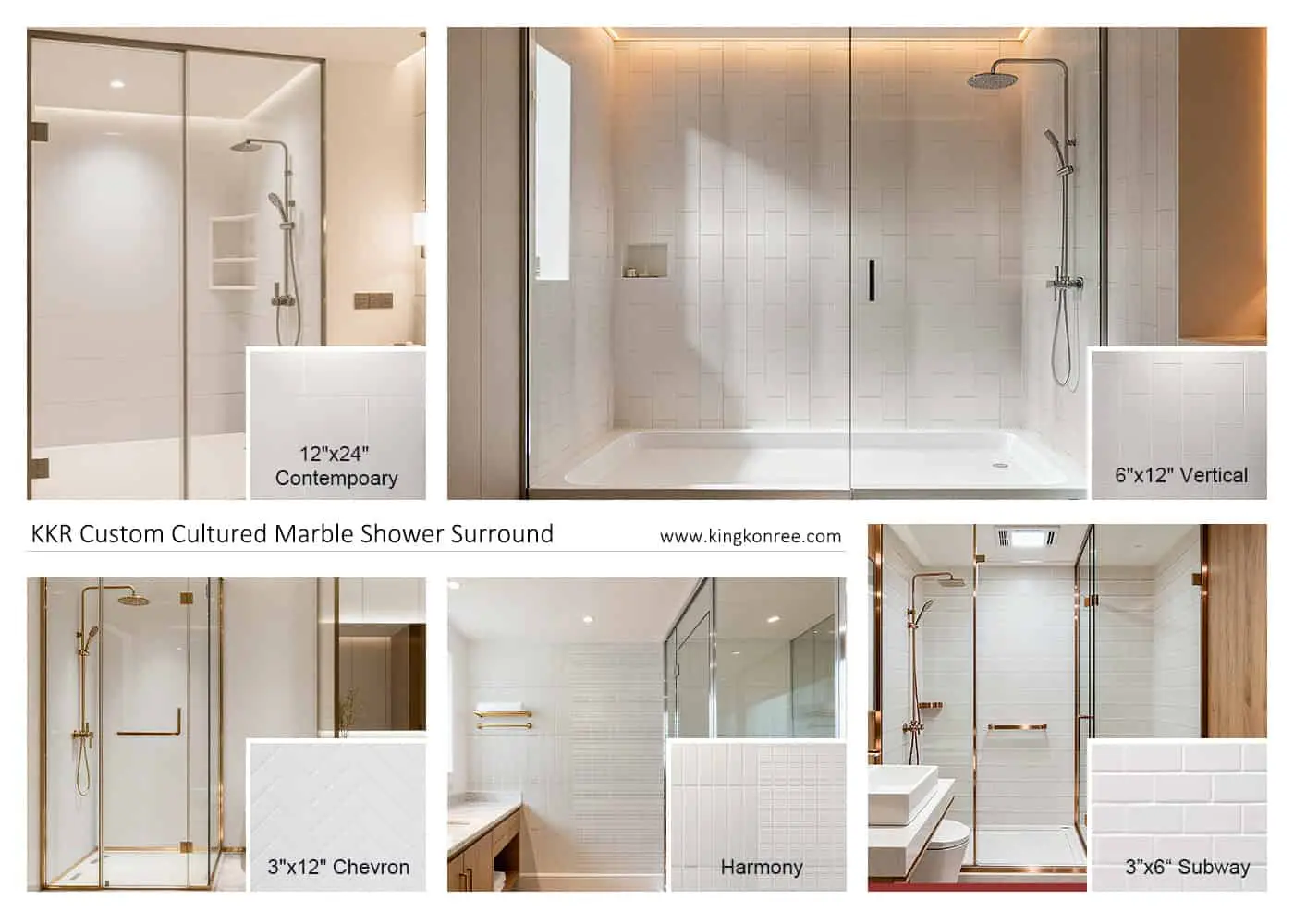
● Affordable Alternative to Stone:
These panels are more budget friendly and affordable than full stone slabs.
Limitations of Cultured Marble Panels as Shower Walls
● Surface Gel Coat Can Scratch:
The protective coating on the cultured marble panels can show wear over time due to scratches or abrasions.
● Limited Repair Options:
Once the gel coat is damaged, the repairs are more complex than with seamless panels.
● Less Flexibility:
These panels are less versatile. Not as easy to custom shape or integrate as acrylic solid surface materials.
Considerations for Commercial and Hospitality Projects
When designing shower spaces for hotels, spas, gyms, or apartment buildings, material choice goes over and above plain visual appearance. There are many things to think about like maintenance costs, durability, heavy usage and brand standards.
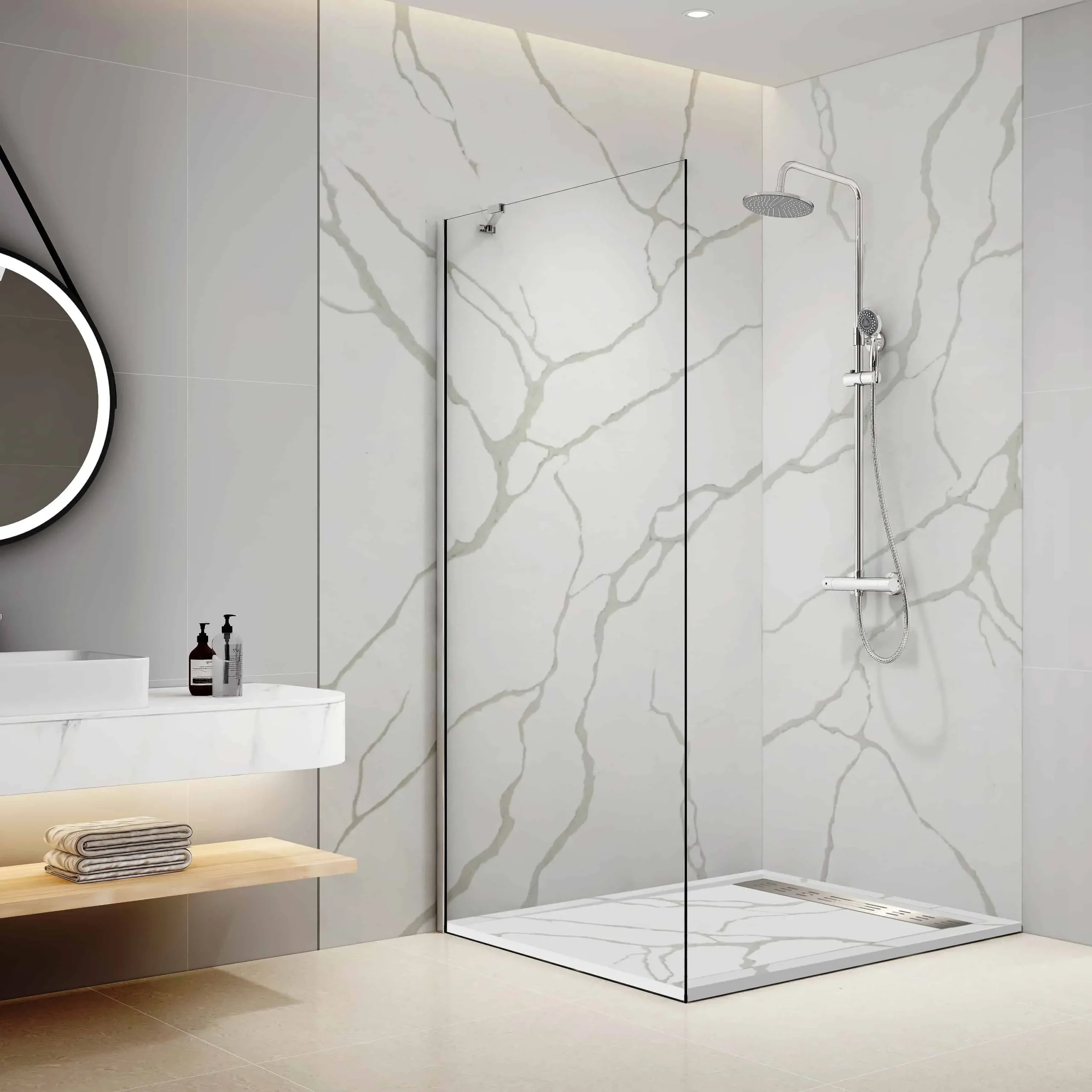
Durability and Maintenance
Shower walls located in high traffic areas must resist constant exposure to heat and moisture. They should also be able to withstand frequent use of cleaning chemicals. Materials that are non‑porous and seamless reduce spots where mold and mildew can grow.
This means there will be lower long‑term maintenance costs because daily cleaning becomes quicker and more effective. Materials that trap moisture for instance the grout lines in tiles require more upkeep. They also deteriorate faster.
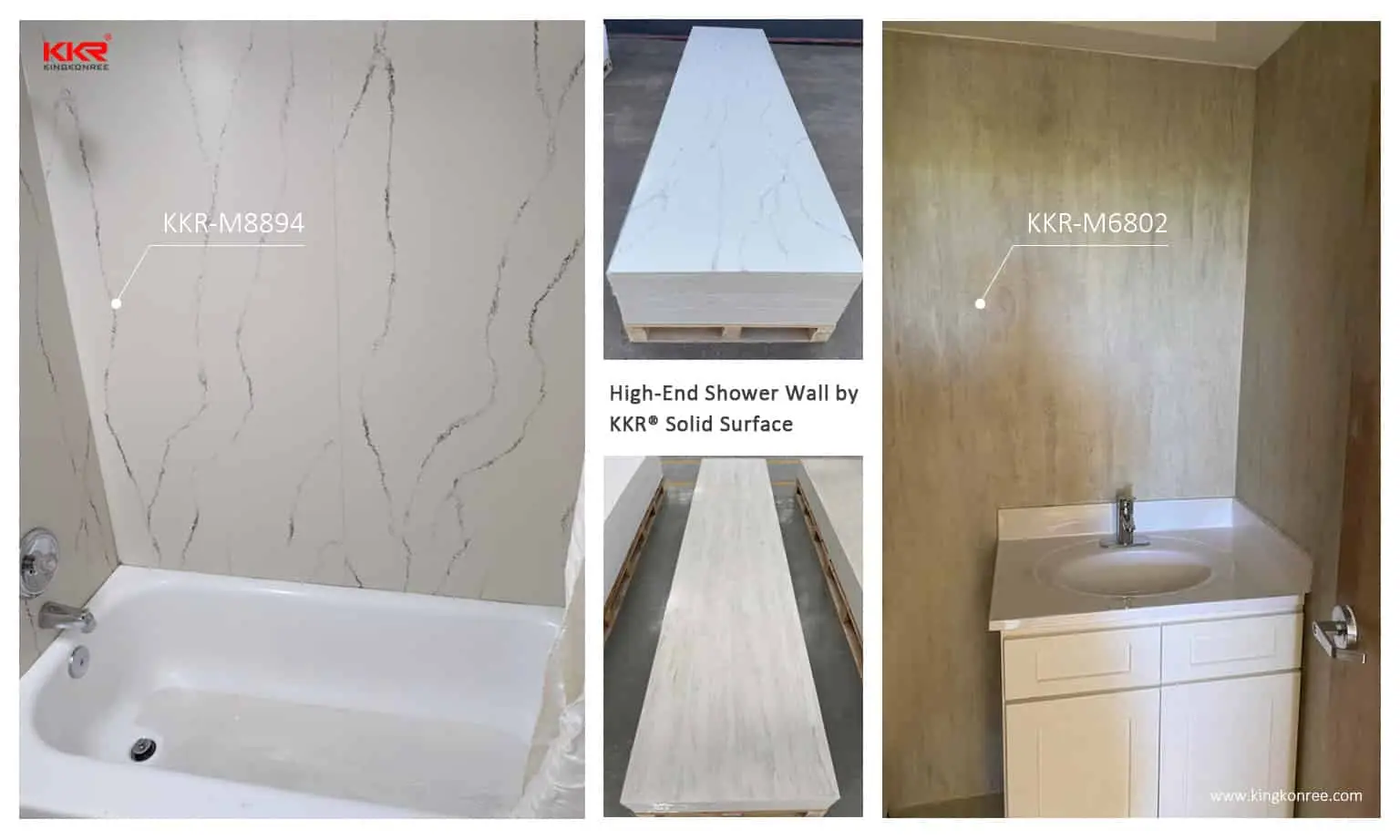
Installation and Design Flexibility
Large shower spaces or unique layouts benefit from panels that can be cut to fit custom shapes, corners, and niches without interrupting the visual flow.
Acrylic solid surface panels are thermoformable. This means they can curve or be shaped into custom layouts without breaking. Acrylic solid surface panels also allow integrated shelves and niches that combine well with the wall surface. This is something that tiles struggle to achieve smoothly.
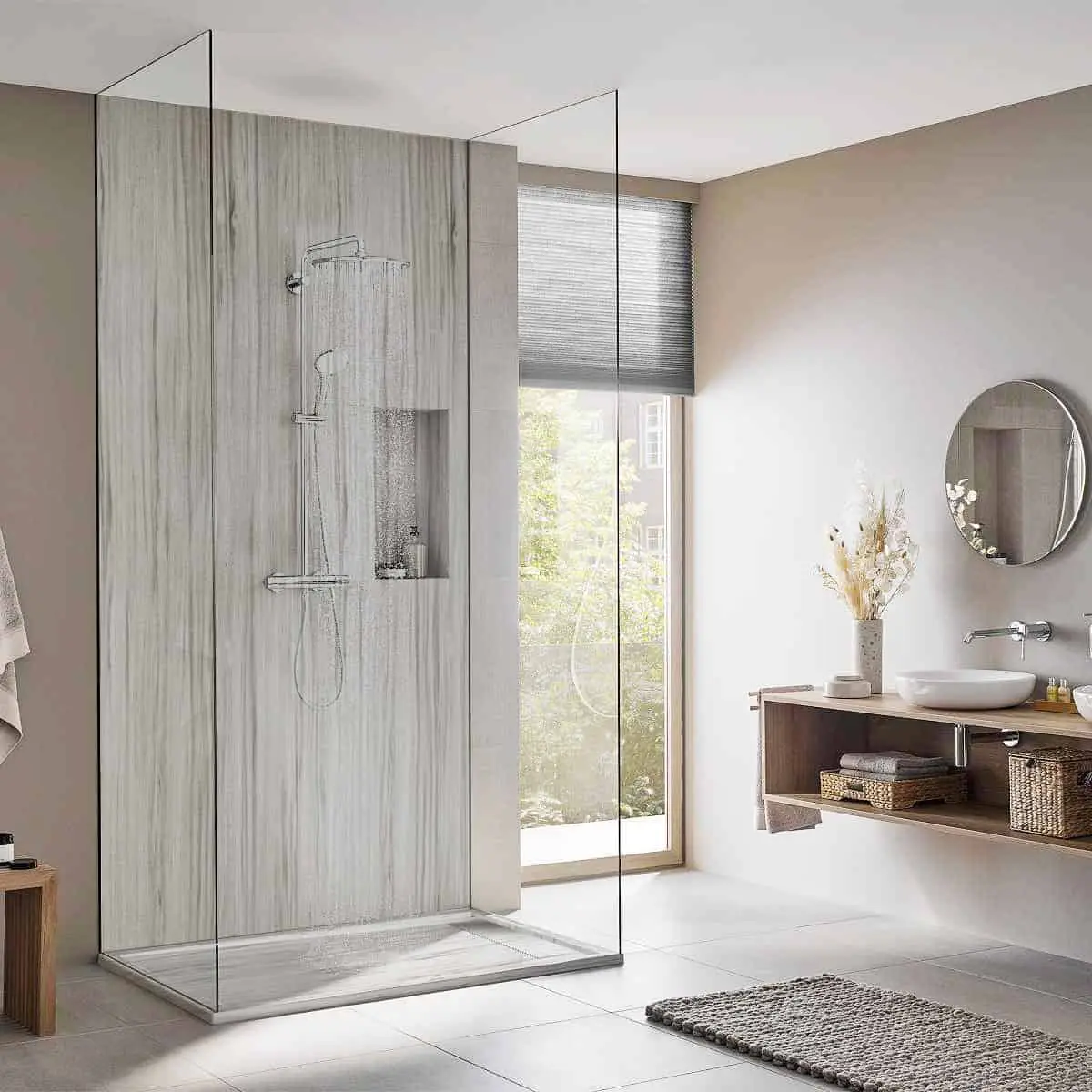
Visual Outlook and Branding
In commercial designs, brand identity matters a lot. The shower walls should match a hotel’s theme or overall aesthetics. This helps create long term impressions on guests. Panels that mimic natural stone, marble, or custom finishes help designers maintain creativity. And at the same time they do not have to sacrifice performance.
Materials like acrylic solid panels allow creation of large and seamless visuals in the shower area. They help convey a clean, modern and premium look. This is exactly what many high‑end brands seek.
KKR Acrylic Solid Surface Panels Are the Right Choice for Shower Walls
In 2026, high-end hospitality design focuses on creating the SANCTUARY feel for the guests. As noted by leading designers in Elle Decor Interior Design Trends 2026 the bathroom is the most scrutinized part of a luxury stay.
KKR is one of the leading manufacturers in the solid surface panels worldwide. Kingkonree produces acrylic solid surface sheet, solid surface countertop, wash basin and bathtubs alongwith other custom finished products.
Here are some of the reasons their acrylic solid surface panels are best for shower walls in bathrooms:
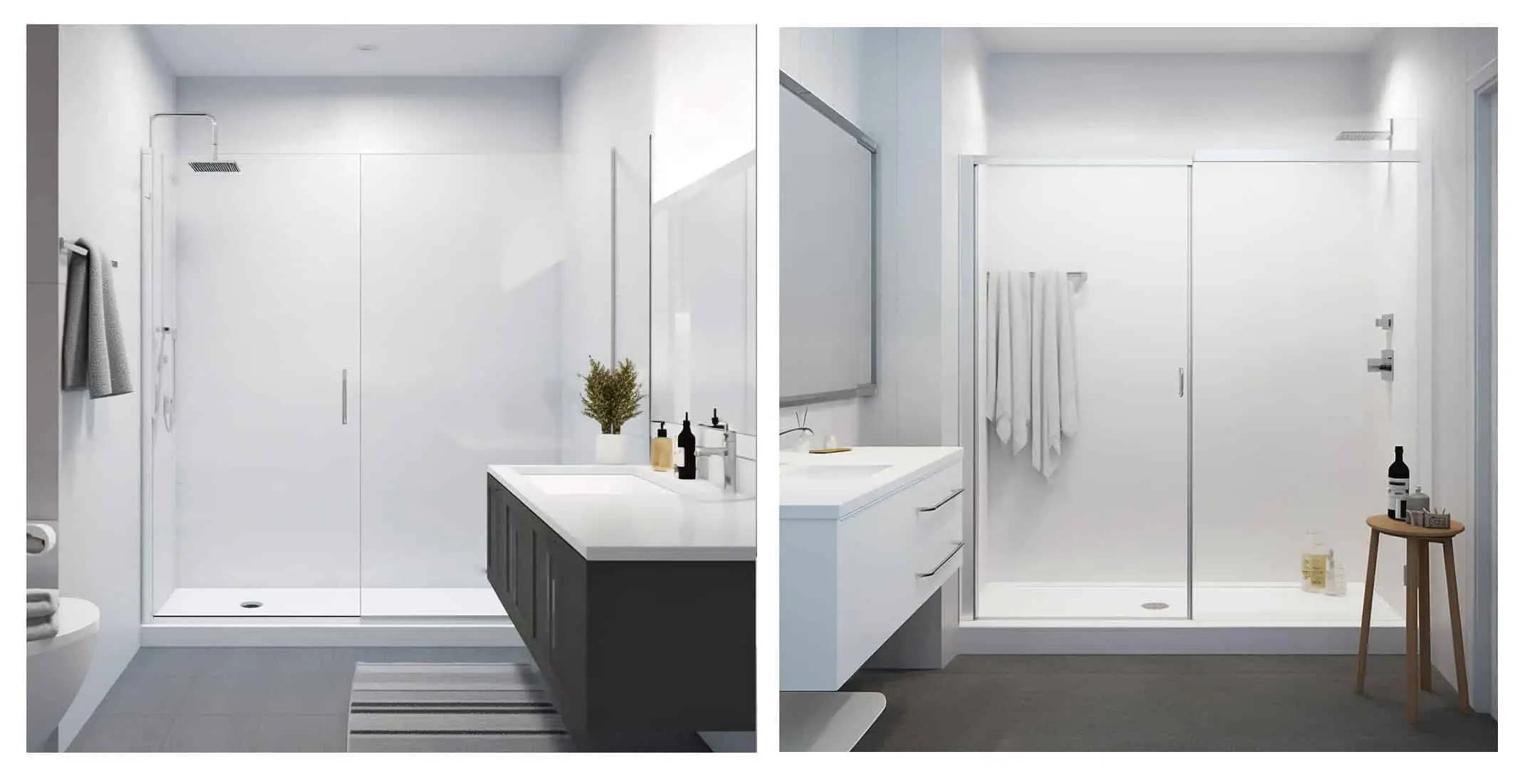
High‑Quality Material for B2B Projects
KKR manufactures high-quality solid surface sheets and panels designed specifically for commercial and hospitality shower walls. Their products offer consistent quality. They have seamless surfaces and long‑term performance. This is because of the international standards used in their production processes.
As mentioned above they are ISO9001:2015 certified and have full quality control. The KKR panels ensure uniform color and performance across large batches. This feature is ideal for big hotel chains or multi‑unit residential projects where consistency matters.
Hygienic and Maintenance‑Friendly
Acrylic solid surface panels have a 100% non‑porous surface. This means that water, soap scum or bacteria cannot easily seep or soak in. That makes cleaning easy. It can be cleaned using just a mild soap and soft cloth. Therefore maintaining hygiene standards in gyms, spas and hotel bathrooms becomes simple.
Unlike traditional tile showers that require grout sealing and frequent cleaning, these panels can be installed without routine sealing. This characteristic saves on long‑term operational costs and keeps showers looking newer for longer.
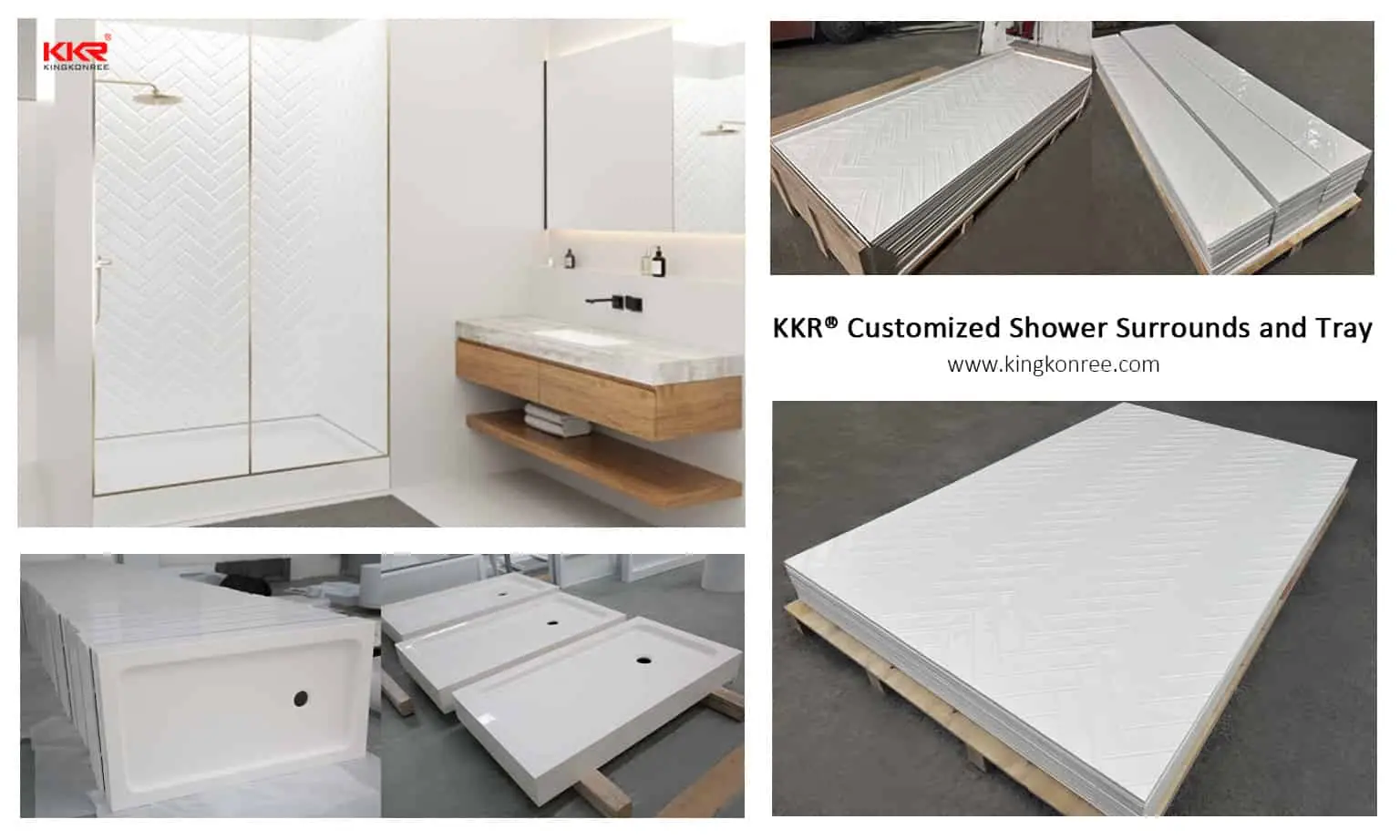
Customization and Project Support
KKR offers custom fabrication for acrylic solid surface panels. This enables architects and contractors to get shower wall panels in specific sizes. You can get them in curves and with accurate cut‑outs for niches, shelves, mixers, or grab bars. KKR offers solid surface wholesale solutions where all fabrication and coordination happens before delivery. At the end you get a clean and on‑brand finish across an entire building.
Select KKR Acrylic Solid Surface Panels for Shower Walls
Selection of the best material for shower walls is a decision that goes far beyond looks when it comes to commercial and hospitality projects. We know that tiles and glass can offer beautiful finishes. They have been doing it for decades. But they also come with challenges. Especially when we talk about maintenance and long‑term performance.
Acrylic solid surface panels engineered for commercial use in KKR’s range provide a compelling combination offer of durability, hygiene, easy maintenance and design flexibility. They have seamless installation, customizable design options and lower lifetime upkeep. These features make them an excellent choice for hotels, spas, and multi‑unit developments today and in years to come.
FAQs
What is the best material to use as shower walls in hotels or commercial bathrooms?
For most commercial set ups the acrylic solid surface panels are a preferred choice on shower walls. This is because they offer seamless design, hygienic finish and can be easily maintained as compared to tile and glass.
Can we install acrylic solid surface panels on shower walls of large shower installations?
Yes you can. They can be customized in large sheets. They can also be cut precisely to fit big showers, irregular layouts and integrated niches.
How can you compare the characteristic of maintenance of tiles in shower walls with acrylic panels?
Tile walls need grout sealing. They also require frequent cleaning. On the other hand acrylic solid surface panels require less upkeep. They reduce the trapping in of moisture and scum in joints.
Can acrylic panels be customized for curved or multi‑panel shower walls?
Yes absolutely. Acrylic solid surface panels are thermoformed. This means they can be customized to fit given requirements and shaped to complex designs before installation.
Which shower wall materials are easiest to clean and maintain?
Non‑porous surfaces are easiest to maintain and upkeep. This include materials like acrylic solid surface panels. Cultured marble are also easier to clean. Tiled shower walls are hardest to clean because of the grout lines.