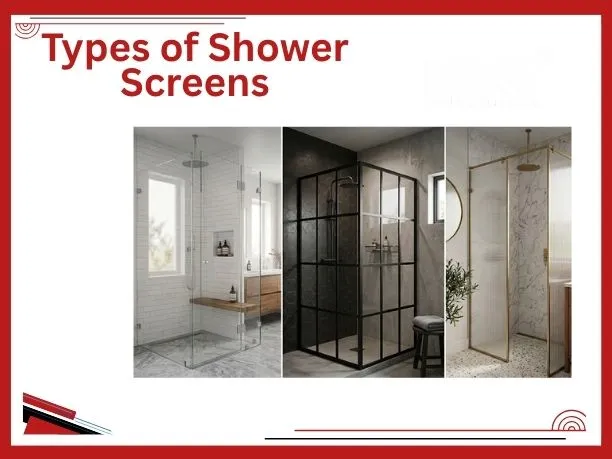
A shower screen is not just for keeping water in. It can affect how spacious the bathroom feels, how easy the shower is to use, and how the overall space looks. There are a variety of frames, glass finishes, shapes, and opening mechanisms, making it hard to select the right one.
The most suitable shower screens will vary according to bathroom design, space, cleanliness requirements, privacy desired, and the design. In a small bathroom, a sliding screen might be appropriate, and in a larger bathroom, a fixed screen can give the room a more open appearance.
This guide covers the most common types of shower screens, their unique characteristics, and what you should look out for when selecting a shower screen.
What Is a Shower Screen?
A shower screen is a glass or other appropriate panel that will divide the shower area from the rest of the bathroom. Its primary function is to control water flow, without compromising access and visibility.
There are a number of different types of modern shower screens that are available for purchase. They can have fixed panels, sliding or hinged doors, frames, or minimal visible hardware.
Common options include:
- Framed and semi-frameless screens
- Frameless shower screens
- Sliding and pivot screens
- Fixed panels
- Folding and bi-fold screens
- Quadrant and curved screens
- Bath shower screens
- Angled shower screens
Types of Shower Screens
There are different types of shower screens based on their frame design, shape, material, and door or opening style. Choosing the right type depends on your bathroom layout, available space, desired appearance, and how you want the shower to function. Also get ideas about materials used in shower walls.
Framed Shower Screen
A framed shower screen has a metal frame around the glass panels. The frame provides support and gives the screen a more defined appearance.
Framed screens can suit busy family bathrooms and work with both traditional and contemporary designs. They are available in different configurations and frame finishes.
Best for: Family bathrooms, traditional designs, and practical installations.
Semi-Frameless Shower Screen
A semi-frameless screen uses less framing than a fully framed design. Some glass edges have a frame, while others remain exposed.
This creates a cleaner appearance while retaining some of the structure of a framed screen. It can be a useful middle ground between framed and frameless options.
Best for: Modern bathrooms where you want some framing with a cleaner look.
Frameless Shower Screen
A frameless shower screen uses glass with minimal visible hardware instead of a complete surrounding frame. Brackets, clips, or channels may be used to secure the panels.
This creates a simple and open appearance. With less visible framing, the bathroom can also feel less crowded.
Frameless designs require accurate measurements and suitable glass and hardware for the installation.
Best for: Modern bathrooms, minimalist interiors, and open shower layouts.
Sliding Shower Screen
A sliding shower screen uses panels that move along a track instead of swinging outward.
This can save floor space because the door does not need a large opening area. Sliding designs can therefore work well in narrow bathrooms or spaces where a pivot door could interfere with another fixture.
Best for: Compact bathrooms and layouts with limited door clearance.
- Pivot Shower Screens
Pivot shower screens use a hinged mechanism that allows the door to rotate open. They provide a traditional door-style opening and are available in framed, semi-frameless, and frameless designs.
Best for: Bathrooms with sufficient space in front of the shower.
Folding Shower Screen
A folding screen uses panels that fold when opened. This reduces the space needed for a conventional swinging door.
It can be particularly useful when the shower is positioned close to other bathroom fixtures.
Best for: Small bathrooms and layouts with limited door clearance.
Bi-Fold Shower Screen
A bi-fold shower screen is a shower screen that has 2 interconnected panels which fold when opening the shower. It provides convenient access without requiring the same outward clearance as a pivot door.
Best for: Compact showers and bathrooms with restricted opening space.
- Quadrant Shower Screens
A quadrant shower head screen is specifically targeted for a corner set-up and is normally curved in the front. Sliding doors are popular for many quadrant designs, which offer both corner locations and space conservation.
The curved front can also reduce how far the enclosure projects into the bathroom.
Best for: Corner showers and compact bathrooms.
Curved Shower Screen
A curved shower screen is made from curved glass or a curved enclosure design. It provides a more delicate look and is an option if you want something that’s not a square or rectangular panel.
Best for: Corner layouts and contemporary bathrooms.
Angled Shower Screen
An angled shower screen is created to fit a non-rectangular or corner shower arrangement layout. The panels will be installed on an angle based on the available space.
This can be useful for odd corners or odd bathroom layouts. This kind of screen requires accurate measurements, especially.
Best for: Unusual layouts and bathrooms with angled walls or corners.
Comparing the Main Shower Screen Options
| Shower Screen Type | Main Advantage | Best For |
| Framed | Strong, defined structure | Family bathrooms |
| Semi-frameless | Balance of framing and clean design | Modern practical bathrooms |
| Frameless | Minimalist appearance | Contemporary bathrooms |
| Sliding | Saves door clearance | Small bathrooms |
| Pivot | Easy conventional access | Larger shower areas |
| Bi-fold | Compact opening | Tight layouts |
| Fixed shower screen | Simple, open appearance | Walk-in showers |
| Quadrant | Efficient corner use | Compact bathrooms |
| Bath screen | Protects bathroom from shower spray | Shower-over-bath layouts |
Shower Screen Materials
The material affects a shower screen’s appearance, durability, maintenance, and overall cost. Glass remains the most common choice, while acrylic can offer a lighter and more economical alternative. Aluminum and stainless steel are typically used for frames, trims, channels, and hardware, with each offering different levels of durability and corrosion resistance.
- Glass: Clear, strong, and visually open; available in different finishes for privacy and style.
- Acrylic: Lightweight and generally more affordable; useful where lower weight or cost matters.
- Aluminum: Lightweight and commonly used for frames and profiles; available in multiple finishes.
- Stainless steel: Durable and corrosion-resistant; suitable for hardware and framing in moisture-prone areas.
Material choice should match the bathroom’s layout, usage, maintenance requirements, and design priorities.
How to Choose the Best Shower Screens for Your Bathroom
When it comes to picking the best shower screens, there’s no clear-cut solution. The correct choice will depend on the size of the room and the intended use of the bathroom.
Measure the Shower Area
Measure the width, depth, and height of the shower area. Look for unusual angles, uneven walls, or other characteristics that may impact installation.
Check Door Clearance
If it has a moving door, see if the opening pathway is the same. The pivot door should not be obstructed by adjoining fixtures.
Consider the Bathroom Style
The shower screen designs must match the overall design of the bathroom. Frameless glass can complement a minimalist design, while framed bath screens can fit into traditional designs.
Think About Cleaning
Screens with fewer frames, tracks, and moving components can have fewer areas where soap residue collects. But all shower glass needs to be cleaned on a regular basis.
Consider Privacy
Clear glass allows light to move through the shower area and can make a small bathroom feel more open. Frosted, patterned, or textured glass can provide greater privacy.
Check Installation Requirements
Installing the screen properly is just as critical as selecting the right screen. All the parts of the walls, the floor, the waterproofing, the glass and seals, the hinges and the hardware must work together.
How to Find the Right Shower Screen Design
The ideal design of a shower screen allows the shower to be both attractive and effective. Design the bathroom floor plan first, and then pick a style later.
For example:
- Choose a sliding shower screen when door clearance is limited.
- For an open walk-in design, select a fixed panel shower screen.
- Choose a frameless bath shower screen for a minimalist appearance.
- Use a framed shower screen if you need space and structure.
- Use a quadrant screen for a corner zone enclosure.
- Consider a bi-fold shower screen for opening up when space is restricted.
- Choose a bath shower screen for a shower-over-bath setup.
The right choice should fit seamlessly into the overall bathroom design.
| Also Read: Types Of Shower Wall Panels: How To Choose |
Choose the Right Shower Screen for Your Space
The right screen should do more than contain water. It should fit the space, allow for easy access, match the design of the bathroom and be easy to maintain.
There are numerous varieties of shower screens available these days that is able to fit nearly every bathroom layout. Sliding and quadrant designs can work well in small spaces, and fixed and frameless shower screens can add an open modern feel to a space.
Take careful measurements and think about daily use before finalizing. A shower screen can be a good solution to enhance the usability and aesthetics of the bathroom.
Contact KKR Stone today to learn more about shower screen options and how to have personalized solid surface bathroom solutions.
Frequently Asked Questions
What are the main types of shower screens?
The main options include framed, semi-frameless, frameless, fixed, sliding, pivot, folding, bi-fold, quadrant, curved, angled and bath shower screens. All have different space, access and design needs.
What is the best type of shower screen for a small bathroom?
Sliding, bi-fold and quadrant screens are good options for smaller bathrooms. They have the potential to squeeze the door to move it or maximize the space of the corner.
Are frameless shower screens better than framed screens?
There is no single right or wrong. The frameless screens give a minimal look, whereas the framed screens give a defined structure. It will depend on the layout, styling, budget and installation needs of a bathroom.
What type of shower screen is easiest to clean?
Fixed and frameless designs can have fewer tracks and frame components, which may simplify cleaning. Maintenance also depends on the glass finish, hardware, water quality, and cleaning routine.