







Choosing between solid surface and acrylic bathtubs depends on your budget, design preferences, installation requirements, and expectations for long-term use.
Solid surface bathtubs are generally suited to premium bathroom projects where a substantial feel, refined appearance, design flexibility, and repairable surfaces are priorities. They are typically heavier and more expensive.
Acrylic bathtubs are a practical choice for homeowners seeking a lightweight, affordable, and versatile option. They are easier to handle during installation, although their surfaces may require more care to prevent scratches.
Neither material is automatically better for every bathroom. Understanding their differences will help you select the right bathtub for your project.
What Is a Solid Surface Bathtub?
A solid surface bathtub is manufactured using a composite material made from natural minerals and high-performance resins. Depending on the manufacturer, the formulation may include aluminum trihydrate (ATH), acrylic resin, polyester resin, or other suitable components.
These materials are combined to create a dense, solid composite with a smooth, refined surface. Unlike an acrylic-sheet bathtub, which is formed from a relatively thin sheet and reinforced, a solid surface bathtub has a more substantial composite construction.
The exact composition and manufacturing process vary between manufacturers.
Advantages and Disadvantages of Solid Surface Bathtubs
Advantages
- Durability: Solid surface construction provides a substantial and durable finish suitable for regular bathroom use. Its resistance to everyday wear depends on the specific formulation and product construction.
- Seamless appearance: Solid surface allows manufacturers to create smooth, visually continuous designs without unnecessary visible joints.
- Design flexibility: It can be molded into different shapes, sizes, and contemporary bathtub designs.
- Surface repairability: Minor scratches and surface imperfections can often be addressed through sanding or refinishing, following the manufacturer’s care instructions.
- Comfortable surface: Its substantial construction provides a solid, comfortable feel during bathing.
- Easy maintenance: Its non-porous surface helps resist moisture absorption and makes routine cleaning straightforward.
Disadvantages
- Higher cost: Solid surface bathtubs generally require a larger initial investment than standard acrylic alternatives.
- Heavy construction: Their weight can make transportation, handling, and installation more challenging. Floor-loading requirements should be checked before installation.
- Potential surface damage: Although durable, solid surface is not indestructible. Improper cleaning, excessive heat, or heavy impacts may damage certain finishes.
What Is an Acrylic Bathtub?
An acrylic bathtub is manufactured using sheets of acrylic plastic, commonly polymethyl methacrylate (PMMA). During production, the sheets are heated and shaped into the desired bathtub form through a process called thermoforming.
Many acrylic bathtubs are reinforced with fiberglass, resin, or other supporting materials to improve structural strength and rigidity.
Acrylic is popular because it combines relatively low weight, design flexibility, and affordability.
Advantages and Disadvantages of Acrylic Bathtubs
Advantages
- Lightweight: Acrylic bathtubs are generally easier to transport, handle, and install than solid surface models.
- Affordable: They usually offer a lower purchase price, making them suitable for budget-conscious bathroom renovations.
- Design variety: Acrylic can be molded into different shapes, sizes, and styles, including freestanding and built-in designs.
- Comfortable bathing: Acrylic surfaces can feel comfortable against the skin and help maintain bathing water temperature.
- Straightforward maintenance: Regular cleaning with appropriate non-abrasive products helps maintain the bathtub’s appearance.
Disadvantages
- Scratch sensitivity: Acrylic surfaces can develop scratches from abrasive cleaners, rough cleaning tools, or accidental contact with hard objects.
- Potential surface deterioration: Improper cleaning, excessive heat, and prolonged exposure to unsuitable conditions can affect the finish.
- Repair limitations: Minor scratches may be repairable, but deeper cracks or structural damage can require professional repair or replacement.
- Construction differences: The overall strength and rigidity of an acrylic bathtub depend on its sheet thickness, reinforcement, and manufacturing quality.
Solid Surface vs. Acrylic Bathtubs: Key Differences
Both materials have practical advantages, but their construction and performance characteristics differ. The following comparison highlights the most important factors to consider before purchasing.
| Feature | Solid Surface Bathtubs | Acrylic Bathtubs |
| Material | Mineral and resin composite | Thermoformed acrylic sheets |
| Construction | Substantial composite structure | Acrylic shell, often reinforced |
| Appearance | Commonly refined matte or satin finishes | Often glossy, with other finishes available |
| Weight | Generally heavier | Generally lighter |
| Durability | Strong surface and substantial construction | Depends on sheet quality and reinforcement |
| Repairability | Minor surface damage can often be refinished | Minor scratches may be repaired using suitable products |
| Heat retention | Depends on material formulation and construction | Depends on acrylic thickness and construction |
| Maintenance | Routine cleaning; refinishing may be possible | Routine non-abrasive cleaning |
| Design | Suitable for contemporary and premium designs | Available in numerous shapes and styles |
| Cost | Generally higher | Generally more affordable |
| Installation | Requires careful handling and load assessment | Usually easier to transport and install |
1. Durability and Repairability
Durability is an important consideration when selecting a bathtub for long-term use.
Solid surface bathtubs have a substantial composite construction that can provide good resistance to everyday wear. Minor scratches and surface imperfections may be repaired through appropriate sanding and refinishing techniques.
Acrylic bathtubs are also suitable for regular use, but their surfaces can be more vulnerable to scratching from abrasive cleaning products and accidental contact with hard objects.
However, acrylic quality varies considerably between products. A well-manufactured, properly reinforced acrylic bathtub can provide reliable performance for years.
Which is better? Solid surface is a strong option if surface refinishing and a substantial construction are important priorities. Acrylic remains a practical choice when properly manufactured and maintained.
2. Heat Retention and Bathing Comfort
Both solid surface and acrylic bathtubs can provide a comfortable bathing experience.
Solid surface bathtubs have a substantial construction, while acrylic bathtubs use relatively lightweight polymer shells. However, water temperature does not depend on material alone.
Factors such as bathtub thickness, insulation, construction, water volume, room temperature, and bathroom conditions also influence how quickly bathing water cools.
There is no universal rule that one material keeps water warm for a fixed number of minutes longer than the other.
Which is better? Compare the construction and insulation of individual bathtub models rather than relying exclusively on the material name.
3. Weight and Installation Requirements
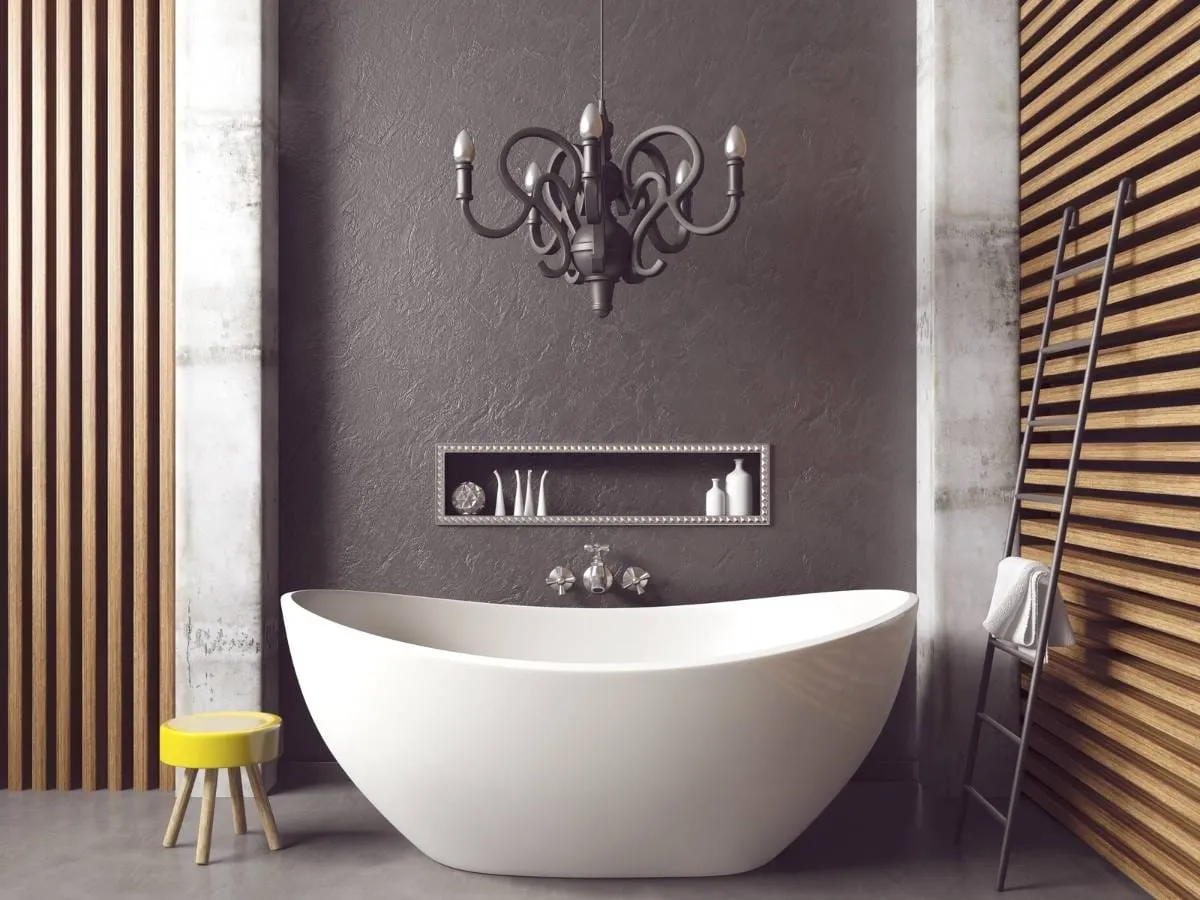
Weight is one of the most important differences between solid surface and acrylic bathtubs.
Solid surface models are generally heavier, which can make delivery, movement, and installation more complicated. Acrylic models are typically lighter and easier to position.
For example, KKR Stone lists the following product weights:
- KKR-B002 solid surface bathtub: 130 kg.
- KKR-B003 solid surface bathtub: 175 kg.
These are individual product specifications, not universal weights for all solid surface bathtubs.
Before installation, consider the complete load, including:
- The empty bathtub weight.
- The weight of the water.
- The weight of the person using the bathtub.
- The supporting floor structure.
If structural capacity is uncertain, consult a qualified building professional before installation.
4. Appearance and Design Flexibility
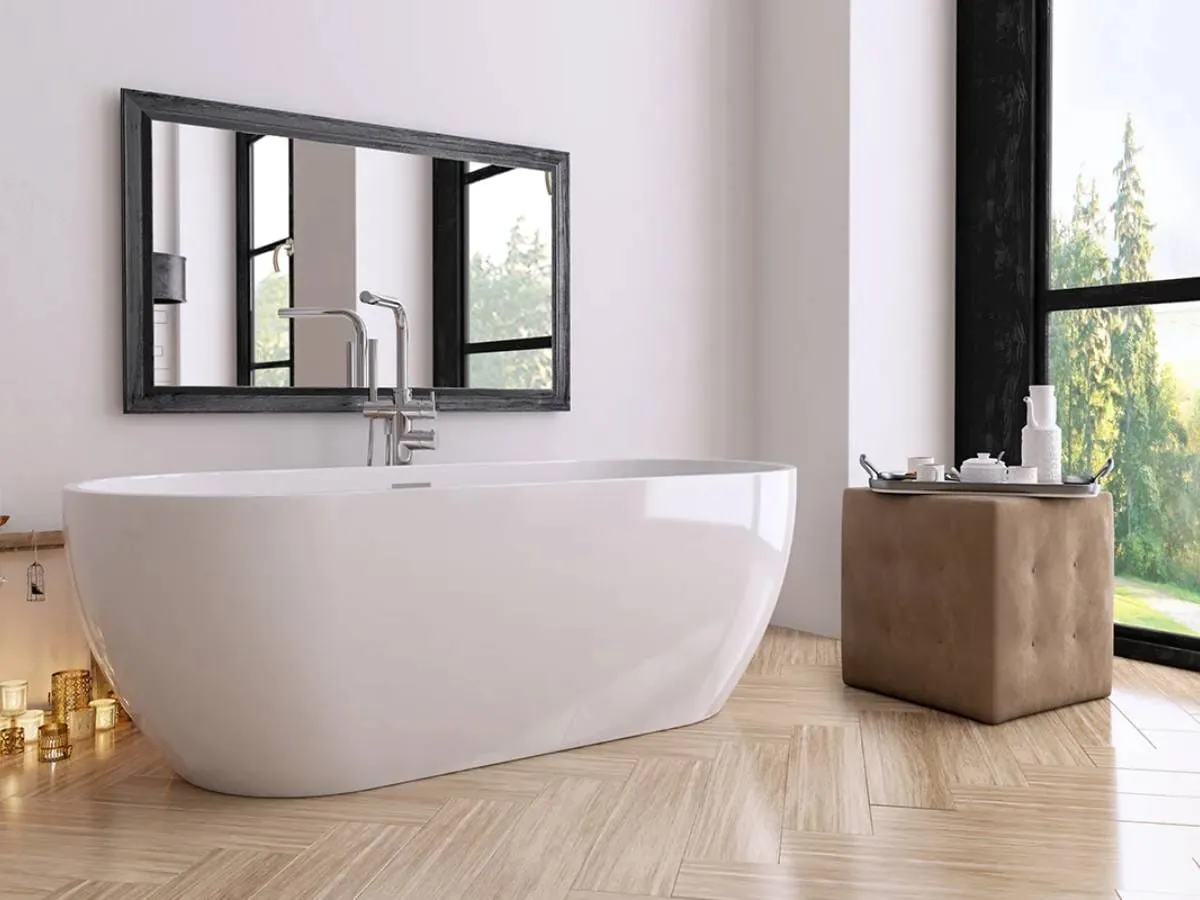
Solid surface bathtubs are particularly suitable for contemporary bathroom designs. Their smooth surfaces, substantial appearance, and refined finishes can complement minimalist, modern, and luxury interiors.
Acrylic bathtubs offer considerable design flexibility as well. Their manufacturing process allows different shapes, curves, dimensions, and styles, making them suitable for a wide range of bathroom layouts.
Solid surface is often associated with matte and satin finishes, while acrylic is commonly available in glossy finishes. However, actual finishes vary by manufacturer and product.
Which is better? Solid surface is worth considering for a premium, substantial appearance. Acrylic offers versatility for different design preferences and budgets.
5. Cleaning and Maintenance
Both materials are relatively straightforward to maintain when cleaned according to their manufacturer’s instructions.
For solid surface bathtubs:
- Clean regularly using a suitable, non-abrasive cleaner.
- Use a soft cloth or sponge.
- Avoid harsh chemicals unless approved by the manufacturer.
- Follow the manufacturer’s instructions for removing scratches or refinishing the surface.
For acrylic bathtubs:
- Use mild cleaning products recommended for acrylic.
- Avoid abrasive powders, rough brushes, and scouring pads.
- Rinse the surface after cleaning.
- Address minor scratches using an appropriate acrylic repair product.
- Follow the manufacturer’s guidance for deeper damage.
Which is better? Both can be easy to maintain. Solid surface offers potential refinishing advantages, while acrylic requires care to protect its finish from scratches.
6. Cost and Long-Term Value
Acrylic bathtubs are generally more affordable because their materials and manufacturing processes are often less expensive.
Solid surface bathtubs usually have a higher purchase price due to their composite materials, construction, and manufacturing requirements.
However, the final project cost involves more than the bathtub itself.
Consider:
- Initial product price.
- Transportation and delivery.
- Installation and handling.
- Floor-support requirements.
- Cleaning and maintenance.
- Potential repair costs.
Acrylic may be the better choice for projects with tighter budgets, while solid surface can justify its higher initial cost when its design and construction characteristics match the project’s priorities.
How to Choose Between Solid Surface and Acrylic Bathtubs
The right bathtub depends on your bathroom design, available budget, installation conditions, and personal preferences.
When Solid Surface Is the Better Choice
Consider a solid surface bathtub if:
- You are designing a premium or contemporary bathroom.
- You prefer a substantial, refined bathtub construction.
- Surface refinishing and repairability are important to you.
- You want design flexibility for a distinctive bathroom layout.
- Your installation location can accommodate the product’s weight.
Explore solid surface bathtub designs to understand the available options.
When Acrylic Is the Better Choice
Consider an acrylic bathtub if:
- You are working with a limited renovation budget.
- You need a relatively lightweight bathtub.
- Your installation area has access or handling limitations.
- You prefer a versatile range of shapes and styles.
- You want a practical bathtub with straightforward routine maintenance.
Before purchasing, compare the actual acrylic thickness, reinforcement, dimensions, and manufacturer’s warranty rather than choosing based on material name alone.
What to Check Before Purchasing and Installing
Regardless of the material, consider these factors before making your decision:
- Bathroom dimensions: Measure the available space and confirm that the bathtub will fit comfortably.
- Installation access: Check doorways, staircases, elevators, and delivery routes.
- Product weight: Review the manufacturer’s specifications and installation requirements.
- Drainage compatibility: Confirm drain location, overflow arrangement, and plumbing connections.
- Surface finish: Select a finish that matches your bathroom design and maintenance preferences.
- Manufacturer guidance: Review cleaning instructions, warranty terms, and product specifications.
For additional purchasing guidance, read our complete guide to selecting a bathtub.
Frequently Asked Questions
Which Is Better, Solid Surface or Acrylic Bathtubs?
Solid surface bathtubs are generally better suited to premium bathroom projects that prioritize substantial construction, refined aesthetics, and surface repairability. Acrylic bathtubs are more suitable for buyers seeking affordability, lightweight construction, and design versatility.
Are Solid Surface Bathtubs More Durable Than Acrylic?
Solid surface bathtubs generally offer a substantial construction and good resistance to everyday wear. However, durability depends on material formulation, manufacturing quality, and maintenance. High-quality acrylic bathtubs can also provide reliable long-term performance.
Are Solid Surface Bathtubs Heavier?
Yes. Solid surface bathtubs are generally heavier than acrylic models because of their mineral-resin composite construction. Their weight can affect transportation, handling, and installation, so always check the individual product specifications.
Which Bathtub Material Retains Heat Longer?
Both materials can provide comfortable bathing temperatures. Actual heat retention depends on construction, insulation, material thickness, water volume, and surrounding conditions. Compare individual product specifications rather than assuming one material always performs better.
Can Scratches Be Repaired on Both Materials?
Yes. Minor scratches on solid surface bathtubs can often be removed through appropriate sanding or refinishing. Acrylic scratches may also be repairable using suitable repair products. Deeper cracks and structural damage may require professional attention.
Is a Solid Surface Bathtub Worth the Extra Cost?
A solid surface bathtub can be worth the additional investment if you prioritize its substantial construction, refined appearance, and potential surface refinishing. If affordability and easier installation are more important, acrylic may provide better value for your project.
Final Verdict
The choice between solid surface and acrylic bathtubs ultimately depends on what matters most to your bathroom project.
Solid surface is an excellent option to consider for premium bathroom designs, substantial construction, and refined aesthetics. Acrylic offers a practical alternative for buyers who prioritize affordability, lightweight installation, and design versatility.
Before making your decision, compare individual product specifications, installation requirements, maintenance instructions, and overall project costs.
KKR Stone offers solid surface bathtub designs for residential and commercial bathroom projects. Explore our solid surface bathtub collection to discover available designs and discuss your project requirements.
Recommended Reading